
The Recycled Ocean Plastic Trap: Why Your Eco-Friendly Activewear is Worsening the Microplastic Crisis
You drag yourself out of bed at 5 AM. You are ready to crush one of your four weekly training sessions. You grab your favorite eco-friendly gym gear and immediately strap your body into a tight petroleum suit.
Most of us have made the switch to sustainable clothing with the best intentions. Major athletic brands proudly advertise that their leggings and compression shirts are made from “100% recycled ocean plastic” or diverted water bottles. We buy these products thinking we are cleaning up the environment.
The unfortunate reality is entirely different. Buying activewear made from recycled trash does not eliminate the trash. It simply changes its shape. We are taking relatively stable plastic bottles and turning them into wearable microplastic dispensers.
Transitioning away from synthetic fabrics is difficult. High-performance natural fibers require an initial financial investment, and nobody expects you to throw away your entire workout wardrobe overnight. Progress over perfection is the goal here. Understanding the mechanics of polymer degradation will help you make better choices the next time you need to replace your gear.
What Is The Environmental Impact of Recycled Polyester Activewear?
The global fashion industry relies heavily on polyester. To combat growing environmental concerns, brands have pivoted aggressively to recycled polyester (often labeled as rPET). They market this transition as the ultimate circular fashion solution.
Science tells a much darker story. A recent laboratory study conducted by the Microplastic Research Group at Çukurova University revealed a startling fact about recycled activewear. Garments made from recycled polyester shed roughly 55% more microfibres during washing than virgin polyester.
When plastic bottles are melted down and mechanically spun into apparel yarn, the fundamental polymer chains weaken. The plastic becomes brittle. Virgin polyester is relatively smooth and resilient, whereas recycled polyester fractures easily under stress.
Every time you move, sweat, and create friction during a heavy workout, those brittle fibers snap off. They rub against your skin. They float into the air around you. The very material designed to save the oceans is actively increasing the microscopic plastic load in your immediate environment.
How Does Downcycling Plastic Bottles Into Clothing Work?
The concept of circularity is beautiful in theory. A clear plastic water bottle can technically be melted down and reformed into a new plastic water bottle in a true closed loop.
Turning that bottle into a pair of moisture-wicking yoga pants breaks the loop entirely. This process is not recycling. It is downcycling.
Once a plastic bottle is transformed into a fleece pullover or a stretchy pair of shorts, it usually gets blended with other synthetic materials like spandex or elastane for performance. Mixed-material clothing is virtually impossible to recycle again at scale.
By purchasing recycled ocean plastic activewear, we are merely intercepting trash on its inevitable journey to the landfill. We prolong its life by a few years, but we guarantee that it will eventually break down into highly toxic microfibers that cannot be contained or captured. Fashion brands now use the same pitch for recycled-bottle vegan leather, which is still a synthetic polymer.
The Link Between Synthetic Fabrics and Indoor Microplastic Pollution
We often think of plastic pollution as a distant problem happening in the middle of the ocean. In reality, the highest concentration of microplastic pollution is likely inside your laundry room.
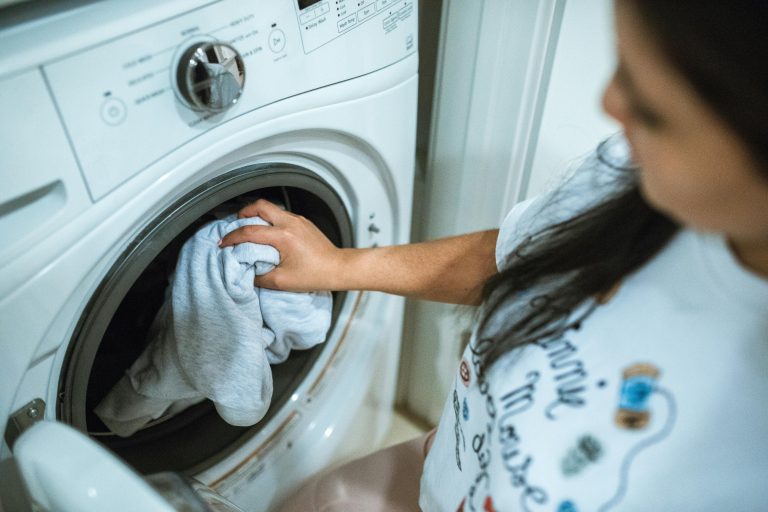
The Mechanical Failure of Washing Machines
- The Agitation Process: Modern washing machines use aggressive mechanical agitation and heat to clean garments. This process acts like sandpaper on brittle recycled polyester.
- Massive Shedding Rates: Studies indicate that a single load of synthetic laundry can release millions of microfibers into the water.
- The Water Treatment Gap: Municipal wastewater treatment plants are highly advanced, but they are not equipped to filter out particles this small.
Every time you wash those “ocean plastic” leggings, you send microscopic plastic straight back into the water supply. Furthermore, the heat from your dryer vents these tiny plastic filaments directly into the air you breathe. Our homes have become the primary distribution centers for microplastic shedding.
Are Natural Fibers Better For Athletic Performance?
Fitness enthusiasts obsess over what goes into their bodies. We carefully read ingredient labels and optimize our nutrition. Yet, we completely ignore what goes on our skin.
Sweat is a highly effective biological solvent. When you are pushing your limits at the gym, your pores are wide open. Synthetic fabrics dyed with heavy metals and treated with chemical water repellents sit directly against your skin.
Anyone who works out regularly knows the struggle of permanent odor. Synthetic gym clothes inevitably end up smelling like a locker room, even right after a fresh wash.
Petroleum-based fabrics are notorious bacterial traps. They hold onto the specific bacteria that cause body odor, and regular laundry detergent cannot easily wash it out.
Natural fibers like organic cotton, hemp, and Merino wool operate differently.
- Merino wool is naturally antimicrobial. It actively resists the bacteria that cause odors.
- Organic cotton is highly breathable, allowing sweat to evaporate rather than trapping it against the skin.
- Investing in non-plastic gear actually saves you money over time because the clothes survive years of heavy use without holding onto foul odors.
You no longer have to throw away a perfectly good shirt just because you cannot get the smell out.
Top Plastic Free Activewear Brand Recommendations
Finding truly plastic-free performance gear takes serious investigative work. Many brands market themselves as “sustainable” or “natural” while still hiding 15% elastane in their waistbands or using synthetic compression liners.
We have categorized the most reliable, thoroughly vetted options available right now.
Budget
Ryker Building a natural fiber workout wardrobe is intimidating, especially when balancing a household budget. Ryker provides a highly accessible entry point. They focus strictly on 100% organic cotton and 100% Merino wool combinations.
- The Highlights: They refuse to use any polyester or plastic-based fabrics in their main lines. Their fabrics are independently tested to ensure they are completely free of BPA and PFAS.
- Why We Love It: Their Apollo Short gives you a true athletic fit without the premium luxury price tag, making it easier to start replacing your most heavily used gym gear.
Best Overall
Wayve Wear Wayve operates with a refreshing, flat anti-synthetic stance. They use absolutely no polyester, no nylon, no recycled plastic, and no toxic water-repellent finishes.
- The Highlights: Their hero product, the Quad Short, features a heavyweight 100% organic cotton shell paired with a 100% Merino wool liner.
- Why We Love It: The trade-off is honest. You get incredible structure and durability instead of cheap four-way stretch. This gear will not pill, it will not stink, and it is built to survive years of heavy lifting.
Investment
Nero If price is not your primary constraint and you want the absolute highest quality materials against your skin, Nero is the definitive choice. They bill themselves as the ultimate luxury option for performance without polyester.
- The Highlights: They utilize GOTS-certified organic cotton sourced meticulously and layer it over an ultra-fine 17.5-micron Merino wool liner.
- Why We Love It: The fabrics are incredibly soft and highly breathable. If you want a genuinely flawless, plastic-free experience for your toughest training days, this is the benchmark.
Frequently Asked Questions About Plastic Free Activewear
What is plastic free activewear? Plastic free activewear is athletic clothing made entirely from natural, biodegradable fibers like organic cotton, Merino wool, hemp, or linen. It avoids the use of petroleum-based synthetics like polyester, nylon, acrylic, and spandex.
Does recycled polyester activewear shed microplastics? Yes. In fact, laboratory testing shows that recycled polyester sheds approximately 55% more microfibres during washing than virgin polyester because the recycling process weakens the polymer chains, making the material brittle.
Why is recycled ocean plastic bad for clothing? Using recycled ocean plastic to make clothing downcycles the material. It takes a recyclable plastic bottle and turns it into a mixed-fabric garment that cannot be recycled again, guaranteeing it will eventually shed microplastics and end up in a landfill.
Are natural fiber workout clothes breathable? Highly breathable. Natural fibers like organic cotton and linen allow air to circulate freely. Merino wool specifically acts as a natural temperature regulator, wicking moisture away from the skin while remaining completely breathable.
How do I wash organic cotton activewear? Organic cotton should be washed in cold water with a mild, eco-friendly detergent. To extend the lifespan of the garment and prevent shrinkage, it is best to air dry natural fiber activewear rather than exposing it to high heat in a dryer.
Does spandex shed microplastics? Yes. Spandex (also known as elastane or Lycra) is a polyurethane-based synthetic fiber. While it provides stretch, it is a form of plastic that contributes to microplastic shedding when washed and worn.
What are the best plastic free activewear brands? Top recommendations for truly plastic free activewear include Wayve Wear for durable cotton and wool blends, Ryker for budget-friendly organic options, and Nero for premium, luxury-grade natural performance gear.
Are there toxins in synthetic activewear? Synthetic activewear can often contain harsh chemicals. Testing has frequently found elevated levels of BPA (an endocrine disruptor) and PFAS (forever chemicals used for water resistance) in various synthetic athletic garments.
Why do synthetic gym clothes smell bad after washing? Synthetic fibers like polyester are oleophilic, meaning they attract and hold onto body oils. These trapped oils create a perfect breeding ground for odor-causing bacteria, which standard laundry detergents struggle to penetrate and remove.
Can natural fiber activewear handle heavy workouts? Absolutely. While natural fibers may lack the extreme four-way stretch of cheap synthetics, heavyweight organic cotton provides excellent structure for lifting, and Merino wool offers superior moisture management and odor resistance for intense training sessions.