Does Reverse Osmosis Remove Microplastics? (And the Plastic Hidden Inside the Cure)
Most people buy a reverse osmosis system to purge chemical contaminants, only to pump their pristine water straight through five feet of cheap polypropylene tubing.
We are constantly hearing about the latest terrifying study finding plastic particles in our blood, our brains, and the rain falling from the sky. The panic is real. The desire to protect yourself and your family is completely valid. You likely started researching the best water filters out of a deep sense of care. You want clean water. You want to do the right thing.
The industry knows this. They will gladly sell you a five-stage filtration system promised to scrub your tap water clean. The science they quote is usually accurate. Reverse osmosis is incredibly effective. The problem is what happens to the water after it passes through that primary filter. The water filtration industry has a massive blind spot. They are using plastic to cure a plastic problem.
We are going to break down exactly how these systems work, why they are still vastly superior to bottled water, and how you can upgrade your setup to truly minimize your daily exposure to synthetic polymers. Progress over perfection is the goal here. You do not need to throw your current filter in the trash. You just need to understand the mechanics of your water supply.
What Are Microplastics and Nanoplastics? (The Size Problem)
Before we can understand how a filter works, we need to understand the enemy. Plastics do not biodegrade. They photodegrade and mechanically break down. A plastic bottle rolling around in the ocean or sitting in a landfill does not turn back into organic matter. It shatters into millions of microscopic shards.
Scientists categorize these shards by size. This distinction is vital when discussing water filtration.
- Macroplastics: Pieces larger than 5 millimeters. Think bottle caps or plastic bags.
- Microplastics: Particles ranging from 1 micron to 5 millimeters. These are the particles commonly found in our food chain and tap water.
- Nanoplastics: Particles smaller than 1 micron. These are the true villains. Because they are so incredibly small, nanoplastics can cross the blood-brain barrier and enter human cells.
Municipal water treatment plants are surprisingly good at catching macroplastics and larger microplastics. They use massive sand beds and coagulation chemicals to trap large debris. However, nanoplastics slip right through municipal treatment facilities. They flow directly into the pipes leading to your kitchen sink.
How Does a Reverse Osmosis Membrane Filter Microplastics?
If you want to know if reverse osmosis removes microplastics, the answer is a resounding yes. It is pure physics.
A reverse osmosis system works by using standard household water pressure to force tap water through a semi-permeable membrane. This is not a standard carbon filter like you would find in a cheap pitcher. A carbon pitcher works like a sponge absorbing specific chemicals. A reverse osmosis membrane works like a microscopic chain-link fence.
The average pore size of a thin-film composite reverse osmosis membrane is 0.0001 microns. That is 0.1 nanometers.
Let the math do the talking here. If the smallest nanoplastics are right around 1 micron in size, and the holes in the membrane are 0.0001 microns, the plastic simply cannot fit through. By simple mechanical size exclusion, an intact reverse osmosis membrane stops incoming microplastics and nanoplastics with greater than 99.9% efficiency.
It is a physical barrier. It strips the water of heavy metals, pharmaceuticals, PFAS forever chemicals, and every size of synthetic polymer. When the water exits the membrane housing, it is essentially perfect.
The Bottled Water Trap: Why RO is Still the Better Choice
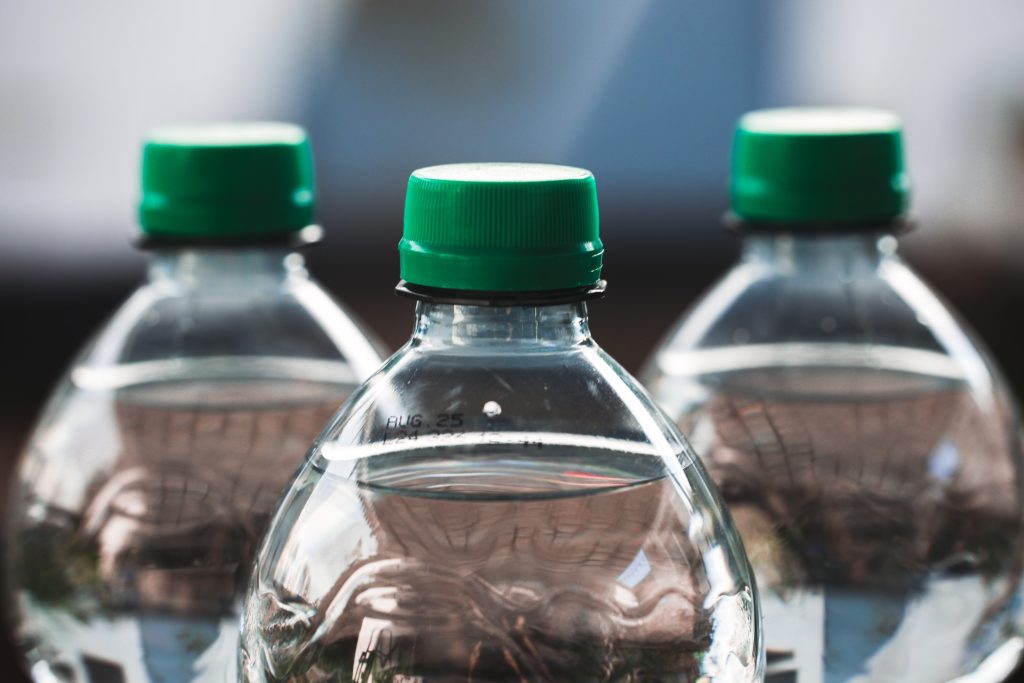
You might be wondering if you should just switch to bottled water to avoid tap water contamination entirely. Please do not do this.
A landmark 2024 study led by Columbia University and published in the journal PNAS completely altered our understanding of bottled water. Using highly advanced stimulated Raman scattering microscopy, researchers tested popular brands of bottled water. The results were staggering. They discovered that bottled water contains roughly 240,000 plastic fragments per liter.
Nearly 90% of those fragments were nanoplastics.
The plastic is not just coming from the source water. The mechanical action of twisting the plastic cap off the bottle shears thousands of microplastics directly into the liquid. The bottle itself sheds polymers as it expands and contracts during shipping.
Standard tap water contains far fewer particles. Most studies estimate tap water contains between 5 and 15 particles per liter. Therefore, filtering your tap water at home is infinitely safer and more logical than relying on single-use plastic bottles. Reverse osmosis remains the gold standard for creating safe drinking water at home.
The Paradox of Purified Water: Why Reverse Osmosis is a “Hungry” Solvent
Here is where the narrative shifts. We established that the water exiting the membrane is nearly flawless. So what goes wrong?
The problem is a chemical concept known as aggressive water. Water is naturally a universal solvent. It wants to dissolve things. In nature, water flows over rocks and soil, picking up calcium, magnesium, and other trace minerals. It becomes chemically stable.
Reverse osmosis strips absolutely everything out of the water. It removes the toxins, but it also removes all the beneficial minerals. This highly purified water is chemically unstable. It is “hungry.” It actively seeks out minerals to dissolve in order to stabilize itself.
When you pump hungry water through a system, it will attempt to dissolve whatever it touches. If it touches copper pipes, it will leach copper. If it touches plastic tubing, it will pull at the plasticizers and chemical bonds within that tubing.
Identifying the Hidden Plastics Inside Standard Reverse Osmosis Systems
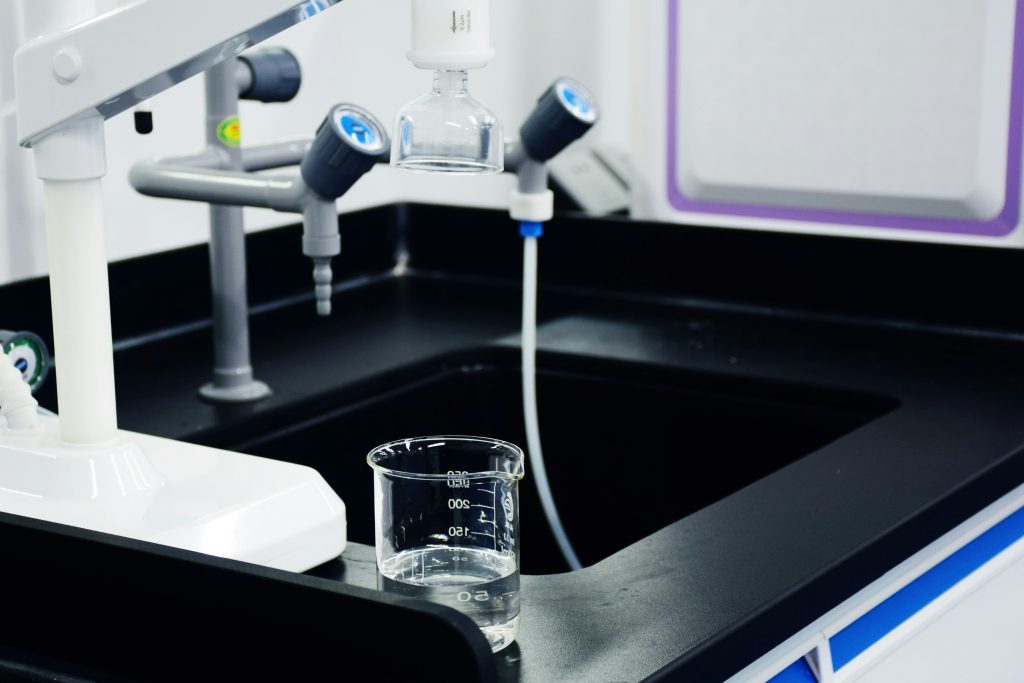
This is the exact irony of the home filtration industry. You use a high-tech membrane to create pristine water, and then you immediately expose that aggressive water to a maze of cheap plastic components.
Studies published in scientific journals like Water Science & Technology and Chemosphere have highlighted this exact re-contamination mechanism. Over time, internal components undergo mechanical friction, hydraulic pressure stress, and chemical degradation.
Let us map out exactly where the plastic hides in a standard under-sink unit.
Polyethylene Tubing and Hoses
Look under your sink right now. If you have a reverse osmosis system, you will see a web of colorful tubes. They are usually blue, red, yellow, and white. These tubes are made of flexible polyethylene or polypropylene.
As the aggressive water travels through these lines, it creates microscopic friction. Over the years, as the plastic ages and becomes brittle, these tubes can shed microplastics right back into the filtered water. You just spent hundreds of dollars to filter out nanoplastics, only to have your own tubing reintroduce them inches before the faucet.
Pressurized Storage Tanks and Butyl Bladders
Reverse osmosis is a slow process. It takes hours to filter a single gallon of water. Because nobody wants to wait ten minutes to fill a glass, systems use a storage tank.
Most standard storage tanks look like they are made of metal on the outside. Do not be fooled. Inside that metal casing is a giant balloon made of butyl rubber or a plastic liner. Your highly purified, hungry water sits inside this plastic balloon for hours or days at a time. The prolonged contact time allows for significant leaching and particle shedding.
The Polyamide Membrane Itself
We must be completely transparent here. Any brand claiming their entire system is 100% plastic-free is lying to you. The semi-permeable membrane itself is made from a polymer composite called polyamide.
This is an acceptable compromise. We need the polymer composite to catch the heavy metals and the initial wave of microplastics. However, you must replace your membrane on schedule. Aging polyamide membranes that are blasted with hard water and chlorine will eventually begin to degrade. A failing membrane will shed its own composite materials into your drinking water. Strict maintenance is your best defense.
The “BPA-Free” Greenwashing Trap in the Filtration Industry
When you shop for a new system, you will see the phrase “BPA-Free” plastered across every box. This is textbook greenwashing.
BPA stands for Bisphenol A. It is primarily used in polycarbonates and epoxy resins to make hard, clear plastics. The tubing and housings in a water filter are made from polyethylene and polypropylene. They never contained BPA in the first place. Advertising a polyethylene tube as BPA-free is like advertising an apple as cholesterol-free. It is a meaningless distraction.
Furthermore, the industry frequently replaces BPA with variants like BPS or BPF. Emerging research shows these chemical cousins act as identical endocrine disruptors in the human body.
The label “BPA-Free” does not mean safe. It certainly does not mean the material is immune to mechanical shedding or plasticizer leaching under the intense pressure of a home plumbing system. You have to look past the marketing buzzwords.
How to Retrofit Your RO System for Minimal Plastic Exposure
You do not need to panic and rip your plumbing apart. If you already own an under-sink unit, you are still vastly better off than someone drinking from the tap or buying bottled water.
However, you can optimize your setup. The goal is to eliminate post-membrane plastic contact points. You want to control the environment the water touches after it has been purified.
Step 1: Swap to Stainless Steel Braided Lines
The easiest fix is targeting the final length of tubing. Identify the tube that runs from the final filter stage up to your dedicated drinking faucet. This is the most critical stretch of plumbing. You can purchase food-grade braided stainless steel lines to replace the cheap polyethylene tubing. This ensures that in the final moments before the water hits your glass, it is only touching safe, non-shedding metal.
Step 2: Upgrade Your Storage Tank
This is a larger investment but makes the biggest impact. You can replace the standard pressurized plastic-lined tank with a specialized glass or stainless steel reservoir. Some modern countertop units bypass the pressure tank entirely, filtering the water directly into a borosilicate glass pitcher. By removing the butyl rubber bladder from the equation, you eliminate the longest duration of plastic contact in the entire process.
Step 3: Use a Remineralization Filter
Remember the concept of hungry water? You need to feed the water so it stops acting like an aggressive solvent. You can add an inline remineralization stage immediately after the primary membrane.
This filter contains natural crushed limestone, calcium, and magnesium. The aggressive water passes over these rocks, dissolves the healthy minerals, and stabilizes its pH. Once the water is remineralized, it is far less likely to leach chemicals or degrade the remaining plumbing components.
Product Recommendations: The Best Low-Plastic RO Water Systems
If you are starting from scratch and want to purchase a new unit, here is how we categorize the best options on the market for minimizing plastic exposure.
Budget: The DIY Retrofit Kit
You do not need a fancy brand name. You can buy a highly-rated, standard five-stage under-sink unit from a hardware store. Your budget play is to immediately throw away the plastic tubing they provide for the final faucet run. Go to the plumbing aisle and buy a stainless steel braided hose and a high-quality remineralization cartridge. You are creating a hybrid system for a fraction of the cost of a luxury unit.
Best Overall: AquaTru Countertop with Glass Carafe
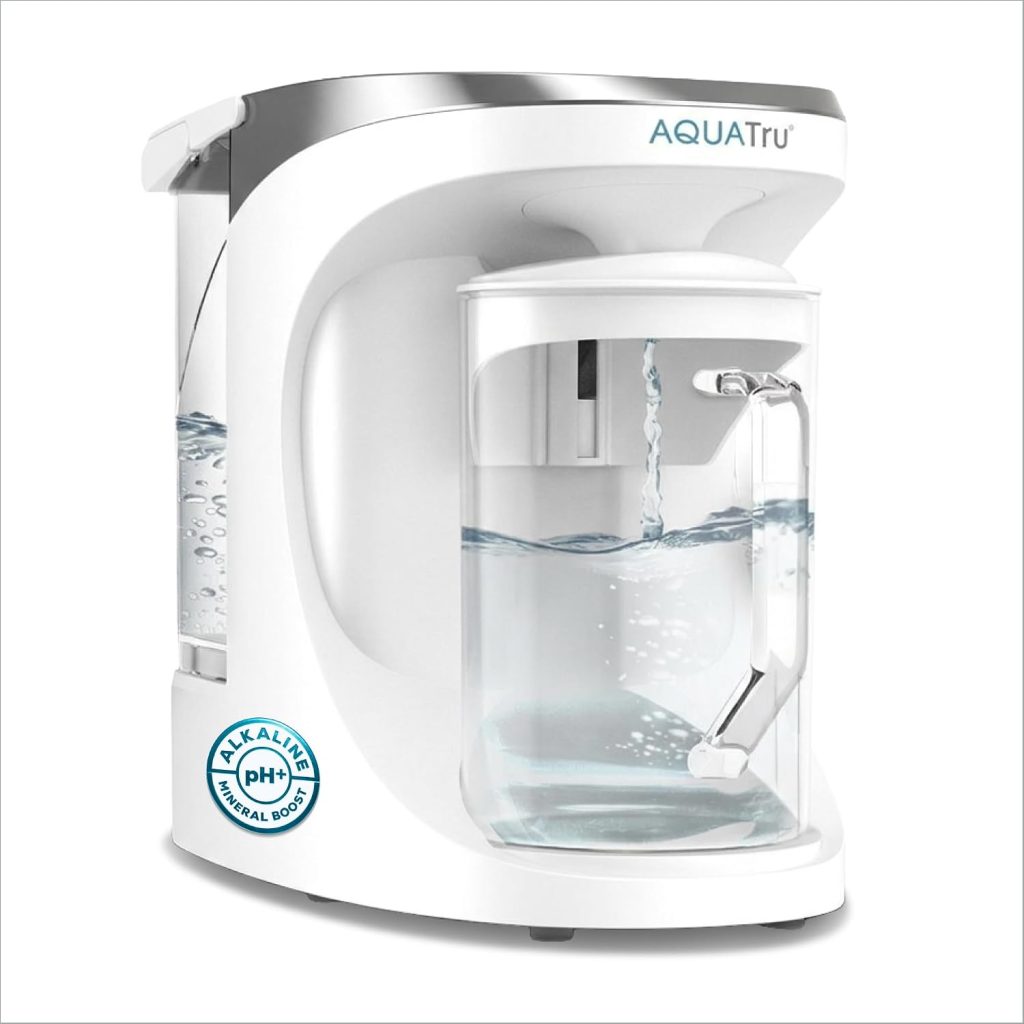
For most people living in apartments or those who do not want to hire a plumber, countertop units are brilliant. AquaTru makes a reverse osmosis system that filters directly into a borosilicate glass carafe. The water is forced through the membrane and immediately drops into glass. There are no pressurized rubber bladders. There are no long runs of polyethylene tubing. It is simple, highly effective, and dramatically reduces post-membrane plastic contact.
Investment: The Custom Stainless Steel Under-Sink Array
If you own your home and have the budget, you can build a commercial-grade setup. Look for brands that offer stainless steel filter housings instead of standard white plastic canisters. Pair these stainless housings with a commercial stainless steel pressure tank. Plumb the entire post-membrane system using hard copper or stainless steel lines. This requires professional installation, but it creates a near-permanent, virtually plastic-free water purification plant under your kitchen counter.
Frequently Asked Questions
Does reverse osmosis remove nanoplastics? Yes. Reverse osmosis membranes feature pore sizes around 0.0001 microns. Nanoplastics are generally considered to be particles smaller than 1 micron. The physical size exclusion of the membrane effectively blocks nanoplastics from passing through the initial filtration stage.
Do carbon water filters remove microplastics? Basic carbon pitchers rely on activated carbon to absorb chemicals like chlorine for taste and odor improvement. They have relatively large micron ratings. While they might catch large pieces of macroplastic debris, standard carbon pitchers are generally ineffective at stopping microscopic nanoplastics.
Is boiling water enough to remove microplastics? Recent studies suggest that boiling hard water can cause calcium carbonate to encapsulate some microplastics, which then fall to the bottom of the pot. However, this only works if your water is naturally rich in calcium, and it does not destroy the plastic. Reverse osmosis remains a far more reliable physical removal method.
Can my water filter actually add microplastics to my water? Yes. If you use a system with cheap polyethylene tubing and a plastic-lined storage tank, the friction and chemical nature of purified water can cause those internal components to shed polymer particles back into your drinking water over time.
What is the safest material for a water storage tank? The safest materials for holding purified water are borosilicate glass and high-quality food-grade stainless steel. These materials are highly stable, non-porous, and will not shed particles or leach endocrine-disrupting chemicals into your supply.
How often should I change my reverse osmosis membrane to prevent plastic shedding? You should strictly follow the manufacturer timeline, which is typically every 2 to 3 years depending on your local water hardness. A degraded, aging membrane can begin to break down and introduce its own polyamide materials into the filtered water.
Are BPA-Free water filters completely safe? Not necessarily. The term “BPA-Free” simply means the product does not contain Bisphenol A. It likely still contains other plastics like polyethylene, polypropylene, or alternative bisphenols like BPS, which can still shed microplastics and leach other chemical compounds.
What does a remineralization filter do? A remineralization filter adds beneficial minerals like calcium and magnesium back into the water after the reverse osmosis process. This raises the pH, improves the taste, and stops the water from acting as an aggressive solvent that degrades your plumbing components.
Is tap water or bottled water safer regarding microplastics? Current scientific consensus shows that tap water contains significantly fewer microplastics and nanoplastics than commercially bottled water. Filtering your tap water at home is the safest option available to consumers.
Can I completely eliminate plastic from my water filtration system? It is currently impossible to have a 100% plastic-free reverse osmosis system because the semi-permeable membrane requires a polymer composite to function correctly. The goal is maximum reduction, specifically targeting and eliminating the plastic parts that touch the water after the filtration stage is complete.