The Best Non-Plastic Water Pitchers and Countertop Filters of 2026
You finally started remembering to drink enough water every day, but pouring it from a scratched up plastic pitcher means you are likely serving yourself a side of microplastics with every single glass.
It is a harsh reality for anyone trying to live a cleaner, healthier lifestyle. We buy water filters to remove toxins from our municipal tap water. Yet, we rely on plastic housings and cheap plastic cartridges to do the job. After months of opening and closing the fridge door, washing the pitcher, and letting it sit in ambient light, that plastic degrades.
If you are wondering how to remove microplastics from water, the very first step is upgrading your hardware. The best non-plastic water pitchers and countertop filters of 2026 do not just look better on your counter. They actually perform better on a molecular level.
Let us look at the science of filtration, the irony of the scratched pitcher, and the top five plastic-free (or incredibly low-plastic) water filters on the market right now.
The Best Non-Plastic Water Pitchers and Countertop Filters
Quick Takeaways
| Brand | Material | Best For | Pros | Cons |
|---|---|---|---|---|
| BOROUX Legacy Gravity System | 304 Stainless Steel | Heavy metals, PFAS, Chlorine | • 100% plastic-free contact • Filters last 1 full year • Massive 3+ gal capacity | • High upfront cost • Tall countertop footprint • Slow gravity filtration |
| Aarke Purifier Glass Pitcher | Glass & Stainless Steel | Chlorine, Heavy metals, Aesthetics | • Compostable filter sachets • Elegant dining aesthetic • Dishwasher safe | • Glass can shatter • Monthly filter changes |
| Kishu Binchotan Charcoal Sticks | Natural Wood Branch | Impurities, Taste, Odor | • 100% zero-waste/ compostable • Lowest cost of entry • Adds trace minerals | • Basic impurity removal only • Takes hours to filter • Requires boiling to recharge |
| LifeStraw Home Glass Pitcher | Borosilicate Glass | Bacteria, Microplastics, Lead | • 0.2-micron membrane traps plastics • Beautiful handblown glass • Faster flow rate | • Internal reservoir is plastic • Small upper chamber • Spout can drip if poured fast |
| GlacierFresh Countertop System | 304 Stainless Steel | PFAS, Heavy metals, Sediment | • Zero plastic contact • Huge capacity for families • Durable for off-grid use | • Filters only last 2 to 3 months • Takes up a lot of space • Heavy to clean in the sink |
Top 5 Non-Plastic Water Filters
Ready to ditch the degrading plastic? Here are the top five options for 2026, categorized by your specific needs and budget.
1. Best Overall: BOROUX Legacy Stainless Steel System
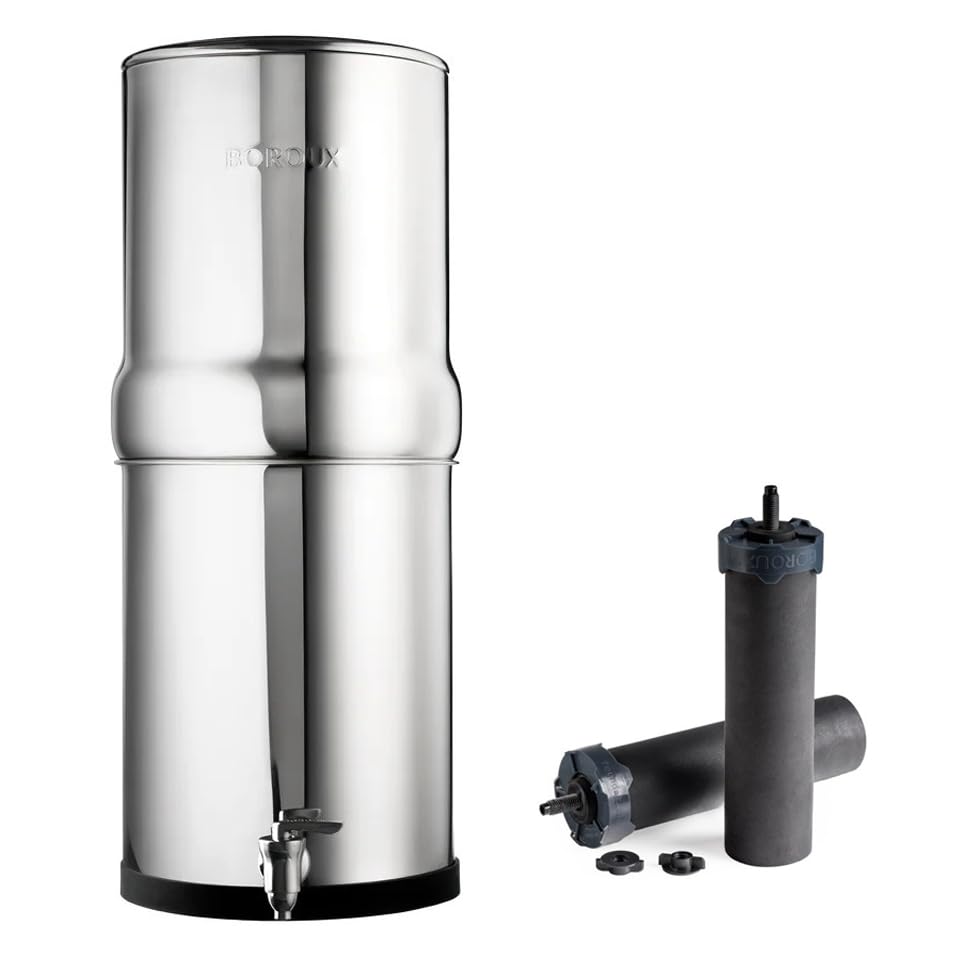
If you want to completely eliminate plastic from your daily hydration routine, the BOROUX Legacy Gravity Water Filter System is the ultimate choice. For years, people relied on legacy gravity systems that occasionally suffered from quality control issues or featured plastic spigots. BOROUX completely changed the game.
The Build: The entire system is crafted from premium 304 stainless steel. It sits beautifully on your countertop and holds over three gallons of water. Crucially, the spigot is also 100% stainless steel with a ceramic valve. There is zero plastic touching your purified water.
The Filtration: BOROUX uses their proprietary Foundation Filters. These are dense carbon block elements that sit in the upper chamber. As water slowly drips through the microscopic pores via gravity, it strips out 99% of harmful contaminants. This includes heavy metals, chlorine, and notoriously difficult forever chemicals (PFAS).
Why It Wins: It requires no electricity and no plumbing. You just pour tap water into the top and let gravity do the work. The filters last for up to an entire year, drastically reducing your replacement waste. It is a heavy-duty, reliable, and completely inert system.
2. Budget: Kishu Binchotan Charcoal Sticks
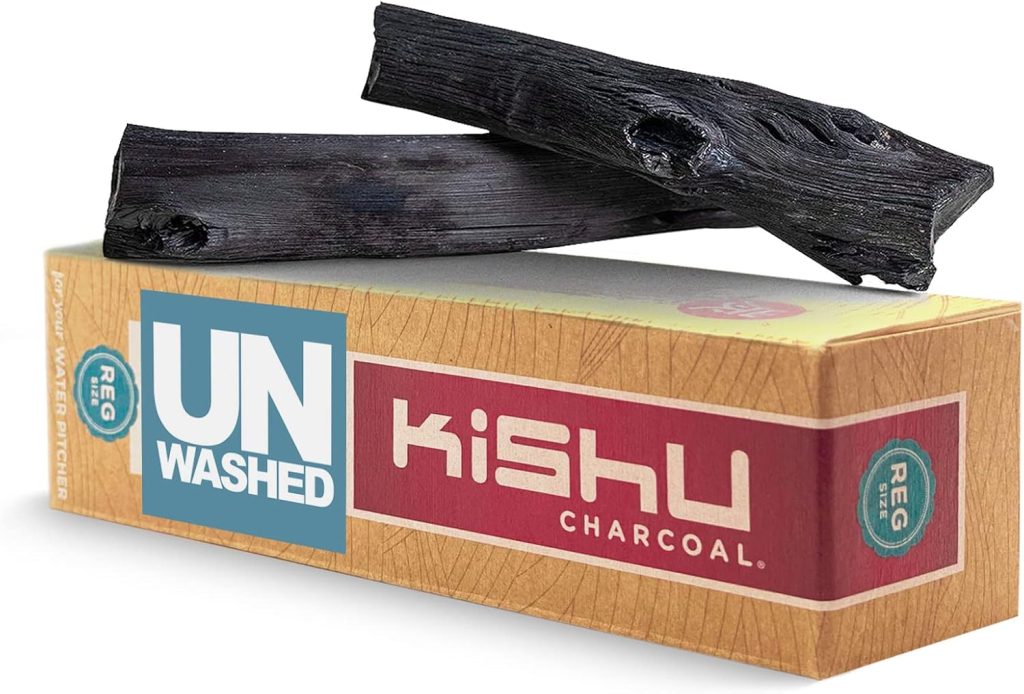
Zero waste is often framed as an expensive lifestyle. It does not have to be. If you are looking for the absolute cheapest, most sustainable way to filter water without plastic, look to a centuries-old Japanese tradition.
The Build: A stick of activated charcoal. That is the entire product.
The Filtration: Binchotan charcoal is made from tree branches baked at incredibly high temperatures. This process leaves the wood highly porous. You simply drop one of these sticks directly into any glass pitcher or mason jar filled with tap water. Over the course of a few hours, the microscopic pores in the charcoal adsorb impurities like chlorine and heavy metals. It also releases beneficial minerals like calcium and magnesium back into the water.
Why It Wins: This is the ultimate “Budget” pick. There is no housing to buy. There are no plastic cartridges to throw away. After three months of use, you simply boil the stick for ten minutes to recharge it. After six months, you toss it into your garden or compost bin where it returns to the earth.
3. Investment: Aarke Purifier Glass Pitcher
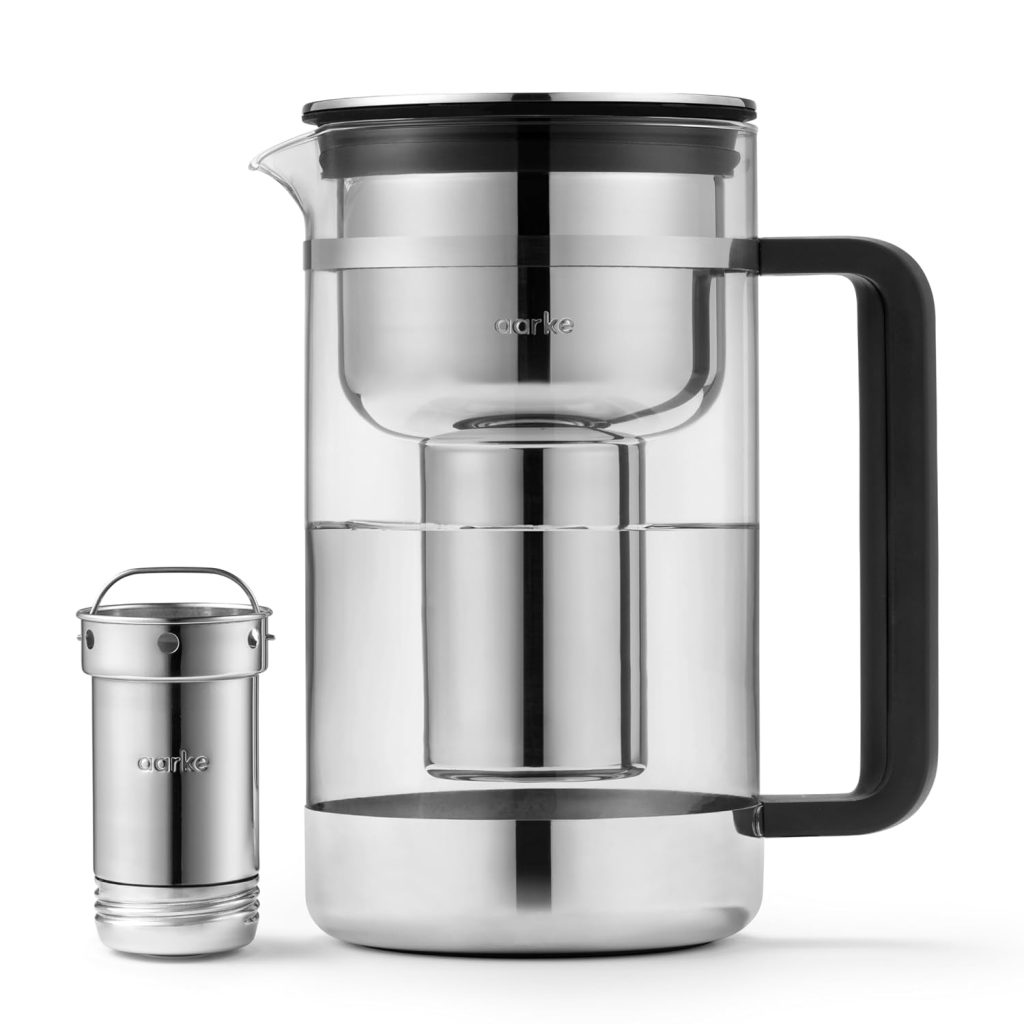
For those who want the familiar form factor of a fridge pitcher but refuse to compromise on materials, the Aarke Purifier is a masterclass in Scandinavian design.
The Build: The Aarke Purifier is made entirely of high-quality glass and stainless steel. It looks like a high-end carafe you would find at a luxury restaurant. It features a removable silicone bumper on the bottom to prevent shattering on hard granite countertops.
The Filtration: This is where Aarke truly innovates. Instead of a disposable plastic filter cartridge, the Purifier features a permanent stainless steel filter hopper. Every month, you open a small paper sachet of filter granules (a mix of activated carbon and ion exchange resin) and pour them into the hopper.
Why It Wins: It wins our “Investment” category because the upfront cost is higher than a standard pitcher. However, the recurring cost and environmental footprint are incredibly low. You are only throwing away a tiny paper envelope instead of a bulky plastic cylinder every month. The water tastes incredibly crisp, and the pitcher looks stunning on a dining table.
4. Best for Microplastic Removal: LifeStraw Home Glass Pitcher
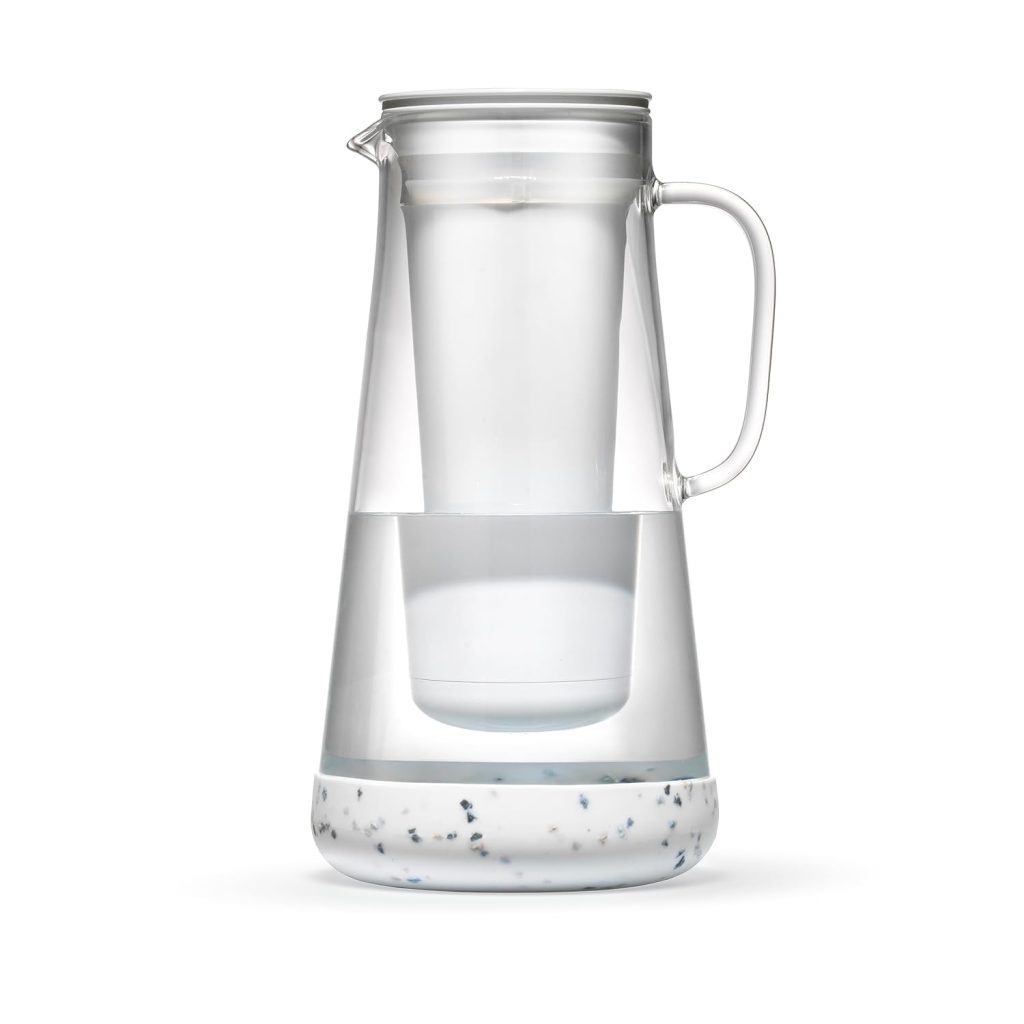
We have to be completely honest here. The LifeStraw Home Glass Pitcher is not 100% plastic-free. The pitcher body is gorgeous handblown borosilicate glass, but the internal filter housing is made of plastic. So why is it on this list? Because it is the absolute best pitcher on the market for removing microplastics.
The Build: A sleek glass body with a silicone base, topped with a functional (albeit plastic) internal reservoir.
The Filtration: LifeStraw utilizes advanced hollow fiber membrane technology. While traditional pitchers stop at 5 microns, the LifeStraw membrane has a pore size of exactly 0.2 microns. This means it physically traps bacteria, parasites, and literal microplastics. It catches the tiny synthetic fibers that standard pitchers miss entirely.
Why It Wins: If your primary concern is learning how to remove microplastics from water, this is the most accessible tool for the job. It bridges the gap between affordable pitcher convenience and heavy-duty filtration. We validate the frustration of the plastic housing, but the scientific performance of the 0.2-micron membrane cannot be ignored.
5. Best High Capacity: GlacierFresh Countertop System
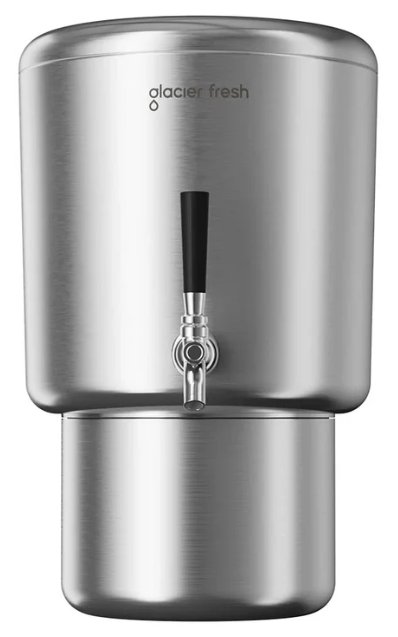
If the BOROUX is out of stock, or if you are looking for a slightly different aesthetic for a large family, the GlacierFresh Stainless Steel System is a spectacular runner-up in the gravity filter space.
The Build: Similar to other premium gravity systems, it features a 2.25-gallon 304 stainless steel body. It is completely plastic-free on the interior, ensuring your water never touches a synthetic surface.
The Filtration: It uses advanced nanofiber membrane filters that target heavy metals, sediment, and volatile organic compounds. The filters are robust and provide excellent flow rates, meaning you do not have to wait forever for the lower chamber to fill up.
Why It Wins: It is perfect for large households or off-grid emergency preparedness. The fingerprint-resistant exterior keeps it looking clean in a busy kitchen. It provides peace of mind that you can generate gallons of clean water daily without ever interacting with a plastic component.
The Micron Math: Does Brita Filter Microplastics?
This is the most common question people ask when they start researching water purity. Does a standard Brita filter microplastics?
The short answer is no. Not effectively.
To understand why, we have to look at the polymer science of size. Water filtration is essentially a game of microscopic physical barriers. Standard water pitchers (like your legacy Brita or PUR) rely on granular activated carbon and ion exchange resin. These filter media are fantastic at grabbing onto chlorine molecules to improve taste and reducing certain heavy metals like lead.
However, the physical pore size of a standard activated carbon filter is usually between 5 and 40 microns.
Now, consider the size of plastic pollution. Microplastics are generally defined as plastic fragments smaller than 5 millimeters. But in your drinking water, the fragments are much smaller. They range from 1 micron all the way down to nanoplastics, which are smaller than a single micron.
Pouring tap water containing 1-micron nanoplastics through a 40-micron carbon filter is like trying to catch a grain of sand with a chain-link fence. The water flows right through, taking the invisible plastic fragments along for the ride.
To actually filter microplastics, you need a sub-micron filter. You need a membrane or ceramic barrier with a pore size of 0.5 microns or smaller. Standard plastic pitchers simply do not have the architecture to handle this level of purification.
The Irony of the Scratched Pitcher
There is a tragic irony sitting in millions of refrigerators right now.
People buy a plastic pitcher to make their water safer. They use it for five or six years. Over time, the clear plastic becomes cloudy. You can see tiny micro-scratches covering the inside of the reservoir.
Those scratches are not just cosmetic. They are physical evidence of polymer degradation.
Every time you wash a plastic pitcher with a sponge, you cause micro-abrasions. Every time the plastic is exposed to temperature fluctuations in the dishwasher or the fridge, the polymer bonds weaken. The result is that the pitcher actively sheds plastic flakes into your drinking water. You might be filtering out the chlorine from your tap water, but you are adding fresh microplastics directly into your glass.
“BPA-free” marketing does not save you here. BPA (Bisphenol A) was removed from most hard plastics years ago after public outcry. However, manufacturers simply replaced it with BPS or BPF. These are structurally similar chemical cousins that carry nearly identical endocrine-disrupting properties.
True purification requires an inert vessel. You need materials that do not react, degrade, or shed. You need glass or food-grade stainless steel.
The Recycling Fallacy and the Cartridge Conundrum
Buying a glass water filter non plastic style is a massive step forward. But we need to talk about the dirty secret of the water filtration industry: The cartridges.
Almost every major water filter brand runs a “recycling program.” They encourage you to mail your wet, heavy, used plastic filter cartridges back to them. They print a green recycling logo on the box. This makes the consumer feel great about their purchase. This is largely greenwashing.
The reality of recycling water filters is grim. A standard filter cartridge is a nightmare of mixed materials. It contains a hard plastic shell, a plastic mesh screen, wet activated carbon, and ion exchange beads. Separating these materials is incredibly labor-intensive and expensive. Most municipal recycling centers will immediately send them to the landfill.
Even when mailed back to specialized facilities, the carbon footprint of shipping heavy, wet filters across the country often negates the environmental benefit. The plastic is rarely turned back into new filters. At best, it is downcycled into park benches or industrial materials.
This is why we strongly advocate for systems that rethink the cartridge entirely. The Aarke Purifier uses loose granules in paper sachets. The BOROUX uses dense carbon blocks that last a full year. The Binchotan stick is literally a compostable tree branch.
When you eliminate the plastic cartridge, you eliminate the greenwashing.
How to Remove Microplastics From Water (Beyond the Filter)
Upgrading your hardware is the most critical step, and if you want filtered water at every tap (shower included), that means a whole-house filtration system. However, if you are serious about reducing your daily intake of synthetic polymers, you should combine a high-quality filter with smarter habits.
Here are three extra protocols for cleaner hydration.
1. Avoid Heat: Never leave water sitting in any kind of plastic container in a hot car or a sunlit window. Heat accelerates the degradation of polymers. If you must use a plastic bottle in a pinch, keep it cold.
2. The Boiling Method: A fascinating study from 2024 revealed that boiling hard tap water for five minutes can actually force dissolved minerals (like calcium) to crystallize around nanoplastics. These encapsulated plastics then fall to the bottom of the pot, allowing you to pour the clean water off the top. It is a brilliant, low-tech way to remove up to 90% of microplastics if you do not have a sub-micron filter.
3. Rethink Your Ice: Do not pour your beautifully filtered, plastic-free water into a scratched plastic ice cube tray. Upgrade to a stainless steel lever-style ice tray or a food-grade platinum silicone tray to ensure your ice does not re-contaminate your drink.
Living with less plastic is a journey. It requires asking tough questions about the products we have blindly trusted for decades. You do not have to be perfect. You just have to make better choices when your old tools finally wear out. Ditching the scratched plastic pitcher is the easiest, most impactful upgrade you can make for your health this year.
Frequently Asked Questions (FAQs)
1. Does Brita filter microplastics? No. Standard Brita filters use activated carbon with pore sizes ranging from 5 to 40 microns. Microplastics and nanoplastics are much smaller (often below 1 micron) and easily pass through these standard filters.
2. What is the best water filter non plastic option? The BOROUX Legacy Gravity System is widely considered the best non-plastic water filter. It is constructed entirely of 304 stainless steel, including the spigot, ensuring your water never touches synthetic materials.
3. How to remove microplastics from water at home? You need a filtration system with a sub-micron pore size (0.5 microns or smaller), such as a reverse osmosis system or a hollow fiber membrane like the LifeStraw Home. Alternatively, boiling hard water can encapsulate plastics in calcium for easy removal.
4. Are glass water filter pitchers safe? Yes. Glass is an inert material, meaning it does not leach chemicals or shed microplastics into your water. Borosilicate glass is especially safe as it resists thermal shock and physical shattering.
5. Do BPA-free plastic pitchers still leach chemicals? Yes. BPA-free plastics often contain chemical substitutes like BPS or BPF, which have similar endocrine-disrupting properties. Furthermore, all plastic pitchers can shed microplastics as they suffer microscopic scratches from washing and daily use.
6. How long do stainless steel water filters last? The stainless steel housing of a gravity filter (like BOROUX or GlacierFresh) will last a lifetime if properly maintained. The internal carbon block filters typically need to be replaced every 6 to 12 months, depending on your tap water quality and usage.
7. Is the Aarke Purifier completely plastic-free? The Aarke Purifier pitcher is made of glass and stainless steel. It uses a stainless steel filter hopper rather than a plastic cartridge. The only plastic is a small, necessary gasket to create a watertight seal, making it one of the lowest-plastic options available.
8. Can I compost my old water filter cartridges? Standard plastic filter cartridges cannot be composted. However, zero-waste alternatives like Binchotan charcoal sticks are 100% compostable. Simply bury the stick in your garden after six months of use.
9. Do refrigerator water filters remove nanoplastics? Most standard refrigerator filters use basic activated carbon blocks designed for taste and odor removal (chlorine). They generally do not have the microscopic pore size required to catch nanoplastics.
10. Are mail-in recycling programs for water filters actually effective? Many mail-in recycling programs suffer from a high carbon footprint due to shipping heavy, wet materials. The mixed plastics and wet carbon are notoriously difficult to separate, meaning many recycled filters end up downcycled rather than turned into new products.

This article contains affiliate links. As an Amazon Associate, Plastic Free Everything earns from qualifying purchases at no extra cost to you.