The Complete Guide to Plastic-Free and Non-Toxic Baby Play Mats
Most baby play mats are made from compressed EVA foam that off-gasses volatile compounds right at floor level, placing infants face-to-face with synthetic softeners during critical stages of development.
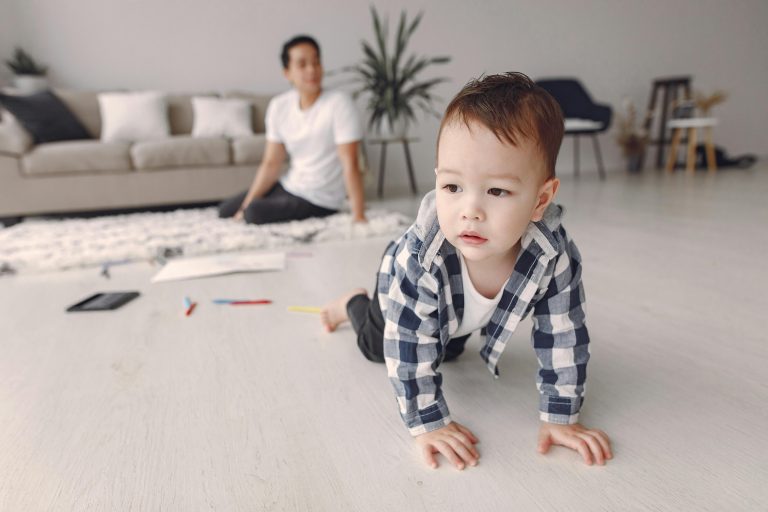
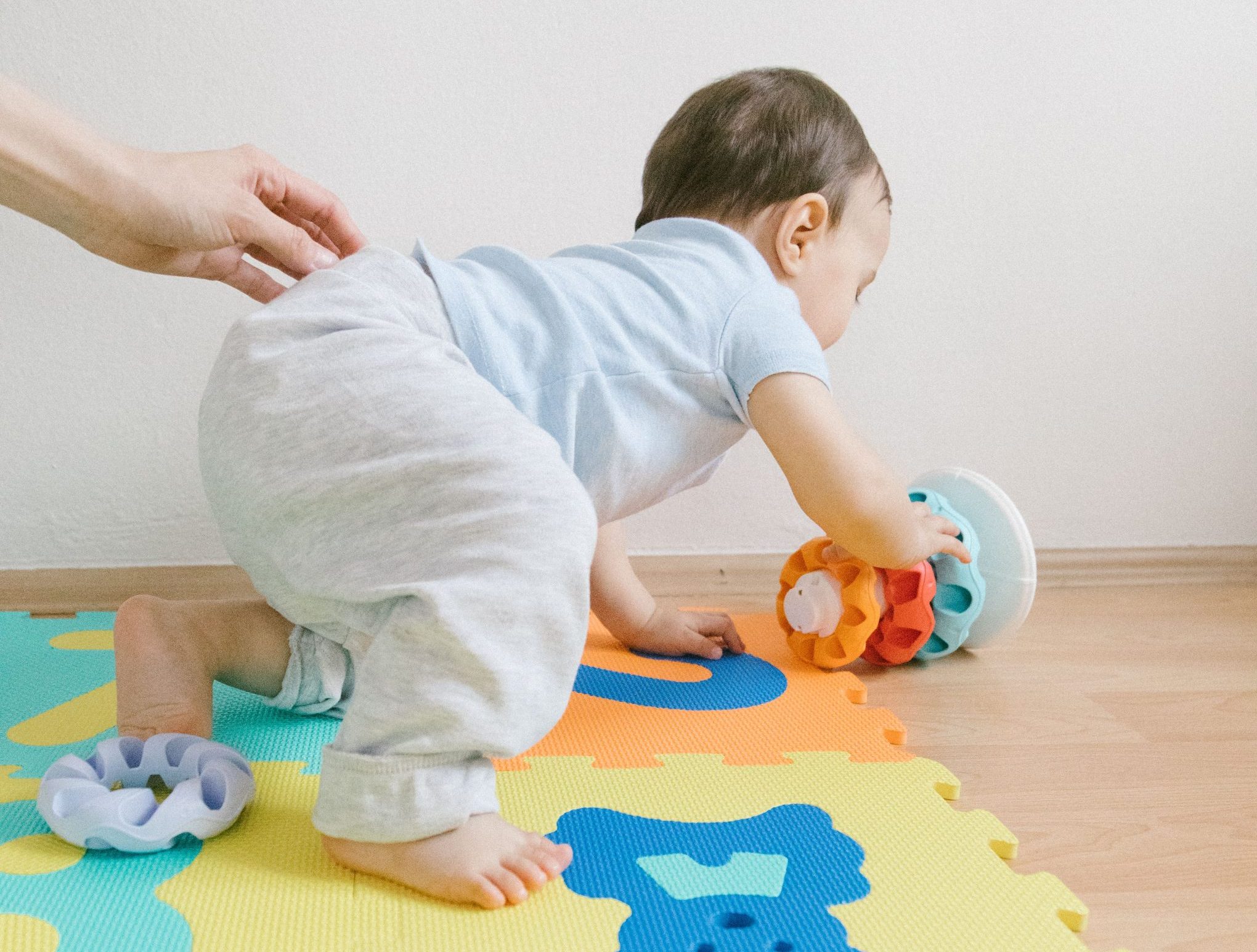
When my one-year-old started crawling, we faced the classic parental dilemma. We needed a safe, soft surface to cushion the inevitable tumbles. My wife, utilizing her background in interior architecture, immediately vetoed the classic primary-colored puzzle pieces that clash with the rest of the house. We started looking at those trendy, minimalist, neutral-toned alternatives flooding our social media feeds. The problem was that a better aesthetic did not equal a better chemical profile.
We quickly learned that the vast majority of “eco-friendly” and “safe” play mats are just petroleum products wrapped in clever marketing.
You do not need to settle for a toxic off-gassing foam pad just to give your baby a soft place to play. We are going to break down the chemistry of floor-level air quality, expose the greenwashing in the baby product industry, and highlight the highest-performing plastic-free play mats available.
Why Floor-Level Air Quality Matters for Infants
Before we examine the mats themselves, we need to understand the microclimate of your living room or play room floor.
When you unroll a brand new synthetic foam mat, it often carries a distinct chemical smell. This is the off-gassing of Volatile Organic Compounds (VOCs). What many parents do not realize is that VOCs and chemical dust are heavier than the surrounding air. They do not just float up and away into your ventilation system. They settle into the lowest twelve inches of the room.
This creates a concentrated zone of chemical pollutants exactly where your baby spends their time. Infants are uniquely vulnerable to this exposure for three reasons:
- High Respiratory Rates: Babies breathe significantly faster than adults, taking in more air relative to their body weight.
- Proximity to the Source: They are face-down, crawling, rolling, and napping directly on top of the off-gassing surface.
- Hand-to-Mouth Behaviors: Babies explore the world by tasting it. They touch the synthetic surface and immediately put their fingers in their mouths, ingesting chemical dust and microplastics.
According to a 2021 study published in the International Journal of Environmental Research and Public Health, infants inhale up to two times more floor dust and associated chemicals than adults due to their breathing zone height and respiratory dynamics. We cannot afford to put a chemical sponge right in the middle of their primary play space.
The Chemistry of Synthetic Play Mats
To understand why plastic-free is the goal, you have to know what you are avoiding. The baby industry relies heavily on three types of synthetic materials. None of them belong in a healthy home, which is also why we skipped the plastic outlet plugs when baby-proofing the rest of the house.
EVA Foam (Ethylene-Vinyl Acetate)
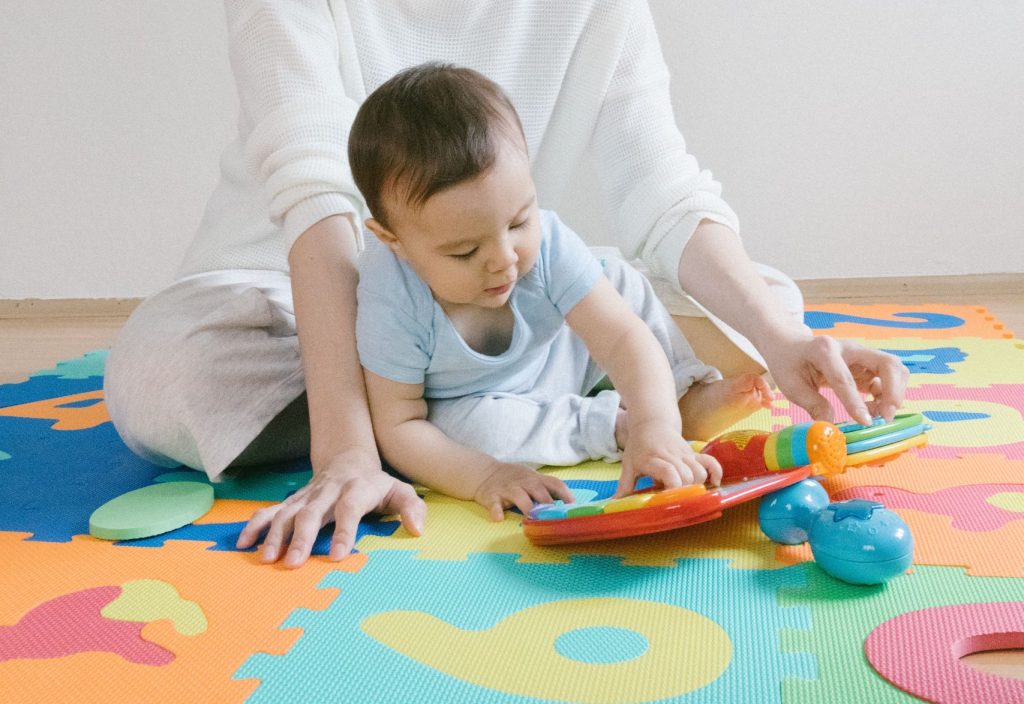
This is the most common material used in puzzle mats and thick floor tiles. It is cheap, durable, and highly cushioned. However, EVA requires a chemical called formamide to make the foam soft and pliable.
Formamide is classified as a reproductive toxin. France actually banned puzzle mats containing high levels of formamide back in 2011, prompting the European Union to establish strict limits on the chemical in children’s toys. While European standards have improved, North American regulations lag behind. Even when manufacturers claim their EVA is “formamide-free,” they are often just testing below a certain threshold rather than eliminating it entirely.
PVC (Polyvinyl Chloride)
Older or cheaper play mats still rely on PVC. This is widely considered one of the most toxic plastics ever created. To make rigid PVC soft enough for a baby to crawl on, manufacturers pump it full of chemical plasticizers called phthalates.
Phthalates do not bind chemically to the plastic. They continuously leach out over the entire lifespan of the product. They act as endocrine disruptors, interfering with a child’s natural hormone development. You should completely avoid any product containing PVC in your home.
TPU (Thermoplastic Polyurethane)
TPU is the current darling of the “non-toxic” baby industry. Brands market it aggressively as the safe, eco-friendly alternative to PVC and EVA. They boast that it is free from heavy metals and BPA.
Here is the truth: TPU is still a synthetic, petroleum-derived plastic. While it is generally more stable than PVC and requires fewer toxic plasticizers, it is not a natural material. It will never biodegrade. It will sit in a landfill for centuries after your child outgrows it. Replacing a highly toxic plastic with a slightly less toxic plastic is a step in the right direction, but it is not a plastic-free solution.
Exposing Play Mat Greenwashing
The baby product industry is notorious for preying on parental anxiety through deceptive marketing. When shopping for a play mat, you have to read past the bold claims on the packaging.
The “BPA-Free” Distraction
You will see “BPA-Free” stamped on almost every foam play mat on the market. This is a classic distraction tactic. Bisphenol A (BPA) is primarily used to harden clear plastics, like old water bottles or hard food storage containers. It is rarely used in soft, squishy foams anyway. Claiming a foam mat is BPA-free is like claiming a bag of apples is cholesterol-free. It is technically true, but it distracts you from the actual ingredients you should be worried about.
“Plant-Based” Foams
Some premium brands advertise “bio-based” or “plant-based” polyurethane foams. They often feature illustrations of soybeans or corn on the box. In reality, these manufacturers simply replace a tiny percentage (often 10 to 20 percent) of the petroleum ingredients with soy or castor oil. The remaining 80 percent is still standard synthetic polyurethane. It is a brilliant marketing strategy that allows them to charge a premium without actually delivering a natural product.
The “Food-Grade” Loophole
Another common buzzword is “food-grade material.” Just because a specific plastic polymer is approved by the FDA for short-term food contact (like a disposable takeout container) does not mean it is ideal for a baby to chew on daily for two years. Food-grade plastic is still plastic.
Certifications You Can Actually Trust
If you want to bypass the marketing jargon, look for independent third-party certifications. These organizations audit the entire supply chain and test the final product for thousands of harmful substances.
- GOTS (Global Organic Textile Standard): The gold standard for natural fabrics. If a cotton play mat is GOTS certified, it means the cotton was grown without synthetic pesticides, and the manufacturing process used safe dyes and ethical labor practices.
- GOLS (Global Organic Latex Standard): The equivalent of GOTS, but for natural rubber. This ensures the latex is harvested sustainably from rubber trees and processed without harmful chemical additives.
- OEKO-TEX Standard 100: This certification guarantees that the final product has been tested for a massive list of toxic chemicals, including pesticides, heavy metals, and formaldehyde.
The Best Plastic-Free Play Mats
To build a genuinely non-toxic play space, we must turn to materials provided by nature. Cork, natural rubber, organic cotton, and wool are materials that meet strict zero-waste and zero-plastic standards.
Here are our top recommendations categorized by your budget and lifestyle needs.
Budget Pick: Organic Cotton Mats
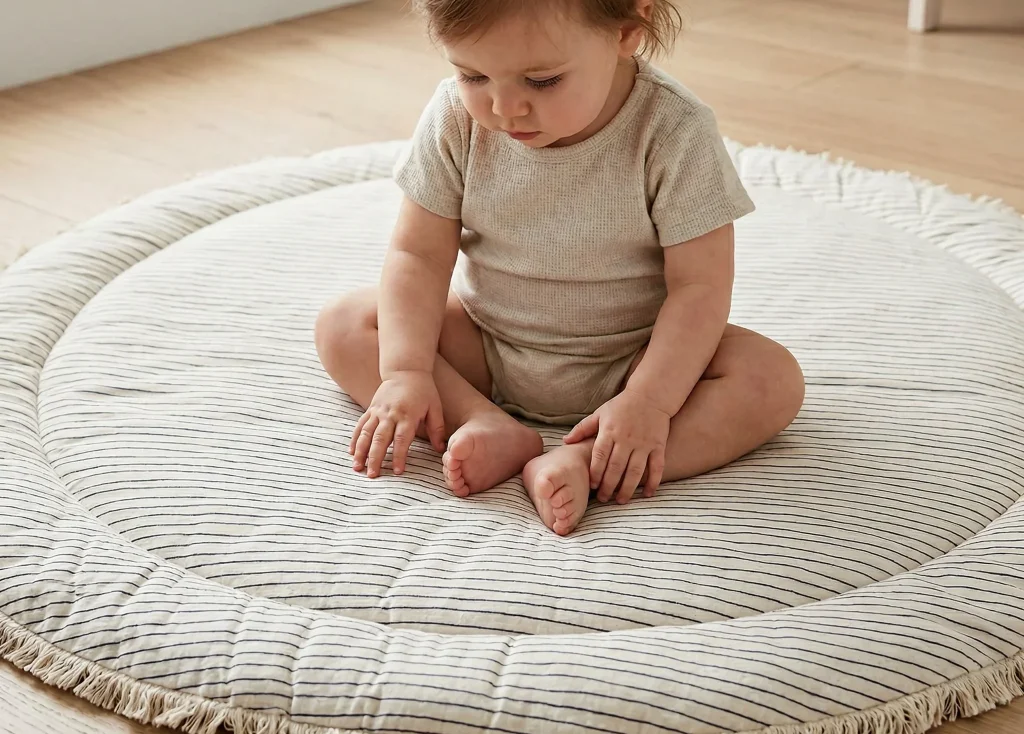
The Material: 100 percent GOTS-certified organic cotton, inside and out.
The Pros: Affordable, machine washable, lightweight, and easy to pack for travel.
The Cons: Minimal padding. They are essentially thick quilts, so they will not protect a wobbly toddler from a hard fall on a hardwood floor. These thinner cotton mats are best used on top of a softer carpeted surface.
Top Recommendation: MakeMake Organics Baby Play Mat
MakeMake Organics steps up perfectly here. They produce beautifully designed and completely organic cotton play mats with a soft quilted texture. Unlike many budget brands on Amazon, there is no synthetic polyester batting hidden inside. Just pure organic cotton from the cover to the core.
Because they are entirely fabric, you can throw them directly into the washing machine. A massive advantage over foam mats that require delicate spot cleaning. If your home already has wall-to-wall carpeting and you simply need a clean and washable surface for tummy time, this is your best bet. It is economical. It is genuinely eco-friendly. The muted earth tones will easily pass the interior design test for your living room without looking like a primary-colored nightmare.
Best Overall: Natural Cork & Tree Rubber
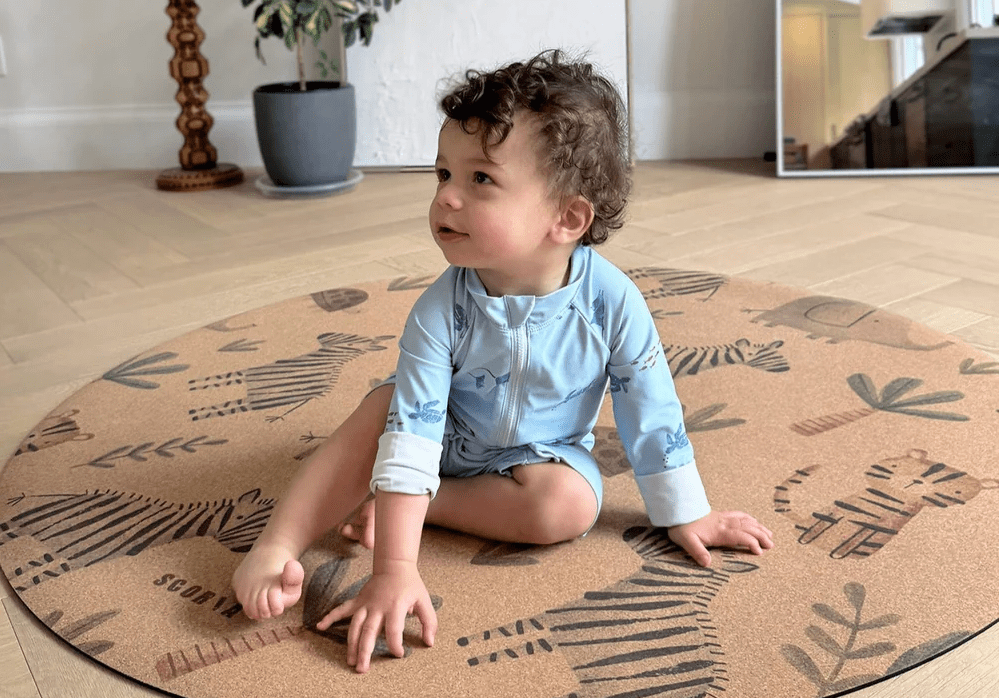
The Material: A heavy-duty base of FSC-certified natural tree rubber topped with 100 percent natural cork. Zero whipped latex. Zero synthetic petroleum foams.
The Pros: Completely natural and plastic-free. The cork surface is naturally antimicrobial and resists mold. The dense rubber base provides outstanding shock absorption for hard floors.
The Cons: It is heavier than synthetic foam tiles and does not fold up easily. The natural rubber carries a mild, earthy scent for the first few days out of the box.
Top Recommendation: Scoria Round Baby Cork Mat
Finding a solid natural rubber play mat that is not just a repurposed yoga mat is incredibly difficult. Most brands just slap a cute print on cheap synthetic foam and call it a day. Scoria solves this by producing a dedicated 47-inch round baby mat crafted entirely from natural cork and FSC-certified natural tree rubber.
Instead of relying on EVA foam or petroleum-based TPU, this mat uses a dense slab of rubber tapped directly from trees. Solid natural rubber provides superior density compared to synthetic air-filled foams. It absorbs hard impacts effortlessly without bottoming out when a toddler takes a spill. It is incredibly grippy. No sliding around the living room.
They top the solid rubber base with a smooth, naturally antimicrobial cork surface. It gives your baby a comfortable place to roll while the rubber absorbs the impact below. Spills wipe up easily with just a soft cloth, mild soap, and warm water. It offers the plush comfort of a standard puzzle mat without releasing a single volatile organic compound into your baby’s breathing zone. You get a completely non-toxic environment that is safe for skin contact and perfectly suited for nurseries or playrooms.
Investment Pick: Premium Wool
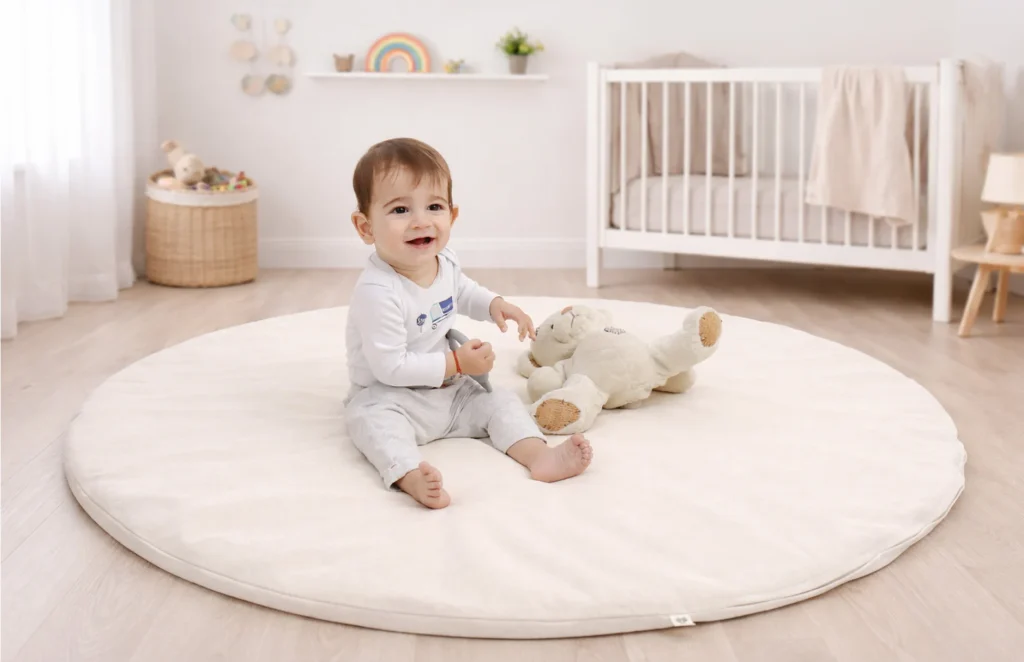
The Material: 100 percent natural, untreated sheep’s wool.
The Pros: Naturally flame retardant, temperature regulating (cool in summer, warm in winter), deeply padded, and heirloom quality.
The Cons: High upfront cost and requires specialized care (spot cleaning or dry cleaning only).
Top Recommendation: Home of Wool Play Mats
For the ultimate zero-waste, heirloom-quality play space, untreated wool is unmatched. Home of Wool handcrafts thick, luxurious play mats using only natural wool batting encased in linen or wool fabric. Wool fibers naturally repel dust mites and resist mold growth. More importantly, wool acts as a natural air filter, actually trapping indoor air pollutants rather than emitting them. These mats are significant financial investments, but they double as beautiful floor cushions or reading nook pads long after your child stops crawling.
Large-Sized Playmats: Epic Floor Coverage
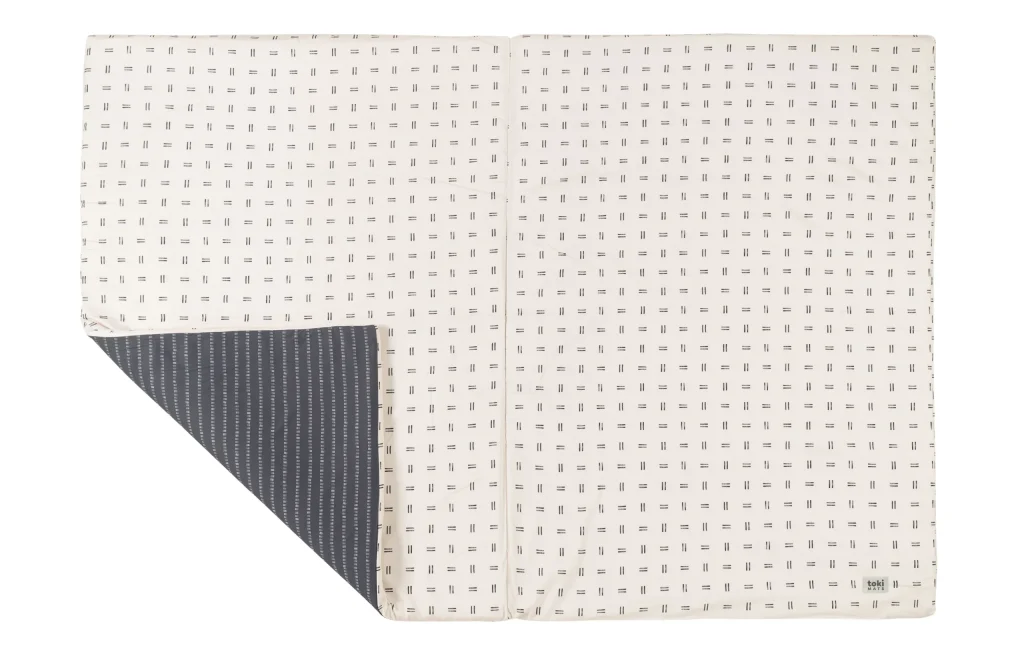
The Material: A core of GOLS-certified natural latex foam encased in a GOTS-certified organic cotton cover.
The Pros: Massive surface area. Exceptional shock absorption. Zero synthetic petroleum foams. The cover is fully machine washable.
The Cons: The inner natural latex core cannot get wet. High price point.
Top Recommendation: Toki Mats Mudcloth Organic Cotton Mat (Mega Size)
Finding a massive zero-plastic mat to cover the floors in our Lakewood living room was an absolute challenge. Most natural brands only make small squares. If you want a giant continuous surface, you are usually forced into buying interlocking EVA foam tiles. Tanya, pulling from her interior architecture background, needed a piece that anchored the space elegantly without turning the main floor into a brightly colored preschool zone.
The Mega size Toki Mats Mudcloth Organic Cotton Mat solves this perfectly. Measuring roughly 4 feet by 6 feet, it gives your one-year-old an epic runway for crawling and tumbling. Instead of petroleum foams, it uses a full inch of pure natural latex foam for serious impact absorption.
Latex foam is essentially whipped sap tapped directly from rubber trees. It provides the exact same heavy-duty squish as a synthetic puzzle mat but without a single drop of petroleum. Toki pairs this natural core with a gorgeous organic cotton mudcloth cover. The aesthetic is incredibly fresh. The muted mudcloth pattern hides minor stains beautifully. When major spills happen, you just unzip the cover and throw it directly into the washing machine. It provides unparalleled zero-chemical floor coverage that looks like a high-end textile rather than a cheap toy.
Practical Care and Maintenance for Natural Materials
Transitioning away from plastic means adjusting your cleaning habits. You cannot blast a natural cork or wool mat with harsh chemical disinfectants.
- For Organic Cotton: Wash on a gentle, cold cycle using a non-toxic, plastic-free laundry detergent. Air drying is best to prevent the internal batting from shifting or shrinking.
- For Natural Cork or Rubber: Use a simple mixture of warm water and a splash of white vinegar. Wipe the surface gently with a damp cloth. Never use bleach or heavy-duty degreasers, as these will break down the natural binders in the rubber.
- For Wool: Vacuum regularly using an upholstery attachment. For wet spills, blot immediately with a dry towel (do not rub, or you will felt the wool). Minor stains can be spot-treated with a mild wool wash and warm water.
The End of the Lifecycle (The Real Zero-Waste Advantage)
The greatest benefit of choosing a natural play mat is what happens when you are finally done with it. An EVA foam mat will exist on this planet long after your great-grandchildren are gone. It will slowly break down into microplastics, leaching chemicals into the groundwater. It cannot be recycled in your curbside bin.
A natural rubber, cork, or cotton mat tells a different story. These materials belong to the biological nutrient cycle. When an organic cotton or wool mat finally reaches the end of its useful life, it can be composted. It will break down into the soil, returning nutrients to the earth without leaving a permanent chemical legacy behind. By choosing natural materials, you are not just protecting your child’s immediate indoor air quality. You are casting a vote for the type of environment they will inherit.
Frequently Asked Questions
What is the safest material for a baby play mat? The safest materials for baby play mats are natural, plant-based, or animal-based fibers. This includes GOTS-certified organic cotton, natural tree rubber, natural cork, and untreated wool. These materials do not require toxic plasticizers or synthetic softeners and will not off-gas harmful VOCs into your home’s air.
Is EVA foam safe for babies to chew on? EVA foam is generally considered safer than older plastics like PVC, but it is not entirely safe for babies to chew on. The manufacturing of EVA foam often utilizes formamide, a toxic chemical that can off-gas over time. Furthermore, chewing on EVA foam can cause tiny microplastic pieces to break off, posing an ingestion hazard for infants.
Does TPU off-gas like EVA foam? TPU (Thermoplastic Polyurethane) is a more stable plastic than EVA and typically produces significantly less off-gassing. It does not require formamide or heavy phthalates. However, TPU is still a synthetic petroleum product. While the off-gassing is minimal, it is not a 100 percent natural material like cotton or rubber.
Are puzzle mats toxic? Most standard interlocking puzzle mats are made from EVA foam, which can contain traces of formamide and other volatile organic compounds. If a puzzle mat smells strongly of chemicals when you open it, it is actively off-gassing into your room. To avoid this, look for puzzle mats made specifically from natural cork or natural rubber.
What does OEKO-TEX certified mean for baby mats? If a baby mat carries the OEKO-TEX Standard 100 certification, it means every component of the product (the fabric, the thread, the core material, and any dyes) has been independently tested for a list of up to 350 toxic chemicals. It is a highly reliable indicator that the product is safe from dangerous heavy metals, pesticides, and formaldehyde.
Can I recycle my old foam baby play mat? No, traditional foam play mats cannot be placed in your curbside recycling bin. The complex chemical structure of polyurethane and EVA foam makes them incredibly difficult and expensive to process. The vast majority of synthetic play mats end up in landfills, where they take hundreds of years to break down.
Are plant-based foam mats actually plastic-free? Usually, they are not. Many brands advertise “plant-based” or “bio-based” foams, but this often means they have only replaced a small fraction (around 10 to 20 percent) of the petroleum ingredients with soy or castor oil. The remaining material is still a standard synthetic plastic polymer. Always check the exact material breakdown.
How do I clean a natural rubber play mat without chemicals? You should clean a natural rubber play mat using a simple, non-toxic solution. Mix one part white vinegar with three parts warm water in a spray bottle. Lightly mist the mat and wipe it down with a soft, clean cloth. Avoid harsh chemicals, bleach, or heavy scrubbing, as this can degrade the natural rubber surface.
Why are non-toxic play mats so expensive? Non-toxic play mats are more expensive because natural materials (like organic cotton, ethically harvested rubber, and pure wool) cost significantly more to source and manufacture than cheap petroleum-derived chemicals. Additionally, obtaining rigorous third-party certifications like GOTS and GOLS adds overhead costs for the manufacturer.
Do cork play mats flake off or pose a choking hazard? High-quality cork play mats are designed with a thin, flexible layer of premium cork securely fused to a natural rubber base. When manufactured correctly, they do not flake or crumble easily under normal use. However, like any baby product, you should inspect it regularly for wear and tear, especially if your baby has sharp teeth and aggressively bites the edges.

This article contains affiliate links. As an Amazon Associate, Plastic Free Everything earns from qualifying purchases at no extra cost to you.