
Is Your Chewing Gum Full of Plastic? The Surprising Truth About Synthetic Gum Bases & Plastic-Free Alternatives
When you chew a standard piece of supermarket mint gum, you are not just masticating flavor. You are actively chewing on a proprietary slab of synthetic rubber made from the exact same polymers used in car tires, glue, and plastic bottles.
For decades, the candy aisle has quietly operated under an umbrella of regulatory secrecy. While food labels require brands to list every preservative, coloring agent, and sweetener, the core substance of chewing gum remains hidden behind two innocent-sounding words: gum base.
Understanding what happens inside your mouth during a 20-minute chew reveals a complex mechanical and chemical extraction process. Body heat, salivary enzymes, and intense crushing force work together to break down synthetic rubber, releasing microscopic plastic particles and chemical additives straight into your digestive system.
Plastic-Free Chewing Gum Alternatives: Tested and Ranked
You do not need to give up chewing gum to eliminate synthetic rubber from your routine. Natural chewing gum has existed for thousands of years. Before petroleum synthesis took over in the mid-20th century, all commercial gum was made from chicle, a sustainable, naturally elastic latex harvested from the sapodilla tree (Manilkara zapota) native to Central America.
Sapodilla trees are sustainably tapped by forest workers known as chicleros. Tapping sapodilla trees keeps rainforest ecosystems standing, providing long-term economic incentives against deforestation while producing a completely natural, biodegradable latex.
We evaluated natural, microplastic-free gum alternatives based on base purity, chew texture, flavor longevity, and packaging sustainability.
|
Brand |
Category |
Primary Base |
Sweetener |
|
Budget |
Tree Chicle |
Xylitol |
|
|
Best Overall |
Tree Chicle |
Organic Cane Sugar |
|
|
Investment |
Wild Chicle |
Organic Cane Sugar |
Budget Pick: True Gum
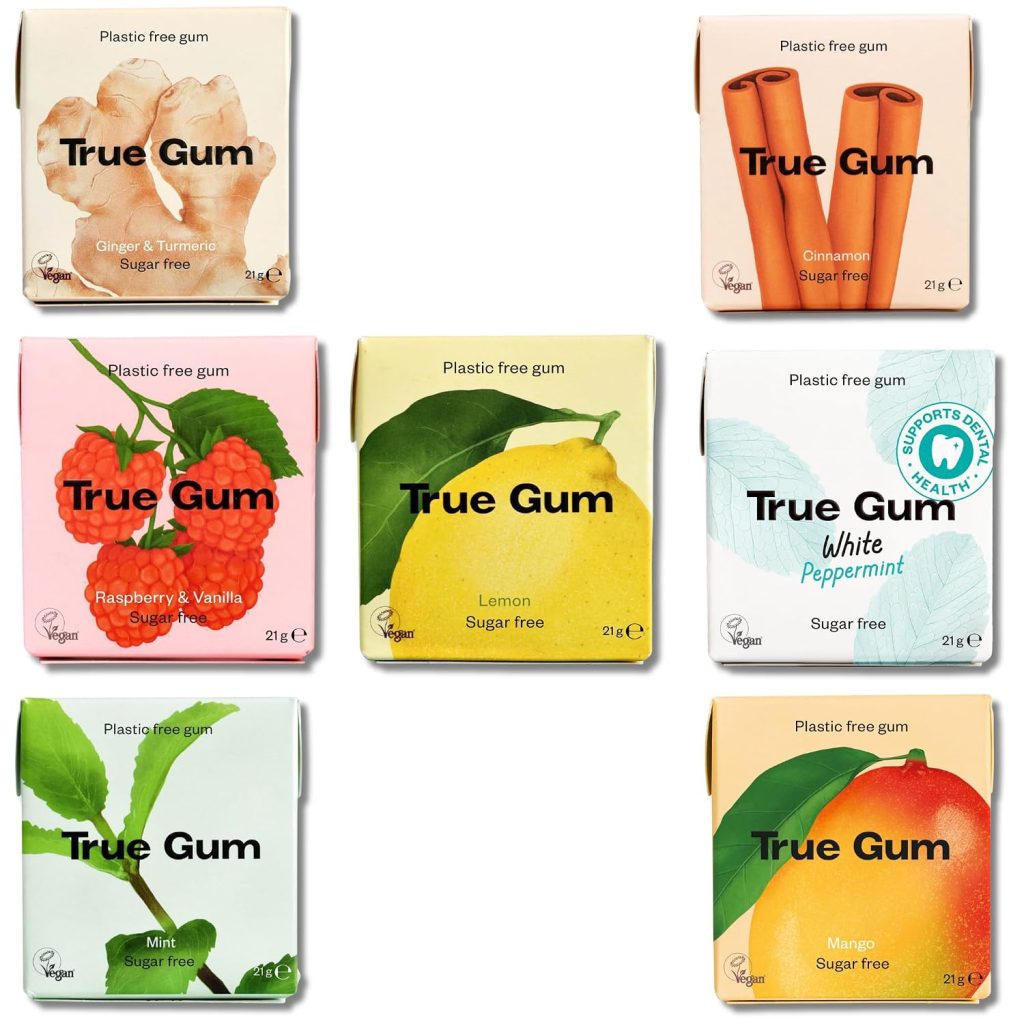
True Gum has emerged as the premier budget-friendly option for plastic-free chewing. Crafted in their dedicated eco-friendly factory, True Gum replaces petroleum rubbers with natural tree sap and plant-based sweeteners.
- The Base: Made with 100% natural chicle latex harvested by chicleros in Central America, softened with candelilla wax and vegetable glycerin. Completely free of synthetic rubber, PVA, and BHT.
- Texture & Flavor: Delivers a smooth, pleasant chew sweetened with tooth-friendly birch xylitol and stevia. Flavors like Mint, Raspberry & Vanilla, and Ginger offer a clean, refreshing taste without artificial aftertastes.
- Packaging: 100% plastic-free, recyclable cardboard boxes. No plastic wraps, foil linings, or blister trays.
- Why It Wins on Value: True Gum offers an outstanding cost-per-piece value, especially in multi-packs, making it the most economical daily driver for health-conscious chewers on a budget.
Best Overall: Simply Gum
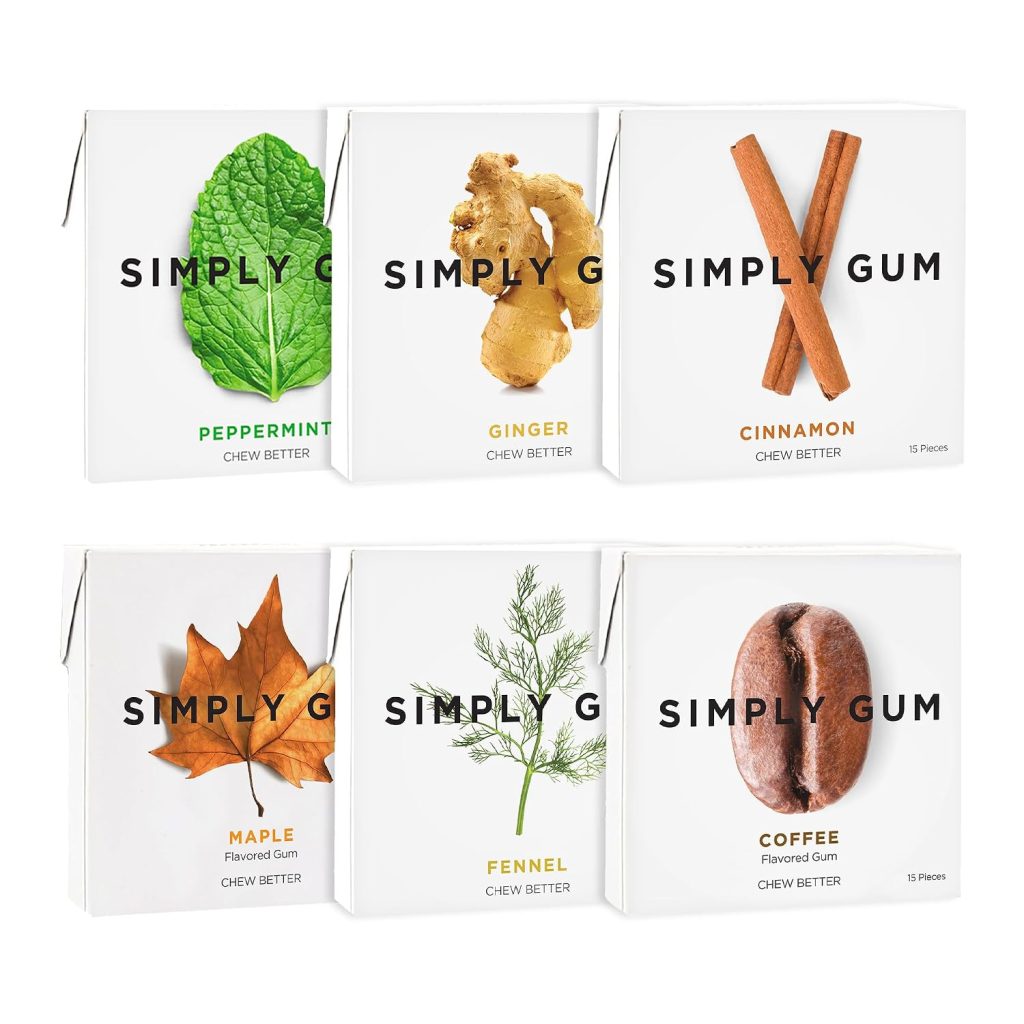
Simply Gum offers complete ingredient transparency, listing every single component directly on the back of their minimalist cardboard boxes.
- The Base: Handcrafted using a natural chicle base, candelilla wax, and organic vegetable glycerin. No synthetic rubber, artificial colorings, or synthetic preservatives.
- Texture & Flavor: Softer, more yield-friendly texture that mimics traditional chewing gum without sticking to dental work. Flavors like Spearmint, Cinnamon, and Ginger use real essential oils and organic cane sugar.
- Packaging: Recyclable cardboard box that includes small sheets of biodegradable post-chew wax paper inside the pack for clean disposal.
- Why It Wins Best Overall: Strikes a great balance between authentic tree-sap elasticity, clean natural flavor, and thoughtful plastic-free packaging.
Investment Pick: Chicza Rainforest Organic Chewing Gum
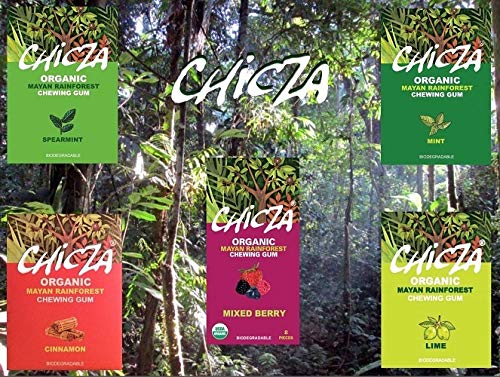
If you want a 100% certified organic, forest-to-table chewing experience, Chicza offers a unique approach to sustainable harvesting.
- The Base: Produced directly by a cooperative of Mayan chiclero farmers in Mexico. Chicza uses 100% wild-harvested organic chicle latex melted together with organic waxes and natural plant oils.
- Texture & Flavor: Unusually rich, thick chew with dense elasticity. Because it contains zero synthetic emulsifiers, the flavor profile is earthy and natural, sweetened with organic agave syrup and natural fruit essences.
- Sustainability: Certified 100% organic and 100% compostable. When discarded outdoors, Chicza biodegrades completely into organic material within weeks.
- Why It Wins Investment: Higher price point due to direct-trade co-op sourcing, organic certifications, and rainforest conservation funding.
The Biomechanics of Chewing: What Happens to Synthetic Rubber in Your Mouth?

To understand how synthetic gum breaks down, you have to look at the environment inside your mouth. Human mastication is an aggressive mechanical process. When your molars compress a piece of gum, they generate localized pressure between 25 and 150 pounds per square inch (PSI).
This mechanical crushing occurs at a constant temperature of 98.6°F (37°C) in an acidic, liquid bath of saliva. Saliva contains active enzymes like alpha-amylase and lingual lipase, which are designed by evolution to break chemical bonds in food.
When you chew conventional gum, three distinct forces interact with the synthetic material:
- Thermal Softening: Body heat warms the synthetic polymers past their glass transition temperature. This turns rigid petroleum rubbers into flexible, pliable masses.
- Mechanical Shear Stress: Repetitive molar contact continuously stretches and compresses the synthetic matrix. This mechanical friction creates micro-tears in the polymer structure, shedding microscopic fragments.
- Salivary Solvent Extraction: Saliva acts as a continuous liquid bath, washing away water-soluble flavorings and emulsifying lipid-soluble plasticizing agents.
A landmark 2025 pilot study presented at the American Chemical Society spring meeting by researchers at UCLA (Mohanty & Lowe) quantified this process for the first time. The researchers measured microplastics released into saliva during standard chewing protocols.
The UCLA study revealed that a single gram of conventional synthetic gum releases an average of 100 to 600 microplastic particles into human saliva. Because a standard stick of commercial gum weighs between 2 and 6 grams, chewing just one piece of conventional gum can release up to 3,000 microplastic particles directly into your mouth.
Crucially, the study showed that 94% of these plastic particles detach within the first 8 minutes of chewing, with the highest concentration shedding in the initial 120 seconds. The primary mechanism driving this release is not chemical digestion, but pure mechanical abrasion. The physical grinding of teeth tears micro-scale plastic particles off the synthetic base, allowing them to mix with saliva and enter the digestive tract.
Deciphering “Gum Base”: The FDA 21 CFR 172.615 Loophole
How did synthetic rubber end up in candy aisles without being listed on the packaging? The answer lies in federal food regulations written over half a century ago.
Under Title 21 of the United States Code of Federal Regulations, specifically 21 CFR 172.615, the U.S. Food and Drug Administration (FDA) defines “chewing gum base” as a non-nutritive masticatory substance. Instead of requiring manufacturers to list specific chemical components on consumer packaging, the law allows them to lump up to 46 distinct synthetic and natural substances under the single trade secret designation “gum base.”
The regulations allow manufacturers to combine ingredients from several chemical categories:
1. Synthetic Elastomers (The Elasticity Foundation)
- Polyisobutylene: A synthetic rubber produced from petroleum-derived isobutylene. It provides the characteristic elasticity in gum and is commercially used to manufacture bicycle inner tubes, tire liners, and industrial sealants.
- Butadiene-Styrene Rubber (SBR): A synthetic copolymer widely used in car tires and shoe soles. It adds structural toughness and resistance to breakdown.
- Isobutylene-Isoprene Copolymer (Butyl Rubber): Synthetic rubber valued for its impermeability to gas, serving as the core elastic binder in mainstream bubble gums.
2. Synthetic Resins (The Texture & Body)
- Polyvinyl Acetate (PVA): A synthetic polymer that provides chewing resistance and film-forming capability. PVA is the exact same base compound used in Elmer’s wood glue, paper adhesives, and latex paints.
3. Plasticizers, Waxes, and Softeners
- Paraffin Wax and Microcrystalline Wax: Petroleum refinery byproducts that lower the softening temperature of synthetic rubbers so they remain pliable at human body temperature.
- Glycerol Esters of Wood Rosin: Resins derived from pine stumps used to stabilize emulsification and balance chewy consistency.
4. Synthetic Antioxidants
- Butylated Hydroxytoluene (BHT): A petroleum-derived antioxidant added directly to synthetic gum bases to prevent the oil and rubber components from oxidizing and turning rancid on store shelves.
Because “gum base” is classified as a proprietary formulation, consumers cannot determine the exact ratio of synthetic rubber to wood glue polymers in any given brand.
Chemical Leaching: What Else Escapes During Mastication?

The release of solid microplastic particles is only half of the chemical exposure equation. The other half involves liquid additives, softeners, and residual manufacturing compounds that dissolve into saliva.
Synthetic rubbers like polyisobutylene and styrene-butadiene are naturally stiff and brittle at room temperature. To make them chewable, manufacturers mix them with plasticizers, emulsifiers, and synthetic antioxidants. These low-molecular-weight additives are not permanently bonded to the polymer chain. Instead, they sit loosely within the rubber matrix.
When exposed to saliva, body heat, and mechanical chewing, these additives migrate out of the rubber through a process known as mass transfer leaching:
- Plasticizer Migration: Phthalates and organic esters used as softeners slowly migrate out of the synthetic base. Salivary lipids act as mild lipophilic solvents, pulling these fat-soluble compounds out of the synthetic rubber.
- Antioxidant Dissolution: Synthetic preservatives like BHT (butylated hydroxytoluene) are fat-soluble. As you chew, BHT dissolves into saliva, transferring synthetic antioxidants directly into your digestive system.
- Residual Monomer Release: During industrial polymer creation, small amounts of unreacted building blocks (such as vinyl acetate or isobutylene monomers) can remain trapped inside the polymer matrix. Chewing compresses the matrix, forcing these unreacted residual compounds into the mouth.
This chemical migration explains why commercial chewing gum loses its flavor, soft texture, and elasticity after 15 to 20 minutes. As softeners, emulsifiers, and flavor oils leach into your saliva and get swallowed, only the tough, unyielding synthetic rubber matrix remains behind.
Quantifying the Annual Microplastic Burden from Gum
To put microplastic exposure into perspective, researchers look at cumulative ingestion rates. The UCLA 2025 pilot study established that an average piece of synthetic gum sheds approximately 100 to 600 microplastic particles per gram.
Assuming a standard gum piece weighs 3 grams and sheds roughly 300 particles per gram, a single stick delivers 900 microplastic particles into saliva.
For an individual who chews two sticks of gum per day:
Daily Ingestion = 2 sticks x 900 particles = 1,800 microplastic particles/day
Annual Ingestion = 1,800 particles/day x 365 days = 657,000 microplastic particles/year
When added to existing environmental exposures from bottled water, food packaging, and synthetic clothing dust, habitual gum chewing represents an intense, concentrated source of direct oral microplastic consumption.
Navigating Greenwashing in the Candy Aisle
As consumer awareness of microplastics grows, mainstream candy brands and boutique manufacturers have launched marketing campaigns designed to reassure buyers. However, many eco-friendly claims conceal hidden synthetic materials.
Here is how to decode greenwashing tactics in the chewing gum market:
1. The “Plant-Based” Label Loophole
Seeing “plant-based” on a box of gum does not automatically mean the product is plastic-free. Manufacturers frequently use sugar cane sweeteners, beet juice coloring, or natural mint oils and apply the label “plant-based ingredients” to the front of the box.
However, the underlying “gum base” inside the piece can still contain 100% synthetic polyisobutylene and polyvinyl acetate. Always check whether the brand explicitly certifies its base as plastic-free tree sap or chicle.
2. The Bioplastic and PLA Trap
Some alternative gum brands claim to use biodegradable bioplastics or Polylactic Acid (PLA) as a substitute for petroleum synthetic rubber. PLA is derived from fermented plant starches like cornstarch or sugarcane.
While technically plant-derived, PLA is a true synthetic polymer. It requires high-temperature industrial composting facilities (140°F with controlled humidity) to break down. In human saliva at 98.6°F, or in soil and waterways, PLA behaves similarly to petroleum plastic. It sheds micro-scale PLA fragments under molar shear stress and resists environmental degradation.
3. The Blister Pack Packaging Fallacy
Brands often market their sustainability efforts by using cardboard outer boxes, while enclosing the individual gum pieces in non-recyclable PVC-to-aluminum blister packs.
Pop-through blister trays are made by heat-forming poly-vinyl chloride (PVC) sheets. This creates composite waste that cannot be processed by municipal recycling programs, canceling out the eco-benefits of cardboard packaging.
Simple Action Plan: Reducing Microplastics Without Stress
Living plastic-free is about progress, not perfection. You do not need to overhaul your entire lifestyle overnight. Eliminating synthetic gum is one of the easiest, lowest-friction swaps you can make to reduce personal microplastic intake.
Use this simple, step-by-step checklist:
- Finish or Swap Your Current Stash: Do not panic or shame yourself if you currently have synthetic gum in your pocket. Switch to a chicle-based brand when you restock.
- Extend Your Chew Time: If you chew conventional gum and cannot swap immediately, keep the same piece longer instead of popping new sticks. The 2025 UCLA study confirmed that 94% of microplastic shedding happens in the first 8 minutes. Popping 3 to 4 fresh sticks a day exposes you to far more microplastics than chewing one piece for an hour.
- Read Base Labels carefully: Look for explicit mention of “natural chicle,” “sapodilla tree sap,” or “plastic-free base.” If a label simply reads “gum base,” assume it contains synthetic petroleum rubbers.
- Dispose of Gum Responsibly: Even natural chicle gum takes a few weeks to break down. Wrap your used gum in scrap paper and toss it into a trash bin rather than dropping it on city sidewalks.
Frequently Asked Questions
Does all chewing gum contain plastic? No, but the vast majority of mainstream commercial chewing gum does. Conventional brands use synthetic gum bases made from petroleum polymers such as polyisobutylene (butyl rubber) and polyvinyl acetate (wood glue resin). However, natural gum brands use tree-derived latex, primarily sapodilla tree chicle, which is naturally plastic-free.
How many microplastics do you swallow when chewing conventional gum? According to a 2025 UCLA pilot study published by the American Chemical Society, conventional synthetic gum releases between 100 and 600 microplastic particles per gram into saliva. A standard 3-gram stick can release up to 3,000 plastic particles directly into your mouth during a typical chew.
Why does the ingredient list on gum just say “gum base”? Under FDA regulation 21 CFR 172.615, manufacturers are permitted to list up to 46 distinct synthetic and natural ingredients under the umbrella term “gum base.” This trade secret shield allows companies to keep their exact synthetic polymer, resin, and wax ratios proprietary without disclosing specific petroleum components to consumers.
Is chicle gum completely natural and safe? Yes. Chicle is a natural latex harvested from the sapodilla tree (Manilkara zapota). It has been sustainably harvested and chewed in Central America for centuries. Authentic chicle contains natural plant polymers that biodegrade organically and do not rely on petroleum rubber or synthetic preservatives like BHT.
Can your body digest synthetic chewing gum if swallowed? Your body cannot digest synthetic rubber polymers like polyisobutylene or polyvinyl acetate. If you swallow conventional gum, the synthetic base moves through your gastrointestinal tract intact and passes out in your stool. However, mechanical friction during chewing releases micro-sized plastic particles that can mix with saliva and enter the digestive system.
Does boiling water or saliva enzymes destroy microplastics in gum? No. Salivary enzymes like amylase break down starches and simple carbohydrates, but they cannot break the strong carbon-carbon bonds of synthetic polymers like polyisobutylene. Microplastic release during gum chewing is driven by mechanical friction and molar shear stress rather than enzymatic digestion.
Are bioplastic or PLA gums safer than conventional gum? Not necessarily. Polylactic Acid (PLA) and other bioplastics are derived from plant starches, but they are still chemically synthesized polymers. Under molar pressure and friction, bioplastics shed microscopic PLA particles into saliva similarly to petroleum plastics. Furthermore, PLA requires industrial composting to degrade and will not break down rapidly in human digestive tracts or ambient nature.
What is the difference between polyisobutylene and polyvinyl acetate in gum? Polyisobutylene is a synthetic petroleum rubber that gives gum its stretch, elasticity, and chewiness. It is the same material used to produce bicycle inner tubes and tires. Polyvinyl Acetate (PVA) is a synthetic resin that provides firmness, structure, and chewing resistance. PVA is the primary polymer compound found in Elmer’s wood glue and latex paints.
Does plastic-free chicle gum biodegrade? Yes. Authentic chicle gum is made from organic tree sap and natural vegetable waxes. When discarded outdoors, natural chicle biodegrades in soil within a few weeks to a few months, unlike synthetic gum bases which persist indefinitely on sidewalks and in ecosystems as permanent plastic pollution.
How can I tell if my gum contains synthetic plastic or natural tree sap? Check the ingredient list on the package. If the label lists “gum base” without further qualification, it almost certainly contains synthetic petroleum polymers. Look for brands that explicitly state “plastic-free base,” “made with natural chicle,” or “100% tree sap base.” Trusted plastic-free brands include Simply Gum, True Gum, and Chicza.
This article contains affiliate links. As an Amazon Associate, Plastic Free Everything earns from qualifying purchases at no extra cost to you.