The Water Scam: Why It Is Time to Switch to a Non Toxic Plastic Free All Purpose Cleaner
You are paying a premium for a plastic bottle filled with 90 percent tap water and a splash of synthetic fragrance.
Take a look under your kitchen sink. You probably have a collection of brightly colored plastic spray bottles. One for the glass. One for the granite. One for the bathroom tiles. They take up an enormous amount of space. They cost anywhere from $4 to $8 each. And when they are empty, you toss them into the recycling bin, hoping for the best.
But here is the uncomfortable reality of the modern cleaning industry. You are not really buying a cleaning product. You are buying a single-use plastic delivery system for water.
Conventional all-purpose cleaners are overwhelmingly composed of standard H2O. To get that water to your local grocery store shelf, companies pump it into virgin fossil-fuel plastics, load it onto diesel-guzzling trucks, and ship millions of pounds of unnecessary weight across the country. It is an environmental disaster disguised as domestic hygiene.
And the remaining 5 to 10 percent of the formula? It is often a cocktail of unregulated chemicals that you are aerosolizing directly into the air your family breathes.
There is a better way. A cheaper way. A much healthier way.
Welcome to the quiet revolution of the non toxic plastic free all purpose cleaner. We are going to break down the chemistry of conventional sprays, expose the fragrance loophole, and show you how a tiny tablet can replace your entire chemical arsenal. No greenwashing. Just straight facts and actionable solutions.
Our Top 5 Plastic Free Refillable All Purpose Cleaner Concentrates
We meticulously researched the current market to find the best non toxic plastic free all purpose cleaner options. We filtered out brands that use PVA dissolving wrappers. We ignored brands that ship liquid refills in plastic pouches.
These five brands represent the absolute best in sustainable, non-toxic chemistry.
Quick Takeaways
| Brand | Format | Category | Pros | Cons |
| Meliora Home Cleaner | Dry Tablets | Budget | • Unscented and highly hypoallergenic • Deeply affordable per bottle • Fully compostable packaging | • Requires warm water to dissolve • No natural scent options available |
| Blueland Multi-Surface | Dry Tablets | Best Overall | • Widely tested and highly effective • Effortless drop-in system • Certified B-Corp | • Proprietary natural scents might not appeal to everyone • Tablets can occasionally chip in transit |
| Grove Co. Multi-Purpose | Liquid Concentrate | Best Liquid | • Highest Amazon ranking for plastic-free liquids • Mixes instantly with zero grit • 100% plastic-free glass and aluminum packaging | • Glass vials are fully recyclable but heavier to ship than dry tablets |
| Green Llama All-Purpose | Dry Tablets | Best Scents | • Beautiful compostable paper sachets • Excellent degreasing power • Lovely botanical fragrance profiles | • Tablets take slightly longer to dissolve in very cold water |
| etee Probiotic Cleaner | Wax Pod | Investment | • Genuinely brilliant zero-waste wax pod • Probiotic chemistry balances home microbiome • Refreshing natural citrus scent | • Wax pods can be susceptible to extreme heat during shipping • Higher cost per fluid ounce |
1. Budget: Meliora All-Purpose Home Cleaner Tablets
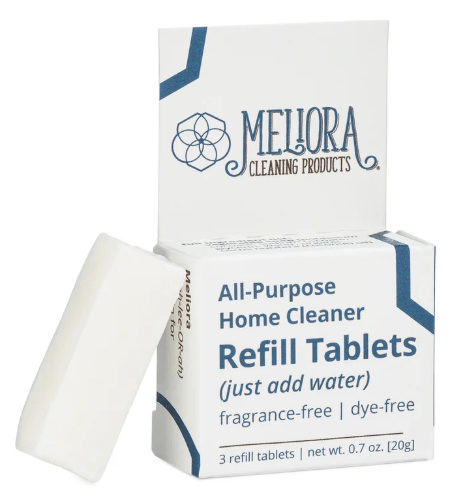
If you think sustainable living is too expensive, Meliora is here to prove you wrong. This Chicago-based company is radically transparent about their ingredients and their pricing.
- The Format: Naked, dry tablets.
- The Packaging: A tiny, fully recyclable and compostable paperboard box.
- The Chemistry: Unscented vegetable soap made with organic coconut oil. It is completely fragrance-free, making it the safest option on this list for households with severe allergies or chemical sensitivities. It is MADE SAFE certified and Leaping Bunny certified cruelty-free.
- The Cost: You get three tablets for roughly $6.00. That equals about $2.00 per 16-ounce bottle of cleaner. That is significantly cheaper than conventional toxic brands.
- The Verdict: The undisputed champion for budget-conscious, toxicity-aware households.
2. Best Overall: Blueland Multi-Surface Cleaner Tablets
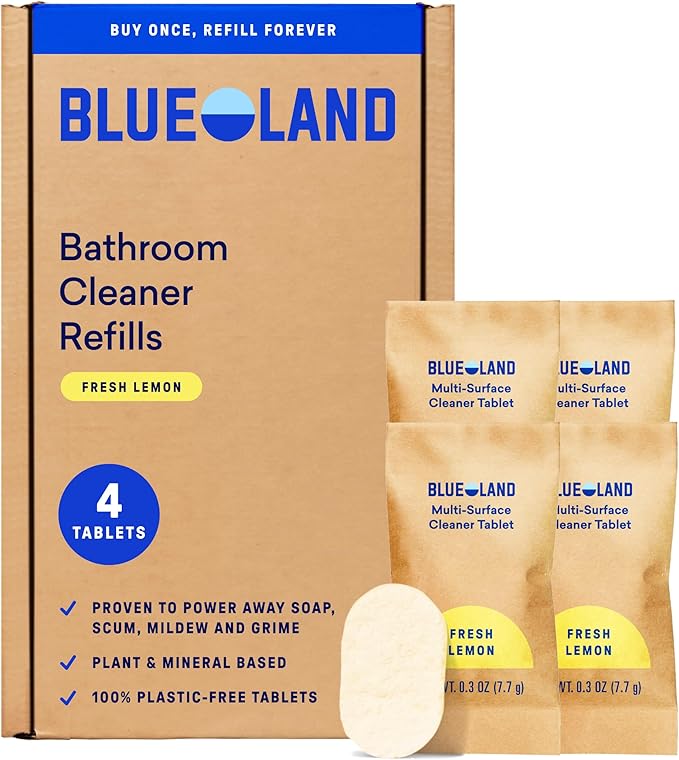
Blueland essentially mainstreamed the cleaning tablet movement. They are a certified B-Corp and have perfected the user experience.
- The Format: A dry tablet about the size of a quarter.
- The Packaging: The tablets arrive in compostable paper wrappers.
- The Chemistry: Plant-based and mineral-based ingredients. They use natural lemon scent. It cuts through daily grease and grime effortlessly. You just drop the tablet into warm water, wait for the fizzing to stop, and start cleaning.
- The Cost: Refill tablets cost around $2.25 to $3.00 each depending on how you buy them.
- The Verdict: The most reliable, widely tested, and universally loved option for transitioning your home. It works brilliantly on sealed stone, wood, and tile.
3. Best Liquid: Grove Co. Multi-Purpose Cleaner Concentrate
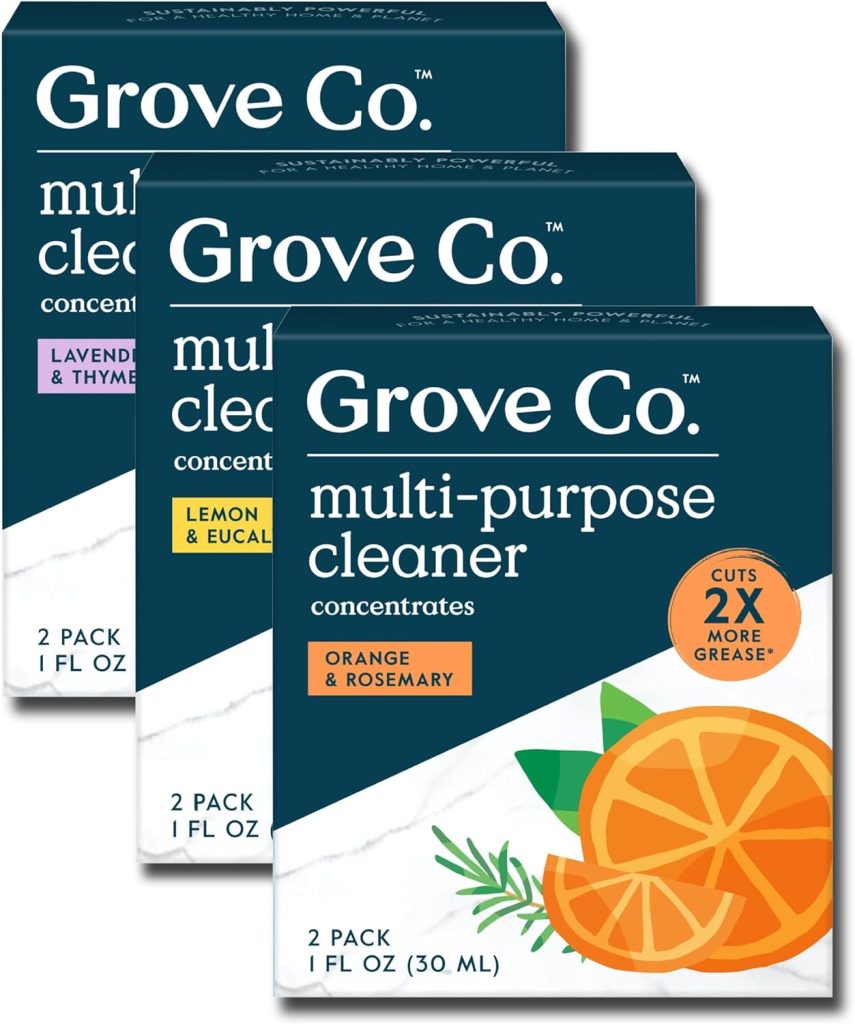
If you prefer a liquid concentrate over a dropping a tablet into your bottle, Grove Co. has completely cornered the market. Boasting the highest Amazon ranking for plastic-free liquid concentrates, it delivers an exceptional clean without the plastic waste.
- The Format: A highly concentrated liquid.
- The Packaging: Tiny 1-ounce glass vials topped with recyclable aluminum caps. Zero plastic pouches or hidden liners.
- The Chemistry: Plant-based surfactants combined with 100 percent natural origin fragrances like Orange & Rosemary or Lemon & Eucalyptus.
- The Prep: Because it is already a liquid, there is no waiting for a tablet to fizz. Just pour the 1-ounce vial into your spray bottle, fill the rest with tap water, shake gently, and you are ready to clean immediately.
- The Verdict: The absolute best choice if you hate waiting for tablets to dissolve and want a top-rated, proven formula with incredible natural scents.
4. Best Scents: Green Llama All-Purpose Cleaner
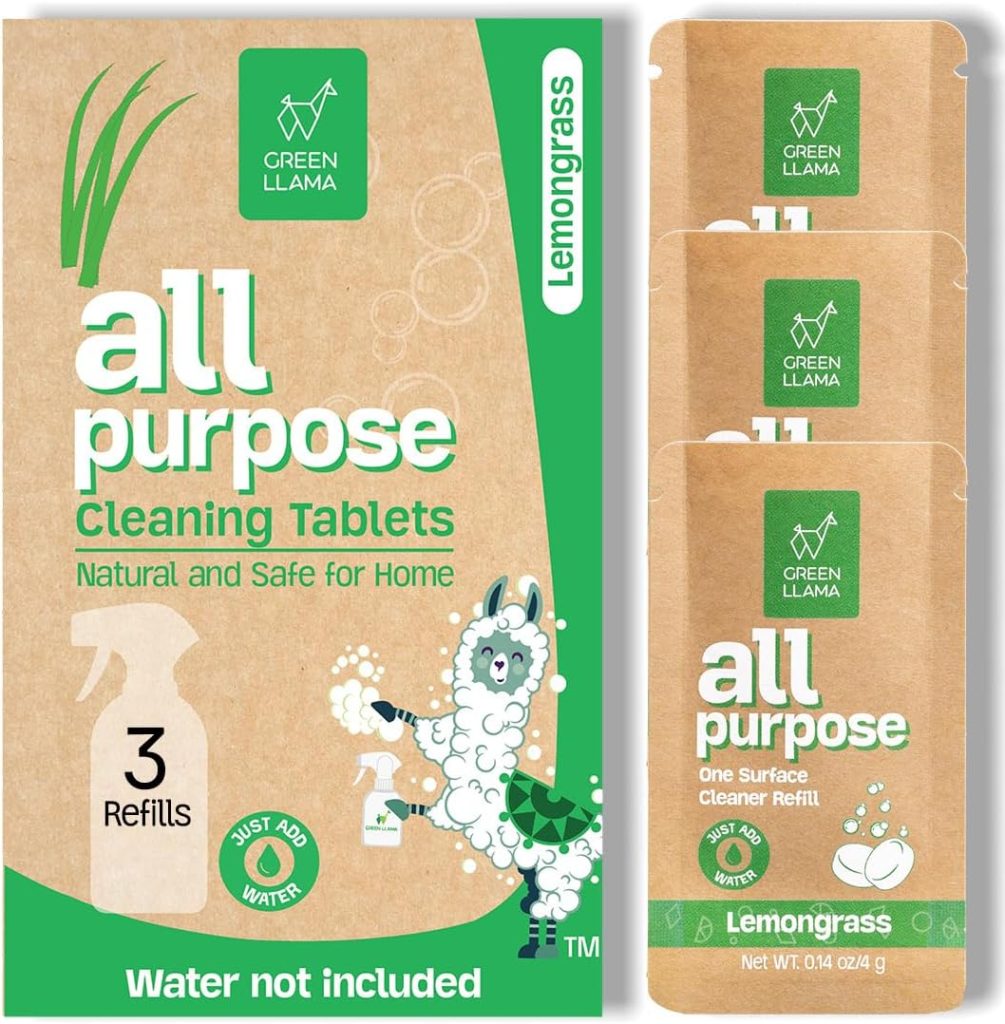
Green Llama recently made the brilliant leap from a loose powder to a highly efficient tablet, completely solving the mess of trying to pour powder into a narrow bottle neck. Their refreshing scents include lemongrass, lavender, and litsea cubeba (a species of evergreen tree).
- The Format: Effervescent tablet.
- The Packaging: Gorgeous, fully compostable paper sachets.
- The Chemistry: A targeted blend of plant-powered surfactants designed specifically to tackle baked-on kitchen grease. It is completely free from parabens, phthalates, and ammonia. Their Lemongrass and Lavender scents are some of the most refreshing on the market.
- The Verdict: A fantastic zero-waste tablet option for households that prioritize beautiful, botanical scents without synthetic chemical fragrances.
5. Investment: etee Probiotic All Purpose Cleaner
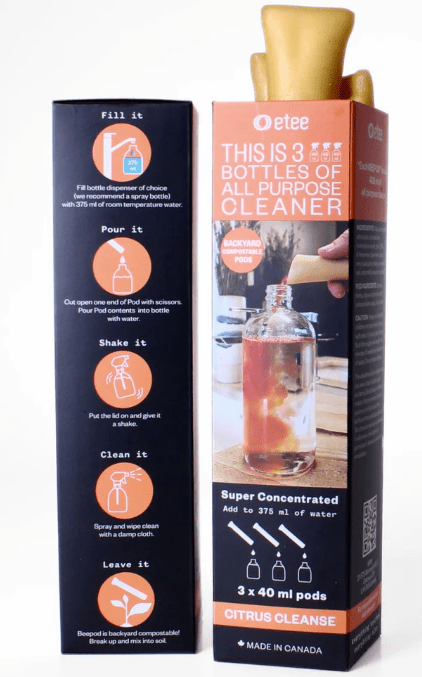
We love brands that push the boundaries of packaging science. The Canadian brand etee completely reinvented how to hold a liquid concentrate without using a plastic bottle or a synthetic PVA film.
- The Format: Liquid concentrate housed inside a natural pod.
- The Packaging: The pod itself is made of natural beeswax, tree resin, and essential oils. It looks like a giant, squishy jellybean. You rip the top off, squeeze the concentrate into your water, and then toss the empty wax pod straight into your backyard compost bin. It is genuinely brilliant.
- The Chemistry: They utilize lab-tested probiotic chemistry. It removes dirt while leaving behind beneficial bacteria to keep surfaces balanced. It features a refreshing citrus scent derived from real lemon and lime oils.
- The Verdict: The ultimate investment for dedicated composters who want actual organic matter left behind instead of plastic. It is a slight premium in price, but the innovation is worth every penny.
The Chemistry of Clean
To understand why a tiny, dry tablet can do the same job as a giant 32-ounce bottle of neon blue liquid, you have to understand how soap actually works.
Water alone is terrible at cleaning up grease. Oil and water naturally repel each other. If you wipe a greasy stovetop with a wet rag, you just push the grease around.
To bridge the gap between oil and water, you need a surfactant. Surfactants are magical little molecules with a split personality. One end of the molecule loves water (hydrophilic). The other end hates water and loves oil (hydrophobic).
When you spray a cleaner onto a greasy counter, the hydrophobic tails of the surfactants stab directly into the grease. The hydrophilic heads point outward, grabbing onto the water. When you wipe the counter with a cloth, the water pulls the surfactant away, and the surfactant drags the grease with it.
That is all cleaning is. You do not need a massive plastic bottle of liquid to achieve this. You just need the surfactants. Everything else is filler.
By purchasing a dry concentrate or a tablet, you are buying the raw, active surfactants. You supply your own water from your kitchen tap. You cut out the plastic bottle, the heavy shipping, and the carbon emissions.
The Toxic Loophole Under Your Sink
The plastic waste is only half of the problem. The secondary issue is the toxicity of conventional sprays.
We have been conditioned by heavy marketing to believe that a clean house smells like Lemon Fresh or Spring Breeze. But clean does not actually have a scent. Clean is simply the absence of dirt and bacteria. That lemon scent is an engineered chemical illusion.
The Fragrance Problem
In the United States, the ingredient labeled as fragrance on a bottle of cleaner is legally protected as a trade secret. A manufacturer does not have to tell you what chemicals make up that scent.
According to the Environmental Working Group (EWG), a single synthetic fragrance can be made up of hundreds of different chemical compounds. Many of these contain phthalates. Phthalates are used to make scents last longer in the air. They are also known endocrine disruptors, meaning they can interfere with your hormones. Every time you spray that conventional cleaner, you are misting these compounds onto food preparation surfaces and into the indoor air.
The Quat Dilemma
If your cleaner promises to kill 99.9 percent of germs, it likely contains Quaternary Ammonium Compounds, commonly referred to as quats.
Quats are incredibly harsh antimicrobials. While they do kill bacteria, emerging science shows they are not necessary for daily household cleaning. The overuse of quats is contributing to the rise of antibiotic-resistant bacteria. Furthermore, quats are notorious respiratory irritants. Studies have shown that regular exposure to quats can trigger asthma and skin dermatitis.
You do not need to scorch the earth to clean up a spilled cup of coffee or a sticky countertop. A high-quality, non toxic plastic free all purpose cleaner relies on natural, plant-based surfactants that physically remove dirt and bacteria from the surface rather than trying to chemically annihilate them.
The Anatomy of a Reusable Spray Bottle
Before we talk about the best cleaning concentrates on the market, we need to talk about the vessel.
If you want to transition to a zero-waste cleaning routine, you need a bottle. The most sustainable bottle is the one you already own. If you have an empty plastic spray bottle under your sink, do not throw it away. Rinse it out thoroughly and reuse it. Keeping existing plastic in circulation is better than buying something new.
But if you are starting from scratch and need to purchase a vessel, here is what you should look for.
The Generic Bottle Recommendation
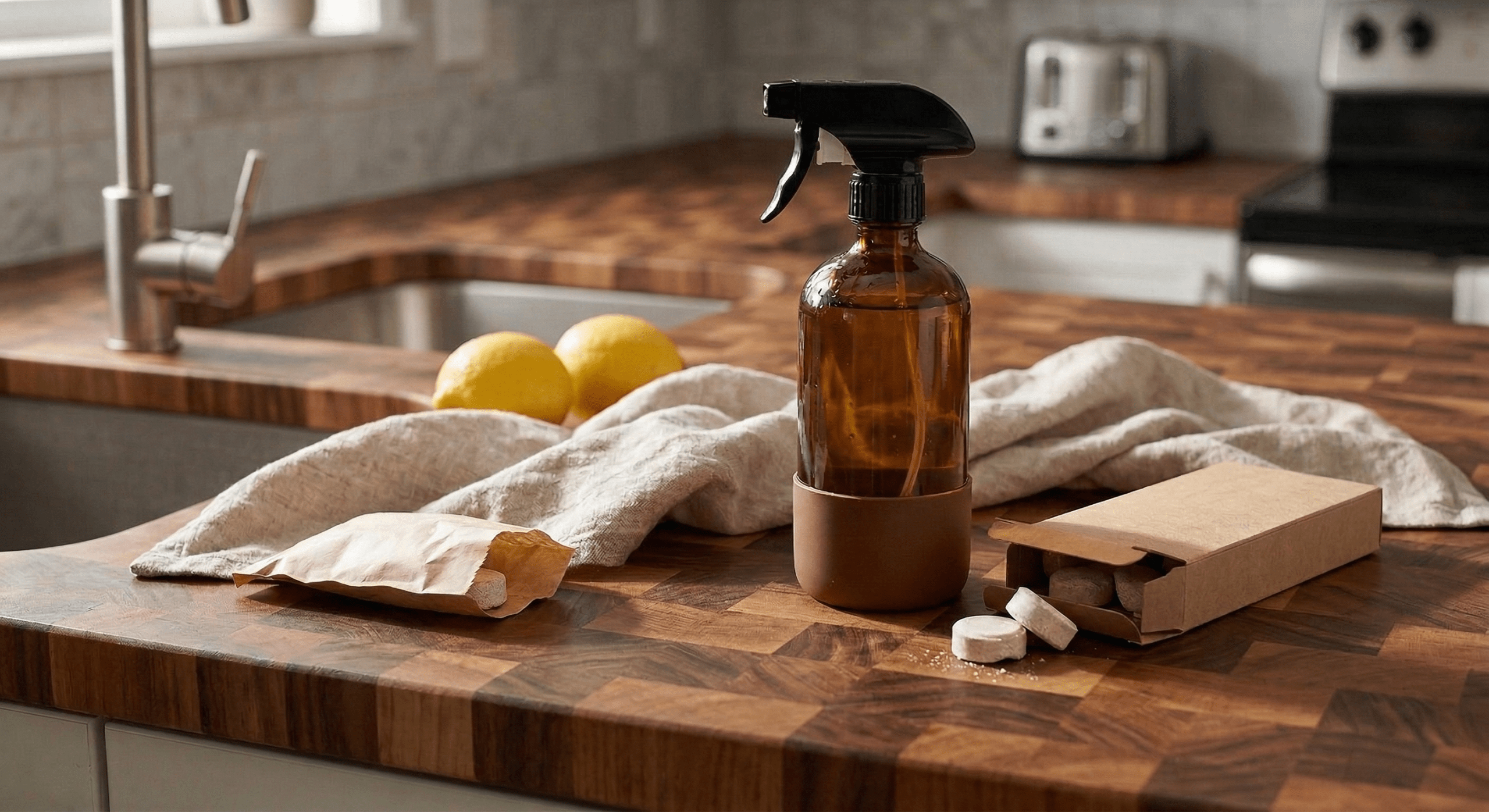
Skip the heavily branded, proprietary bottles that lock you into a specific company’s ecosystem. Buy a generic 16-ounce amber glass spray bottle with a silicone protective boot.
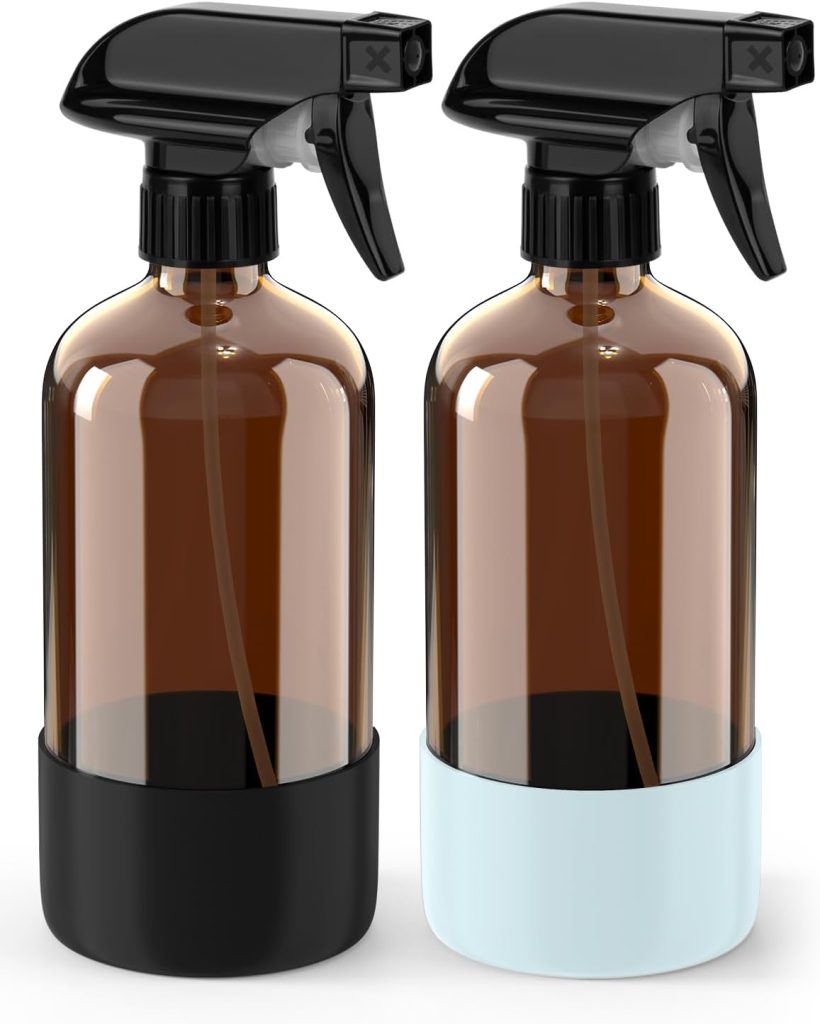
- Why Amber Glass? Dark glass protects the liquid inside from UV light. This is especially important if you eventually experiment with adding your own natural essential oils to your cleaning routine, as light can degrade the oils. Glass is endlessly recyclable and will never leach chemicals into your cleaning solution.
- Why the Silicone Boot? Glass is slippery when wet. A silicone sleeve or boot at the base of the bottle prevents it from shattering if you accidentally drop it on a tile floor.
- The Uncomfortable Truth About Triggers. We must be entirely honest here. A 100 percent plastic-free trigger sprayer does not exist for consumer household use. The internal springs, tubes, and nozzles require complex, flexible components that are currently made of plastic. The goal of zero-waste living is progress over perfection. By purchasing one highly durable trigger sprayer and using it for a decade alongside glass bottles and naked tablets, you are eliminating hundreds of single-use plastic bottles from your life.
How to Transition Without the Guilt
If you look under your sink right now and see a graveyard of half-empty plastic bottles, take a deep breath.
Do not throw them in the trash. The most environmentally destructive thing you can do is waste a usable product. Use up your conventional cleaners. Finish the bottles.
While you are using them up, order a generic glass spray bottle and a box of Meliora or Blueland tablets. Have them waiting in the wings. When your last plastic bottle of neon blue liquid finally runs dry, rinse it out and recycle it.
Then, fill your new glass bottle with warm tap water, drop in a plastic-free tablet, and watch it fizz.
You just eliminated a massive source of household plastic and removed toxic synthetic fragrances from your breathing air. It is a small action, but it is a permanent upgrade to your health and the health of the planet.
Progress over perfection. One bottle at a time.
10 Frequently Asked Questions About Plastic-Free Cleaning
1. What is the difference between a cleaning tablet and regular liquid cleaner? The only difference is water. Conventional liquid cleaners are up to 95 percent water mixed with active cleaning ingredients (surfactants). A cleaning tablet is simply the active surfactants compressed into a dry form. You add the water yourself at home, which eliminates the need for heavy plastic shipping jugs.
2. Are dissolving cleaner tablets wrapped in plastic? Some are, but the best ones are not. Many mainstream “eco” brands wrap their pods in Polyvinyl Alcohol (PVA), which is a water-soluble plastic. We recommend naked tablets (like Meliora or Blueland) that use compostable paper packaging, or wax pods (like etee) to ensure a genuinely plastic-free experience.
3. Do natural, non-toxic cleaners actually kill germs? Natural cleaners rely on surfactants to physically lift and wash away dirt, grease, and bacteria from surfaces rather than chemically killing them with harsh pesticides like bleach or quats. For daily household messes, physically removing the bacteria with soap and water is highly effective and much safer for indoor air quality.
4. Why is the word fragrance on a cleaning label a red flag? In the United States, fragrance formulations are protected as trade secrets. A brand can use the single word fragrance to hide hundreds of synthetic chemicals, including phthalates, which are known endocrine disruptors. Non-toxic cleaners either use no scent at all or disclose specific, natural essential oils.
5. Can I use a plastic-free all-purpose cleaner on marble or granite? Yes, but you must check the ingredients. True all-purpose cleaners made with gentle vegetable soaps (like Meliora) or mild plant surfactants are safe for sealed stone. However, if a natural cleaner relies heavily on citric acid or vinegar, it can etch and ruin natural stone. Always spot-test a hidden area first.
6. Why do you recommend a silicone boot for glass spray bottles? Glass is infinitely recyclable and non-toxic, but it is fragile. A silicone boot or sleeve slides over the bottom of a glass bottle. If the bottle slips out of your wet hands and hits a hard surface like a kitchen tile or quartz countertop, the silicone absorbs the shock and prevents shattering.
7. Is it possible to find a 100 percent plastic-free spray trigger? Currently, no. The internal mechanisms of a spray trigger require highly flexible tubes, gaskets, and springs that are currently made of durable plastics. The zero-waste strategy is to buy a high-quality trigger once and reuse it for years with glass bottles and refill tablets, drastically reducing overall plastic consumption.
8. Do I need to use hot water to dissolve cleaning tablets? Warm water is best. Cold water will eventually dissolve a cleaning tablet, but it takes much longer. Boiling hot water can create excess pressure inside a closed spray bottle. Fill your bottle with warm tap water, drop in the tablet, and wait until the fizzing completely stops before screwing on the spray top.
9. How long does a mixed bottle of natural cleaner last? Because natural cleaners do not contain harsh synthetic preservatives, they have a slightly shorter shelf life once mixed with water. Most brands recommend using the mixed solution within 6 to 12 months. If you notice the liquid becoming cloudy or developing an off odor, simply dump it out, rinse the bottle, and drop in a new tablet.
10. What is the cheapest zero-waste cleaning option? The absolute cheapest option is mixing standard white vinegar and water, but it smells harsh and cannot be used on natural stone. For commercial products, Meliora’s All-Purpose Home Cleaner tablets are incredibly cost-effective. When bought in a 3-pack, they break down to roughly $2.00 per full 16-ounce bottle of cleaner.