The Hidden Tubing: Why Plastic-Free Coffee Makers Are Nearly Impossible to Find (And What to Buy Instead)
Your morning brew hits 200°F. Do you know what else does? The 12 inches of industrial tubing hidden inside your “stainless steel” coffee maker.
If you’ve been hunting for a truly plastic-free automatic coffee maker, you’ve likely hit a wall. You find a machine with a sleek metal body and a glass carafe, but the Amazon reviews whisper about a chemical smell. Or you find a “BPA-Free” sticker and wonder if that’s actually safe.
Here is the hard truth that most green living sites won’t tell you: A 100% plastic-free automatic drip coffee maker is extremely hard to find.
To move water from a reservoir up to a showerhead against gravity, machines need pumps and tubing. In 99% of machines (even the expensive ones) that tubing is silicone or PVC. However, that doesn’t mean you’re doomed to drink microplastics. It means you need to stop looking for perfection and start looking for minimal contact.
We tore down the specs on the top non-toxic brewers to find out which ones actually keep your coffee clean.
The Chemistry of the Brew: Why Heat Matters
Plastic at room temperature is relatively stable. Plastic subjected to hydrothermal aging (the scientific term for getting blasted with hot water daily) is a different story.
When you heat plastic, two critical things happen:
- Leaching: Additives used to stabilize the plastic (like plasticizers) migrate into the water. A study from the University of Cincinnati found that when polycarbonate bottles were exposed to boiling water, the rate of BPA release increased by up to 55 times compared to room temperature.
- Degradation: Over time, the polymer chains break down, shedding micro-particles into your cup.
Most cheap coffee makers ($20–$100 range) use PVC or lower-grade Polypropylene for their internal tubing. Even if the water tank is “BPA-Free,” that boiling water is traveling through a plastic tunnel before it hits your beans.
The “BPA-Free” Trap
Do not trust the “BPA-Free” label. It simply means the manufacturer didn’t use Bisphenol A. They likely used Bisphenol S (BPS) or Bisphenol F (BPF) instead. Research published in Environmental Health Perspectives suggests these alternatives often have similar endocrine-disrupting effects to the chemical they replaced.
The Goal: We aren’t looking for a sticker. We are looking for glass, steel, and gravity.
Note: If you are willing to do the work manually, you can achieve 100% plastic-free brewing easily. Check out our guide to Manual Pour Overs and Ceramic Drippers here, but if you need a machine that does the work for you, keep reading.
The Investigation: Top “Low-Tox” Automatic Brewers
We’ve categorized these based on your tolerance for plastic and your need for convenience.
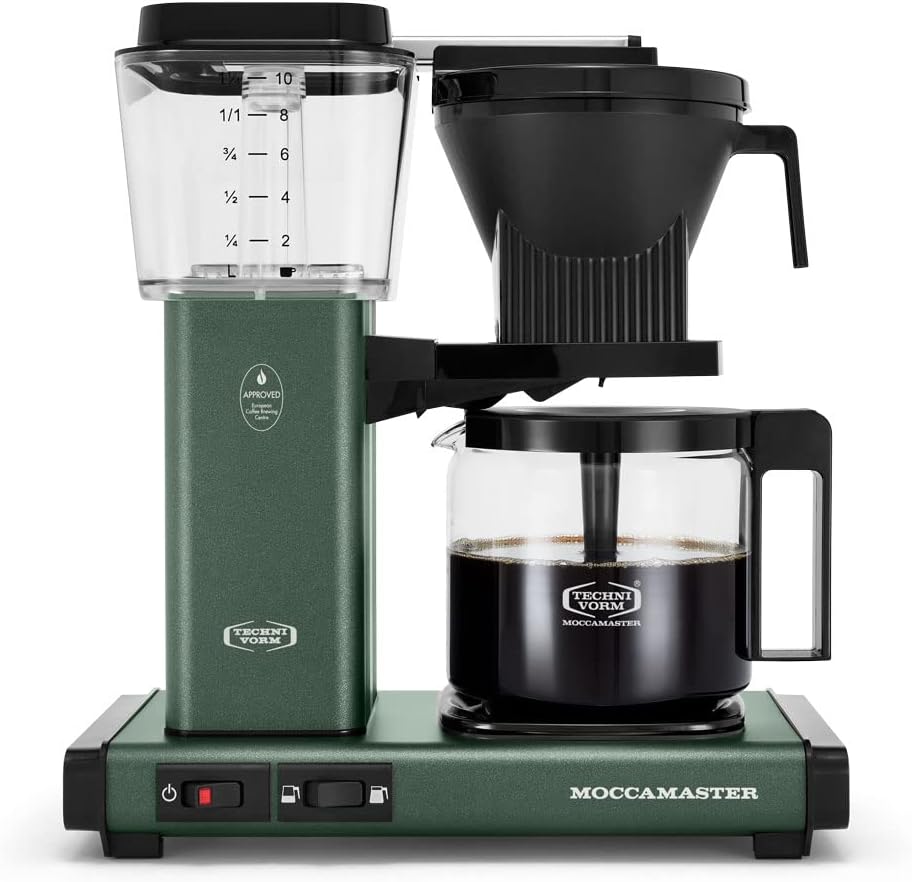
1. The Best Automatic Compromise: Technivorm Moccamaster
Category: Investment / Best Overall
If you refuse to give up the convenience of a button-press brew, the Technivorm Moccamaster is the gold standard. It is handmade in the Netherlands and built like a tank.
- The Internal Anatomy: Water leaves the reservoir (plastic) and enters a copper boiling element (not plastic). It boils instantly and travels up a glass transfer tube (encased in the reservoir) before exiting through a stainless steel shower arm.
- Where the Plastic Is: The water reservoir itself is made of high-grade plastic. The brew basket is also plastic (though a stainless steel insert is available from third parties).
- Why We Recommend It: Technivorm uses phthalate-free plastics that adhere to strict European manufacturing standards. Because the water is heated in the copper element and moves quickly, the “hot contact time” with plastic is significantly lower than in standard machines where water boils inside a plastic chamber.
- Pro Tip: To make this more plastic-free, you can remove the plastic brew basket and hold a ceramic pour-over dripper (like a Hario V60) under the stainless steel spray arm while it brews.
Pro Tip: If you buy the KBGV Select model, you are getting a machine that lasts 20+ years, keeping cheap plastic machines out of the landfill.
2. The “Aesthetic” Upgrade: Ratio Eight
Category: Luxury / Design
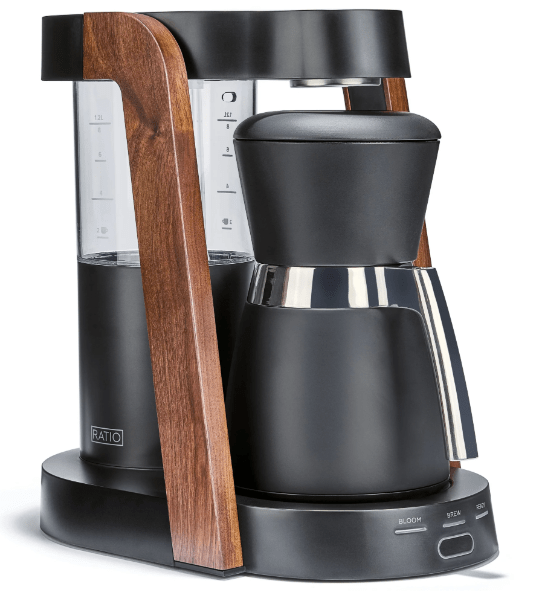
The Ratio Eight is designed to look like a piece of art, and it gets closer to the plastic-free dream than almost anyone else by making the plumbing visible.
- The Good: The hot water lines are made of borosilicate glass—you can actually see the water moving through them. The body is die-cast aluminum. It uses a stainless steel showerhead.
- The Bad: The cold water tank is still a “BPA-free copolymer” (plastic).
- The Reality Check: It is significantly more expensive than the Moccamaster. You are paying for the glass internal tubing. If the idea of any hidden tubing keeps you up at night, this is your upgrade.
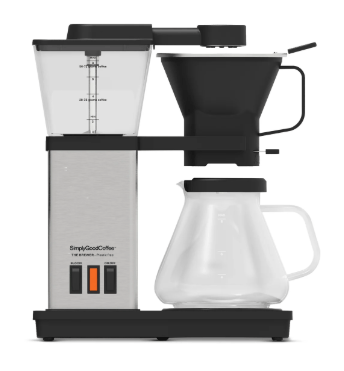
3. The Modern Challenger: The Brewer Plastic Free
Category: Marketed as Plastic Free
This machine was engineered specifically to answer the complaints about the Technivorm. It offers the automation of a drip machine with the material purity of a manual pour-over.
- The Internal Anatomy: Unlike the Moccamaster, The Brewer features a borosilicate glass water reservoir. The water travels from the glass tank into a stainless steel heating unit and exits through a stainless steel showerhead into a stainless steel brew basket [^5].
- Where the Plastic Is: The machine uses medical-grade silicone seals (safe, heat-stable) to connect the glass and steel parts. There are plastic “insulators” (black parts) to protect your hands from heat, but they do not touch the water path.
- The Trade-Off: Unlike the Moccamaster (made in the Netherlands), this machine is manufactured in China. Additionally, while independent lab testing confirms it meets Gold Cup standards for temperature and extraction, it is not yet officially listed on the SCA Certified Home Brewer registry [^5].
The “Nuclear Option”: 100% Plastic-Free (Manual)
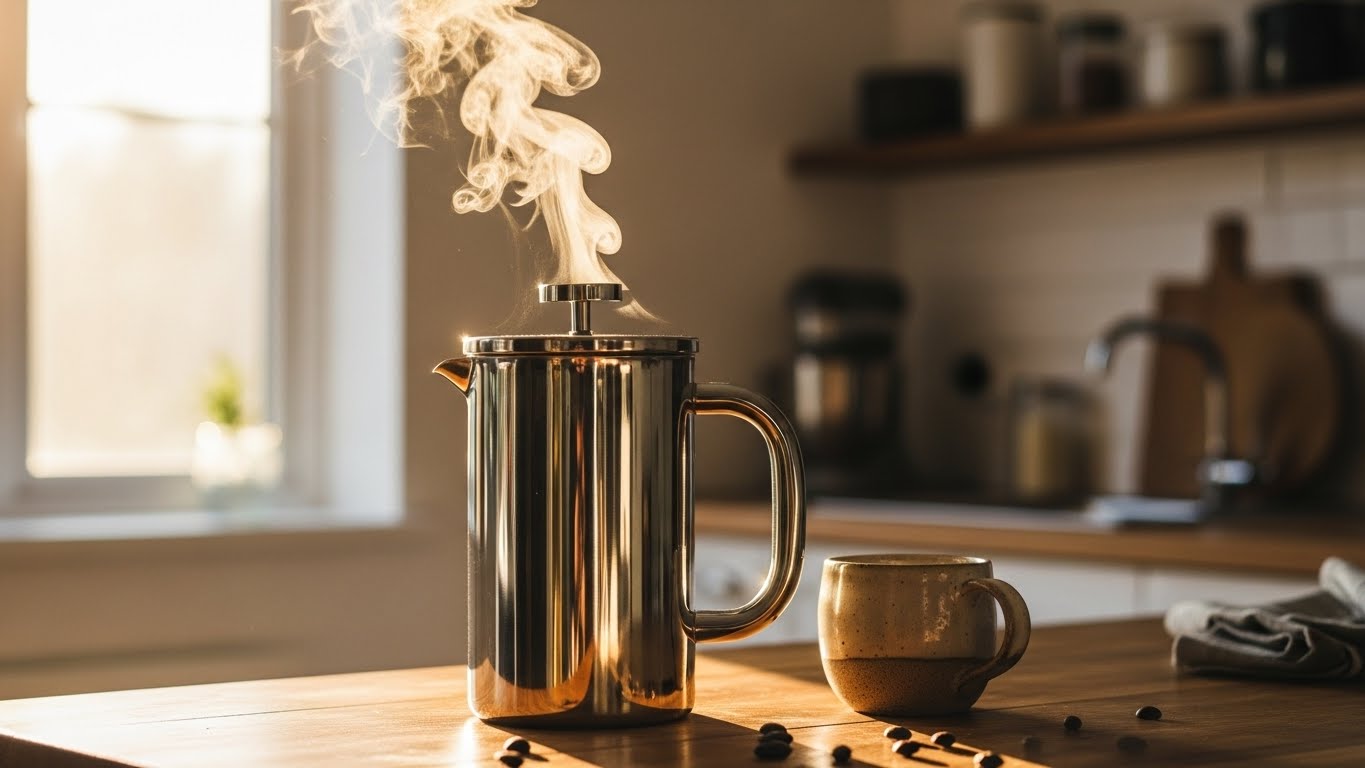
If you read the above and thought, “95% isn’t good enough,” you have to be the machine. A stainless steel French Press is the only way to guarantee a toxin-free brew.
The Frieling Double-Walled Stainless Steel French Press
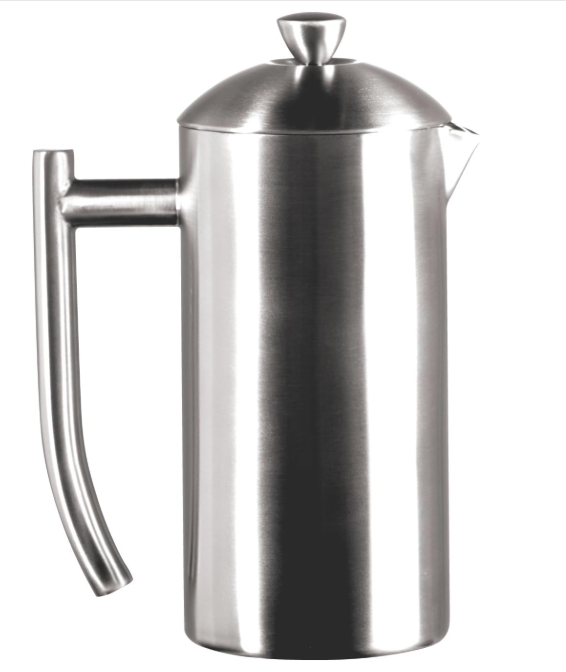
Category: Budget / Purist The Verdict: 100% Plastic-Free
Unlike glass presses (which often have plastic lids or plungers that touch the hot coffee), the Frieling is solid 18/10 stainless steel.
- Why: Zero plastic parts. Zero breakage risk. Zero leaching.
- The Trade-off: It’s manual. You have to boil the water (in a stainless steel kettle) and plunge it yourself.
- The Taste: Because it uses a metal mesh filter rather than paper, you get more natural oils in your cup. The result is a richer, heavier body than drip coffee.
The “Greenwashing” Watchlist: What to Avoid
When shopping for alternatives, watch out for these traps:
- “Stainless Steel Exterior”: A shiny metal shell usually hides a cheap black plastic tank and PVC tubing. Knock on the side—if it sounds hollow/plastic, it probably is.
- Pod Machines: There is no such thing as a plastic-free pod machine. You are brewing hot water inside a plastic cup. It is the worst-case scenario for leaching.
- Glass Carafes with Plastic Lids: Many “glass” coffee makers pour the hot coffee directly through a plastic lid spout. Always remove the lid before pouring if you can.
Final Thoughts: Progress Over Perfection
If you have a busy family and need 10 cups of coffee ready at 6 AM, the Technivorm Moccamaster is a safe, scientifically sound choice that minimizes toxicity. It removes the cheap PVC tubing found in standard makers and replaces the heating element with copper.
If you are brewing for one and want total purity, get a Frieling French Press.
Don’t let the fear of a single plastic gasket stop you from making a better choice than the $20 all-plastic brewer sitting at the grocery store.
What’s your brewing setup? Did you ditch the automatic machine for a manual one? Let us know in the comments.
Frequently Asked Questions (FAQs)
Q: Does the Technivorm Moccamaster have plastic parts? A: Yes. The water reservoir and the brew basket are made of high-quality, BPA/BPS/BPF-free plastics. However, the heating element is copper and the outlet arm is stainless steel. The water travels from the tank (cold) -> copper heater -> glass tube -> steel arm -> coffee.
Q: Is silicone safe for coffee makers? A: Silicone is generally considered safer than plastic because it is thermally stable and does not contain plasticizers like phthalates. However, it is still a synthetic polymer. If you want 100% purity, stainless steel or glass is preferred.
Q: How do I remove the plastic taste from my new coffee maker? A: Run a cycle with a mixture of white vinegar and water (1:1 ratio), followed by two cycles of plain water. If the taste persists, it may be the quality of the internal tubing, which cannot be “cleaned” away.
Q: What is the best kettle for plastic-free coffee? A: Look for an electric gooseneck kettle with a 100% stainless steel interior (check that there is no plastic water level window inside). Brands like Fellow or generic stainless steel stovetop kettles are great options.