Steeping in Science: The 11.6 Billion Microplastics in Your Tea Bag
You perform the ritual every morning. You boil the water. You select your favorite Earl Grey or Green Tea blend. You watch the steam rise, feeling virtuous about choosing a beverage packed with antioxidants and devoid of sugar. It is the ultimate wellness habit.
But according to chemical engineering researchers, you might also be brewing a hot cup of liquid polymer.
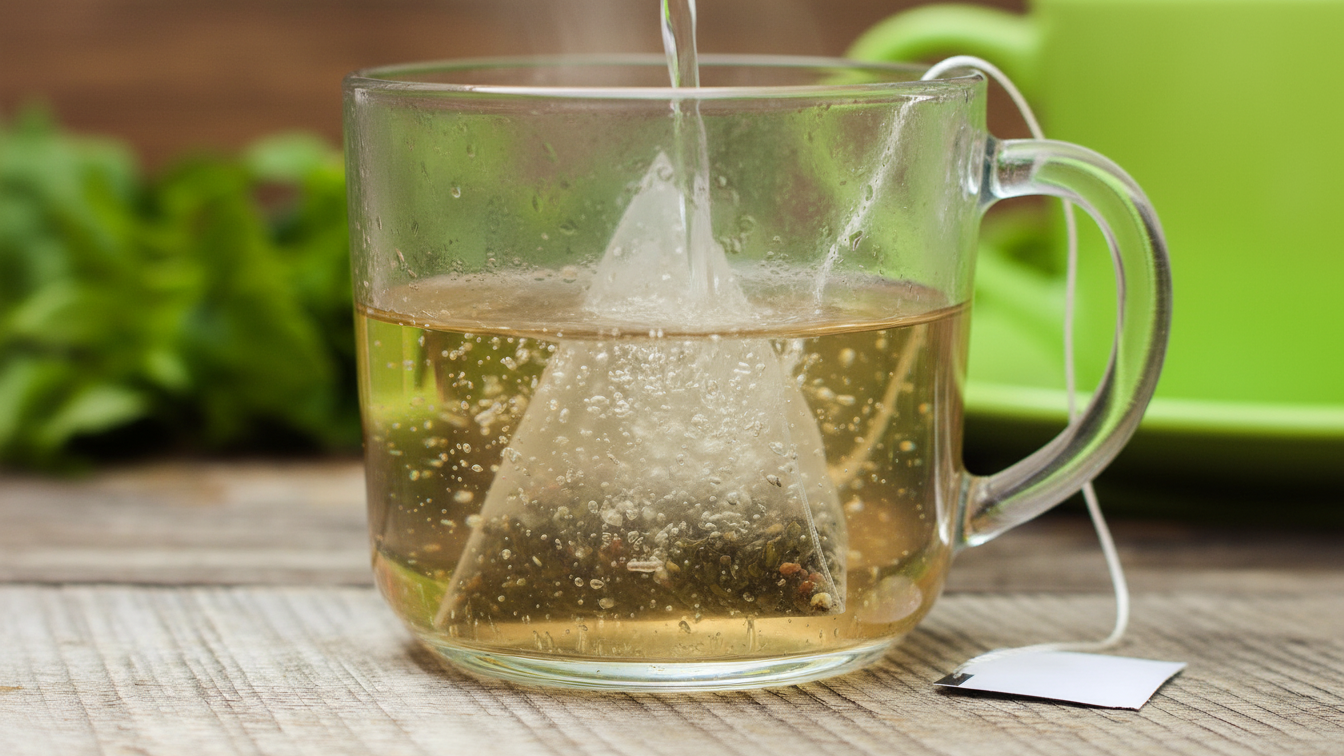
For years, we looked at plastic pollution as an ocean problem or a litter problem. We worried about turtles and straws. We didn’t realize that by dunking a “silken” pyramid bag into 200°F water, we were conducting a high-heat extraction experiment in our own kitchens.
The tea industry has a dirty secret wrapped in a pristine white package. Whether it is the fancy mesh pyramid or the humble paper square, plastic is hiding in your mug.
Here is the science behind why your tea bag belongs in the trash (or doesn’t), why “paper” isn’t always paper, and the simple tools you need to reclaim your morning ritual.
The McGill Study: A Wake-Up Call for Tea Drinkers
In 2019, a team of researchers at McGill University in Montreal decided to test a hunch. They purchased four different commercial teas packaged in plastic teabags (often marketed as “silken” or mesh) and removed the tea leaves to test the bags themselves.
They submerged the empty bags in water heated to 95°C (203°F)—standard brewing temperature.
The results were not just bad. They were astronomical.
The study, published in Environmental Science & Technology, found that a single plastic teabag released approximately 11.6 billion microplastics and 3.1 billion nanoplastics into a single cup.
Read the Data:Plastic Teabags Release Billions of Microparticles and Nanoparticles into Tea (ACS Publications)
To put that number in perspective:
- That is orders of magnitude higher than plastic loads found in other foods.
- Table salt, which is often cited as a source of microplastics, contains relatively trace amounts compared to this “tea soup.”
- Nanoplastics are small enough to potentially penetrate human cells.
The heat is the catalyst. Plastics that are stable at room temperature begin to degrade and shed structure when hit with near-boiling water. We are essentially cooking the plastic and drinking the broth.
The Three Types of “Hidden” Plastic
You might be looking at your box of tea right now thinking, I’m safe. My tea bags look like paper, not that fancy mesh stuff.
Not so fast. The industry uses plastic for two reasons: durability (so the bag doesn’t disintegrate in hot water) and sealing (so the tea doesn’t fall out).
1. The “Silken” Pyramid (PET or Nylon)
These are the premium bags. They feel smooth, look expensive, and are almost exclusively made of food-grade nylon or polyethylene terephthalate (PET).
These were the primary offenders in the McGill study mentioned above. While they have a high melting point, “melting” isn’t the issue. The issue is shedding on a microscopic level. The structural integrity of the mesh breaks down just enough to release billions of particles.
2. The Heat-Sealed “Paper” Bag (Polypropylene)
Take a look at a standard square tea bag. Does it have a staple? If it is crimped shut with heat pressing rather than a staple or a fold, it almost certainly contains plastic.
Paper does not melt. To get two pieces of paper to fuse together, manufacturers add a layer of polypropylene (PP) fibers. When heated, the plastic melts and glues the paper shut. This means even your “natural” paper bag is effectively a plastic-paper hybrid (often ~20-30% plastic) that cannot be composted and leaches microplastics when brewed.
3. The Epichlorohydrin Issue
Even if a paper bag is folded (origami style) and staple-free, the paper itself needs “wet strength.” Regular paper turns to mush in water. To prevent this, paper is often treated with epichlorohydrin, a chemical mainly used in the production of epoxy resins.
While the EPA monitors epichlorohydrin levels in drinking water, it is classified as a probable human carcinogen. The concern is that when hot water hits the bag, this chemical can hydrolyze to form 3-MCPD, another carcinogen. It is a chemical cocktail we simply do not need in our Chamomile.
Greenwashing Alert: The Bioplastic Trap
Enter the “Corn Starch” bag.
As consumers got wise to microplastics, brands pivoted to PLA (Polylactic Acid). This is a plastic derived from renewable biomass like corn starch or sugar cane. You will see terms like “Biodegradable mesh” or “Plant-based filters.”
Here is the reality check: PLA is still a polymer.
- It does not rot in your backyard: PLA requires specific industrial composting conditions (temperatures sustained above 131°F/55°C) to break down. A 2024 study led by the University of Plymouth tested “biodegradable” tea bags by burying them in soil for seven months. The results were damning: bags made solely of PLA remained “completely intact.”
- It harms soil health: The same study found that the presence of these PLA discs in the soil had tangible negative effects on earthworms (Eisenia fetida), resulting in up to 15% greater mortality and a reduction in reproduction rates.
- Monoculture Crops: Industrial corn farming is resource-intensive, requiring significant amounts of nitrogen fertilizers which contribute to waterway pollution.
If the goal is to be “Plastic Free,” replacing a petroleum polymer with a corn polymer that kills earthworms is a lateral move, not a solution.
The Solution: Loose Leaf is Luxury, Not Labor
The zero-waste movement often feels like a sacrifice. You have to give up convenience for the sake of the planet.
Switching to loose leaf tea is the exception.
This is one of the few swaps where the eco-friendly option is objectively superior in taste, cost, and quality.
- Flavor Profile: Tea leaves need room to expand (the “agony of the leaves”) to release flavor. Bags compress the dust and fannings (low-grade tea), resulting in a bitter, one-note brew. Loose leaf offers the full, complex profile.
- Cost Per Cup: You pay a massive premium for the bagging machinery. Buying high-quality loose tea is almost always cheaper per cup than bagged tea of similar quality.
- Zero Waste: Tea leaves are 100% compostable. They feed your garden. The loop is closed.
The Gear: The Best Loose Leaf Tea To Remove Microplastics in Your Tea
You do not need a complex ceremony. You just need a way to keep the leaves out of your teeth. Here are the best plastic-free tools to democratize your tea experience, categorized by your lifestyle.
Budget Pick: The Stainless Steel Basket Infuser
Forget the cute “tea balls” on a chain. They are fiddly, hard to clean, and don’t give the leaves enough room to expand. You want a basket infuser.
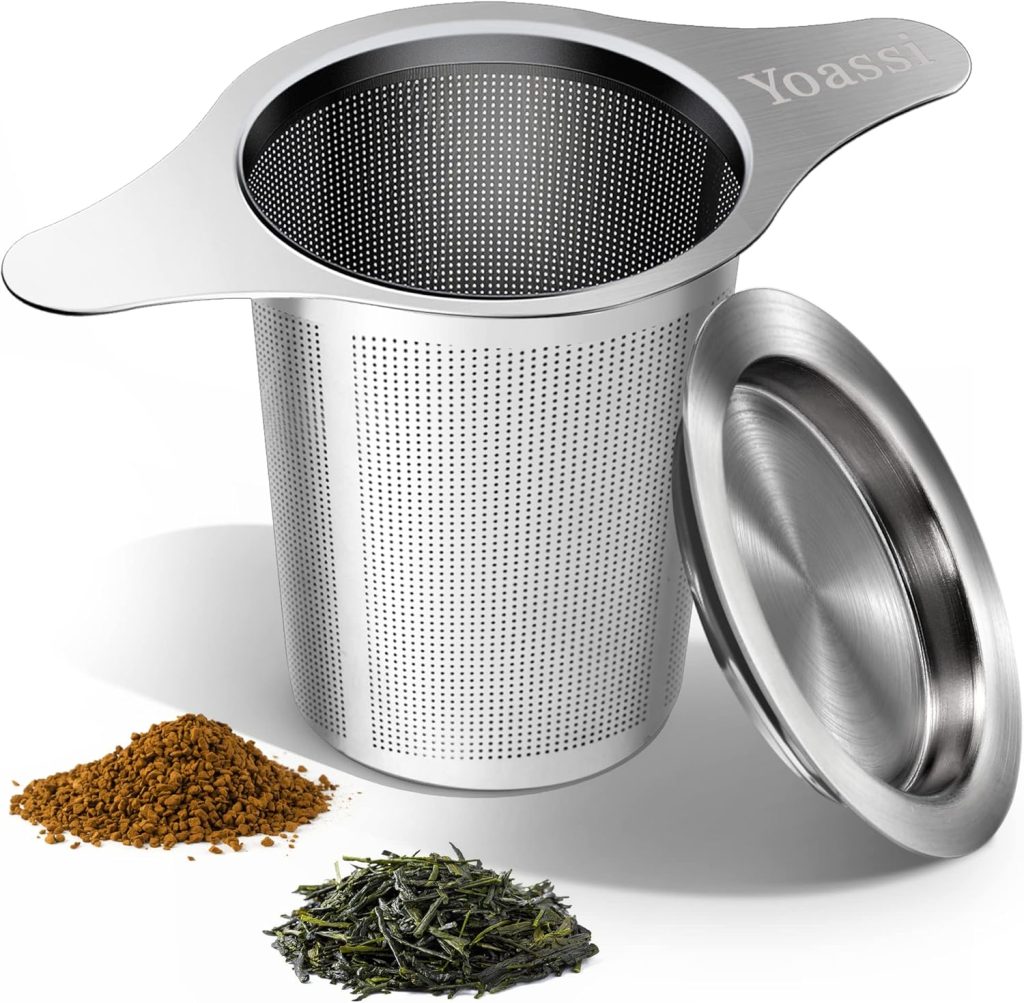
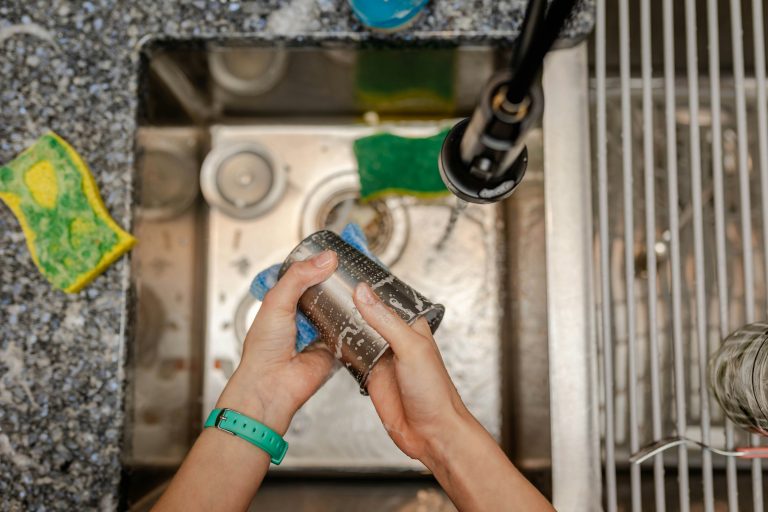
This sits directly inside your existing mug. It has fine laser-etched holes that keep even tiny Rooibos needles inside while letting water flow freely.
- Why we love it: It is indestructible. It fits almost any mug. It is dishwasher safe.
- Material: 100% 304 Stainless Steel.
- The Investment: Usually under $15.
- The Verdict: If you buy one thing from this article, make it this. It solves the problem instantly.
Best Overall: The Plastic Free French Press
You might already have one for coffee. If so, scrub it out (coffee oils ruin tea) and repurpose it.
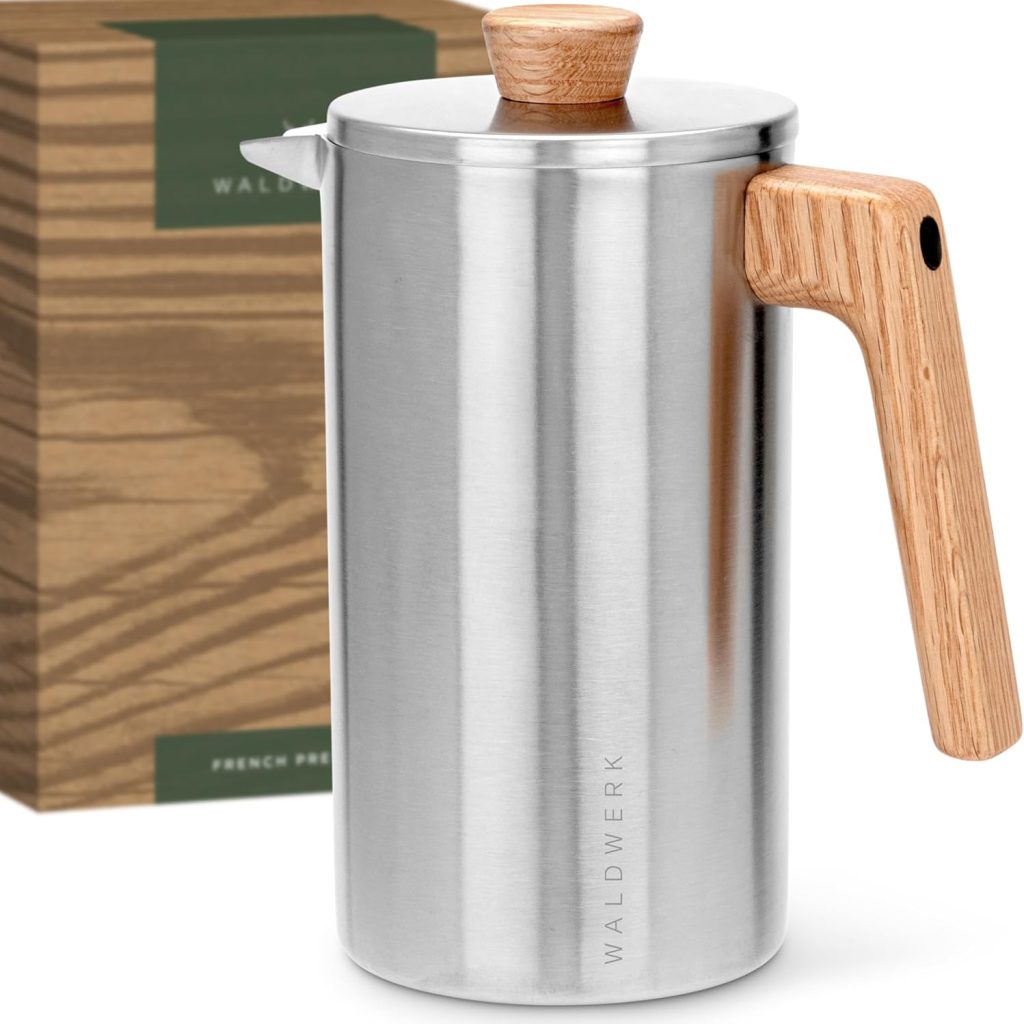
The French Press is arguably the best tea brewing device in existence. The leaves have total freedom to float and steep, maximizing flavor extraction. When you plunge (gently!), you separate the liquid perfectly.
- The caveat: Ensure your press is glass and stainless steel. Avoid plastic lids or plungers where the hot water touches plastic components.
- Brand Recommendation: Look for brands that offer plastic-free internal mechanisms.
- Pro Tip: Don’t let the tea sit in the press after plunging, or it will turn bitter. Pour it all out immediately.
Investment Choice: The Glass Teapot with Steel Infuser
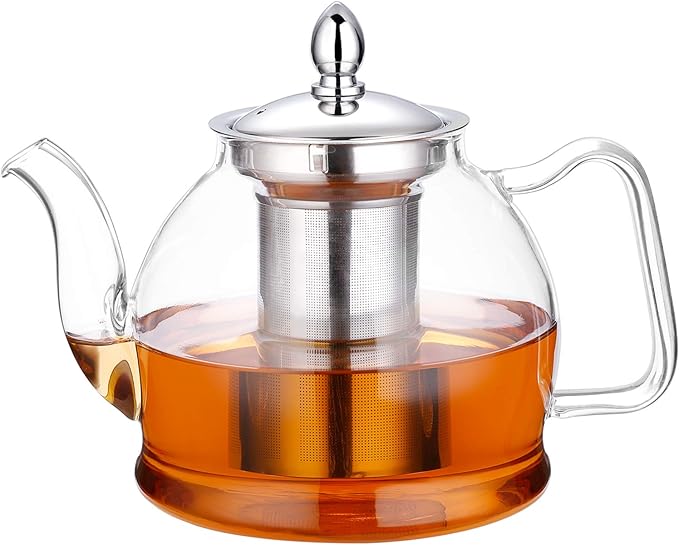
If you want the aesthetic ritual, a borosilicate glass teapot is the move. Being able to see the color of the tea change helps you judge steep time without a timer. There are so many glass teapots to choose from but this one is my favorite.
- What to look for: A removable stainless steel coil or basket in the spout.
- Durability: Borosilicate glass is heat resistant, but it is still glass. This is for the mindful brewer, not the rush-out-the-door commuter.
The Organic Cotton Option
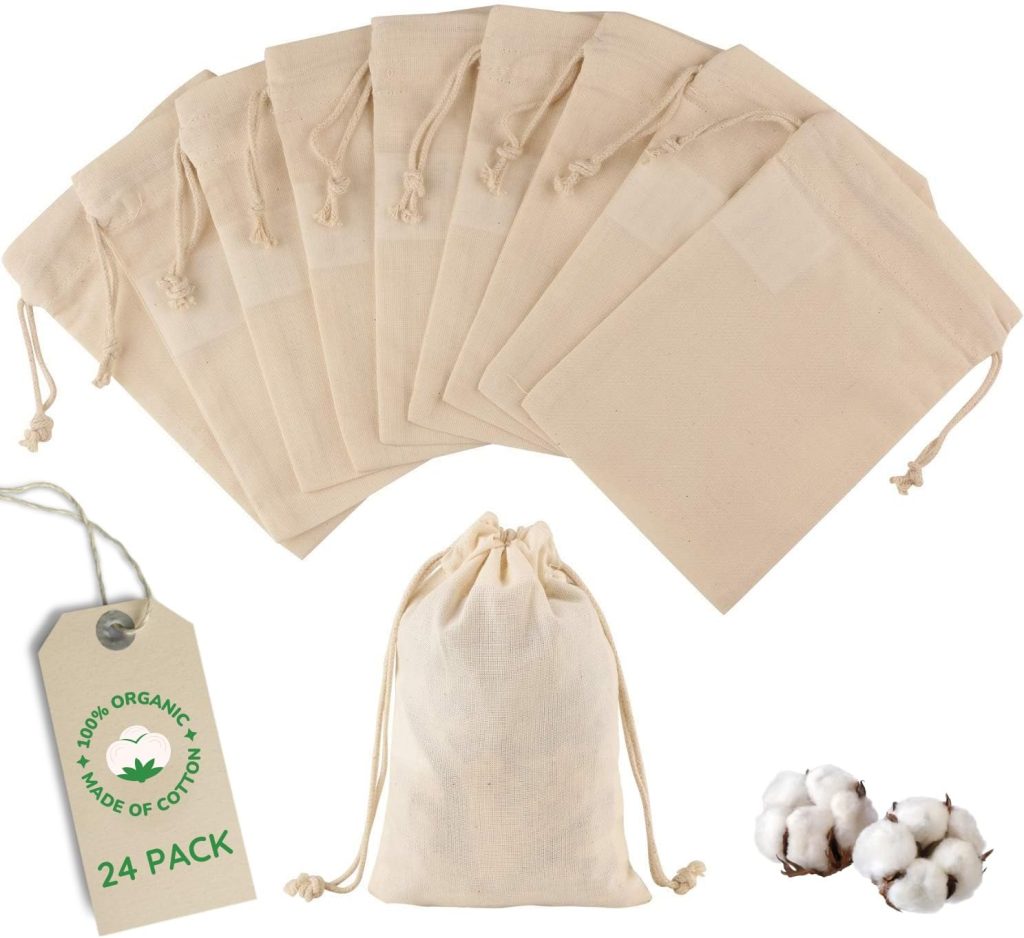
If you simply cannot deal with washing an infuser and need the convenience of a throw-away bag, opt for reusable organic cotton tea bags.
You fill them with loose leaf tea in advance (meal prep for tea!), steep them, and then flip them inside out to compost the leaves. You boil the bags occasionally to clean them.
- Pros: Convenient, pre-fillable.
- Cons: They eventually stain and hold onto flavors (don’t brew mint in the same bag you use for chai).
A Note on “Plastic-Free” Tea Brands
If you must buy bagged tea, you have to be a detective. Do not trust the word “Natural.” Look for:
- “Plastic-Free” Certification: Explicit statements on the box.
- Staples or Sewn bags: If there is a staple, there is likely no heat-sealant glue.
- Compostable Packaging: Brands that use NatureFlex (wood pulp cellulose) for the inner wrapper rather than foil or plastic.
However, even the best bagged tea creates waste. The box, the wrapper, the string, the tag. Loose leaf eliminates the supply chain of trash entirely.
Progress Over Perfection
You don’t have to throw out every box of tea in your pantry today. That creates waste, which is what we are trying to avoid.
- Finish what you have: Drink your current stash. While time intensive, you could cut out the tea from any plastic bags you have and add it to either a reusable cotton tea bag or an infuser.
- Buy the Infuser: Get a stainless steel basket. It is a one-time purchase that lasts a lifetime.
- Buy one bag of Loose Leaf: Go to a local shop or find a bulk section. Smell the leaves. Notice the difference.
Tea has been consumed for thousands of years without polypropylene. We introduced plastic into this ancient tradition for the sake of a few seconds of convenience. By going back to the source, we aren’t just saving our health; we are reclaiming the ritual.
Brew slow. Drink safe.
How do you brew your tea? Have you made the switch to loose leaf? Let us know in the comments.
Frequently Asked Questions (FAQs)
Q: Are paper tea bags safer than the mesh ones? A: Generally, yes, but “safer” doesn’t mean “plastic-free.” While mesh bags (nylon/PET) release the highest volume of microplastics, many paper bags are sealed with polypropylene (plastic glue) or treated with epichlorohydrin. The safest option is always loose leaf tea or certified plastic-free bags.
Q: Can I just cut the tea bag open and pour the tea into an infuser? A: Absolutely. This is a great way to use up your current stock of bagged tea without steeping the plastic bag itself. Just cut the top, dump the leaves into your stainless steel basket, and compost the empty paper bag (if it’s plastic-free) or trash it.
Q: What about “biodegradable” corn starch tea bags? A: These are made from PLA (Polylactic Acid). While they are plant-derived, they are still a bioplastic structure. They do not break down in home compost piles and require industrial facilities. There are also concerns about the additives used in bioplastics.
Q: Is boiling water necessary to release microplastics? A: Heat is the primary driver. The McGill study found that at 95°C (203°F), the shedding was massive. Cold brewing likely releases significantly fewer particles, though degradation can still occur over time.
Q: Does the type of tea matter (Green vs. Black) regarding microplastics? A: No. The plastic comes from the bag, not the tea leaves. Whether you are brewing herbal, black, or green tea, the bag material behaves the same way when exposed to hot water.