
Green Cleaning 101: How to Clean Your Entire Home Without Plastic or Toxins
Your cleaning closet is likely a graveyard of high-density polyethylene (HDPE) and polyethylene terephthalate (PET). Even if the liquid inside claims to be plant-based, the delivery system is a problem.
Standard cleaning products present a dual-threat: chemical toxicity and physical plastic pollution. When you spray a conventional cleaner, you aren’t just dealing with the volatile organic compounds (VOCs). You are interacting with a supply chain that relies on single-use plastic bottles, synthetic fragrances derived from petroleum, and cleaning tools that shed microplastics directly into our waterways.
The Chemistry of the Clean Smell
That lemon fresh scent isn’t coming from a grove in Sicily. Most conventional cleaners use synthetic fragrances that contain phthalates. These are plasticizers used to make scents last longer. They are also known endocrine disruptors.
When these chemicals are stored in cheap plastic spray bottles, a process called leaching occurs. The surfactants in the cleaner can cause the plastic of the bottle to migrate into the liquid. You are essentially cleaning your counters with a soup of plastic by-products.
The Problem With Microfiber
We need to talk about microfiber. It’s marketed as a sustainable alternative to paper towels because it’s reusable. However, microfiber is made of Polyester and Nylon.
Every time you rinse a microfiber cloth, thousands of microscopic plastic shards go down the drain. These are too small for wastewater treatment plants to filter. They end up in the bellies of plankton, then fish, then us.
Essential Swaps: Tools of the Trade
To go truly plastic-free, you have to look at the hardware.
1. The Scrubber: From Polyurethane to Plants
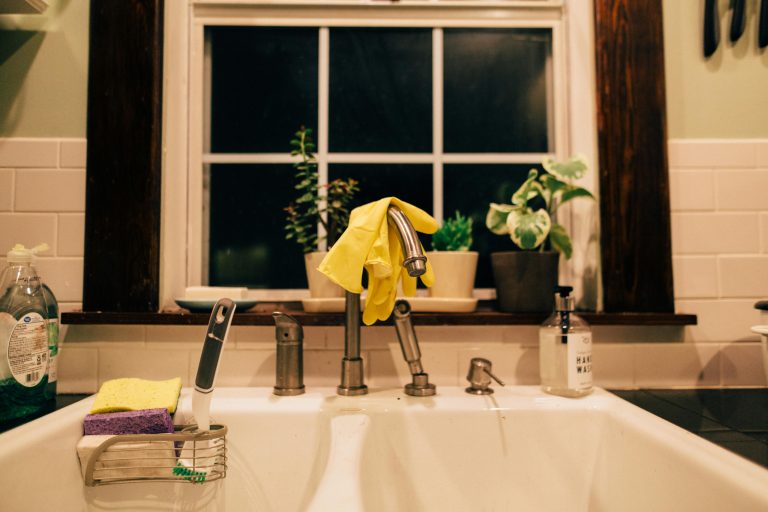
Most yellow and green sponges are made of Polyurethane foam (plastic) and Polyester. They cannot be recycled and they harbor bacteria at an alarming rate.
- Budget: Loofah slices. Yes, the gourd. It’s abrasive, compostable, and costs pennies.
- Best Overall: Coconut fiber scrubbers or coconut coir brushes.
- Investment: Hand-carved wooden dish brushes with replaceable agave fiber (Tampico) heads.
2. The Cloth: Ditching the Polyester
Stop buying cleaning rags made of synthetic blends.
- Budget: Old 100% cotton t-shirts or flannel sheets cut into squares.
- Best Overall: Swedish Dishcloths. These are generally made of 70% wood pulp and 30% cotton. They absorb 20x their weight and are fully backyard compostable.
- Investment: Heavy-weight organic hemp cloths. Hemp is naturally antimicrobial and tougher than cotton.
3. The Vessel: Glass and Silicone
If you are still using plastic spray bottles, the natural ingredients inside are being compromised.
- The Switch: Amber glass bottles. The dark glass protects essential oils from UV degradation. Use a silicone boot on the bottom to prevent breakage on stone countertops.
The Master Plastic-Free Cleaning Recipes
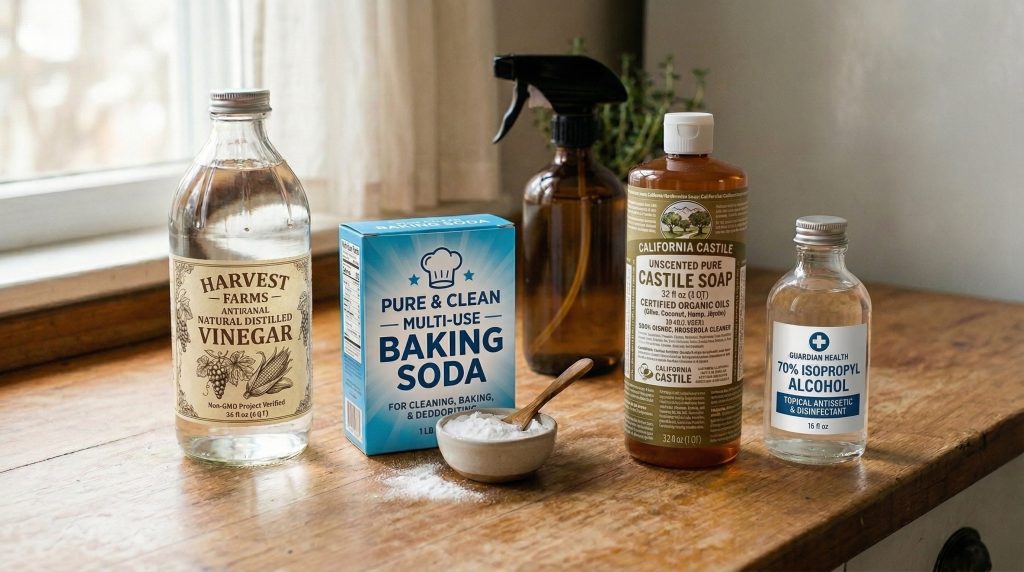
You do not need 15 different bottles for 15 different surfaces. That is a marketing myth designed to sell more plastic. Most of your home can be cleaned with four basic ingredients: Distilled White Vinegar, Baking Soda, Castile Soap, Rubbing Alcohol, and essential oils (optional).
The All-Purpose Workhorse
This handles 90% of surfaces, including counters, baseboards, and fans.
- 1 part Distilled White Vinegar
- 1 part Water
- 20 drops of Lemon or Tea Tree essential oil (optional)
The Heavy-Duty Scrub (The “Soft Scrub” Alternative)
For tubs and sinks where soap scum lives.
- 1 cup Baking Soda
- 2 tablespoons Liquid Castile Soap (look for bulk refills)
- 1 tablespoon Water
- 10 drops of Lemon or Tea Tree essential oil (optional)
The Glass Specialist
- 1 cup Water
- 1/4 cup Rubbing Alcohol (dissolves oils and prevents streaks)
- 1/2 cup Distilled White Vinegar
Navigating the Refill Market: A Warning
The newest trend in eco-friendly cleaning is the refill pouch. Be careful. Many of these pouches are made of multi-layer laminates (a mix of plastic and aluminum). These are almost impossible to recycle.
If you want to buy commercial products, look for these three formats:
- Glass Concentrates: Small glass vials with aluminum lids that you dilute in your own permanent glass bottle.
- Solids: Dish soap bars that look like a block of cheese. You rub your wet brush directly on the bar. No plastic bottle required.
- Powders or Tablets: Cleaners that come in compostable paper packaging or infinitely recyclable steel tins.
Plastic-Free Cleaning Hierarchy
| Room | The Plastic Problem | The Plastic-Free Solution |
| Kitchen | Plastic bottled dish soap, synthetic sponges | Dish soap bar, coconut fiber scrubbers, wooden dish brush with replaceable tampico heads |
| Bathroom | Plastic toilet brushes, aerosol sprays | Wood/Natural fiber toilet brush, citric acid fizzies |
| Laundry | HDPE jugs of liquid detergent, dryer sheets | Powder detergent in cardboard packaging, wool dryer balls |
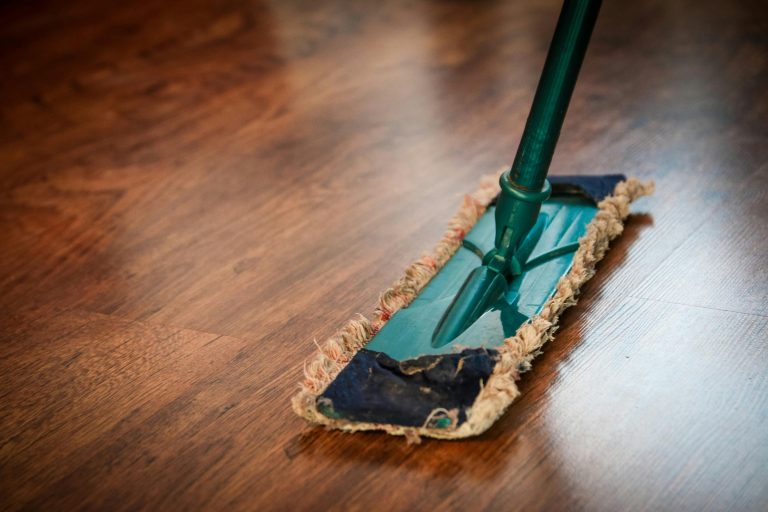
| Floors | Disposable plastic mop pads (Swiffer style) | Cotton mop heads or steam mops with washable pads |
Data Check: Why This Matters
- Recycling Rates: According to the EPA, only about 8.7% of plastic in the United States is actually recycled. The rest ends up in landfills or the ocean.
- Indoor Air Quality: The American Lung Association notes that many cleaning supplies contribute to chronic respiratory problems and headaches due to VOCs.
- Microplastics: A study published in Nature estimated that humans ingest an average of 5 grams of plastic per week, roughly the weight of a credit card. Eliminating synthetic cleaning tools is a direct way to reduce that load in your immediate environment.
Transitioning Without the Overwhelm
Do not go home and throw away every plastic bottle under your sink. That’s just creating more immediate waste.
Use what you have. As each bottle empties, replace the tool or the liquid with a plastic-free version. The Progress over Perfection mindset is what makes this sustainable. Start with the kitchen sponge. It’s the cheapest swap and has the highest impact on microplastic reduction in your home.
Frequently Asked Questions
1. Are plastic-free cleaning products as effective as traditional ones?
Yes. Ingredients like acetic acid (vinegar) and sodium bicarbonate (baking soda) have been used for centuries. For disinfection, high-percentage alcohol or hydrogen peroxide provides hospital-grade results without the plastic waste of bleach bottles.
2. What is the best plastic-free alternative to paper towels?
Swedish dishcloths and 100% cotton un-paper towels are the best alternatives. Swedish dishcloths are particularly effective because they can replace up to 17 rolls of paper towels and are made of natural cellulose.
3. How do I clean without a plastic spray bottle?
Switch to glass spray bottles with silicone protection. You can also use aluminum bottles, which are lighter than glass and infinitely recyclable.
4. Is Castile soap safe for all surfaces?
Castile soap is safe for most surfaces, including stone. However, do not mix it directly with vinegar. The acid in the vinegar will unsaponify the soap, turning it back into a gloopy oil mess that leaves a film.
5. Are laundry detergent sheets actually plastic-free?
Many laundry sheets use PVA (Polyvinyl Alcohol) to hold their shape. While PVA is technically water-soluble, there is ongoing debate about its ability to fully biodegrade in all wastewater conditions. Instead look for powdered detergents in cardboard or aluminum packaging.
6. Can I use vinegar on granite or marble?
No. The acid in vinegar and lemon juice will react with the calcium carbonate in natural stone, leading to permanent dull spots called etching. Use a pH-neutral castile soap solution instead.
7. What is the best way to get rid of old plastic cleaning bottles?
Empty the contents safely, rinse the bottle, and check your local municipality for HDPE or PET recycling. If the bottle has a trigger spray, note that the trigger mechanism is often made of multiple materials and must be trashed.
8. Do wool dryer balls really replace dryer sheets?
Yes. Wool dryer balls reduce static and drying time by separating clothes and allowing air to circulate. They replace synthetic dryer sheets which contain tallow and plastic-based fragrances.
9. How do I find a plastic-free toilet brush?
Look for brushes made from FSC-certified wood and union fiber (a mix of coco and tampico fibers). Unlike plastic brushes, these don’t shed bristles that end up in the sewage system.
10. Is bio-plastic a good alternative for cleaning products?
Often, no. Many bio-plastics require industrial composting facilities to break down and will not decompose in a backyard bin or a landfill. They also contaminate the traditional plastic recycling stream.