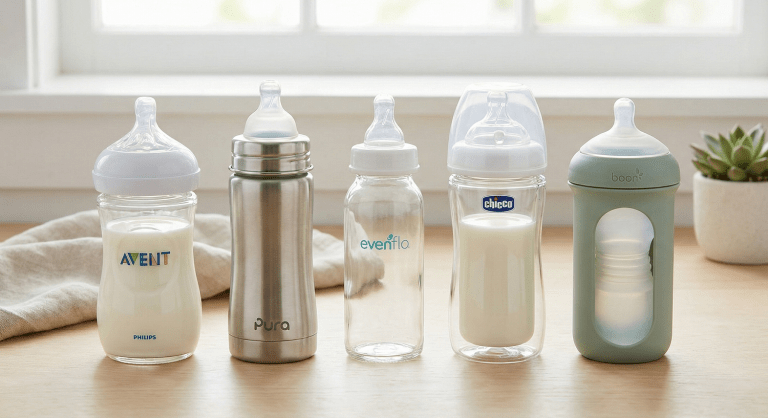

How to Baby Proof Your Home Without Plastic: The Aesthetic and Non-Toxic Guide
Your living room does not need to look like a brightly colored, plastic-padded cell just because your baby learned how to crawl.
If you are a parent who just spent the last nine months carefully curating an organic, non-toxic nursery, the sudden arrival of the crawling phase can feel like a design and environmental disaster. Suddenly, the pressure is on to cover every square inch of your home in squishy synthetic foam, install clunky plastic gates, and lock your cabinets with cheap PVC latches. The baby-proofing industry thrives on a potent mixture of parental anxiety and cheap petroleum products.
But here is the truth the industry ignores. Babies explore their environment with their mouths. Everything they touch eventually ends up getting chewed on, sucked, or licked. When we cover our homes in synthetic plastic baby-proofing gear, we are essentially serving up toxic chew toys disguised as safety equipment.
We can do better. You can protect your child from sharp corners, steep stairs, and hot stoves without introducing endocrine-disrupting chemicals into their immediate environment. This is your guide to aesthetic, plastic-free baby proofing. No shaming. No anxiety-inducing perfectionism. Just progress, real science, and beautiful solutions that keep your home looking like adults actually live there.
The Chemistry of the Crawl: Why Standard Baby Proofing Fails
To understand why plastic-free baby proofing matters, we have to look at the polymer science behind standard safety gear. It is not just about learning how to reduce waste at home. It is about keeping dangerous chemicals out of your baby’s developing body.
The PVC and Phthalate Problem
Take a look at those clear, squishy corner guards designed to soften the blow of a coffee table edge. Most of them are made from Polyvinyl Chloride (PVC). PVC is naturally a hard, brittle plastic. To make it soft and rubbery enough to act as a bumper, manufacturers must add heavy doses of chemical plasticizers.
If you find yourself wondering what is phthalate and why it matters, the answer is critical. Phthalates are the exact chemical plasticizers used to make PVC soft. Here is the investigative catch. Phthalates are not chemically bound to the plastic polymer. They sit loosely between the molecules. Over time, and especially when exposed to heat or friction, they leach out. When your teething infant inevitably bites down on that soft corner guard, those phthalates dissolve directly into their saliva.
Phthalates are classified as endocrine disruptors. They interfere with hormonal development and have been linked to a host of developmental and reproductive issues. Putting them right at mouth-level for a curious baby defeats the entire purpose of safety.
The Microplastic Dust Trap
A groundbreaking 2021 study published in Environmental Science & Technology Letters by researchers at the NYU Grossman School of Medicine revealed a staggering statistic. Babies have 10 to 15 times more microplastics in their bodies than adults.
How does this happen? The answer lies at ground level. As babies crawl, the friction of their knees and hands on synthetic carpets breaks loose microscopic plastic fibers. These fibers float into the indoor air and settle into house dust. Babies breathe closer to the floor, ingest dust as they play, and constantly put their dust-covered hands into their mouths. When we add cheap foam mats and shedding plastic safety gates to the mix, we are only adding to the microplastic load in their direct breathing zone.
The Greenwashing Filter: Do Not Fall for BPA-Free Labels
When shopping for eco friendly baby products, you will see the label BPA-Free slapped onto almost everything. This is a classic greenwashing tactic.
BPA (Bisphenol-A) was phased out of most baby products after massive public outcry regarding its toxicity. However, the chemical structure of clear, hard plastic still requires a hardener. Manufacturers simply swapped BPA for BPS (Bisphenol-S) or BPF (Bisphenol-F). These sister chemicals are structurally nearly identical to BPA and show the exact same endocrine-disrupting behaviors in laboratory studies.
BPA-Free does not mean safe. It certainly does not mean plastic-free. If a product is made of hard, clear plastic, it likely contains a regrettable chemical substitution.
The Room-by-Room Guide to Aesthetic, Plastic-Free Baby Proofing
Baby proofing does not mean buying a product for every potential hazard. The most sustainable and non-toxic baby proofing strategy is simply removing the hazard entirely. Here is how to tackle your home room by room.
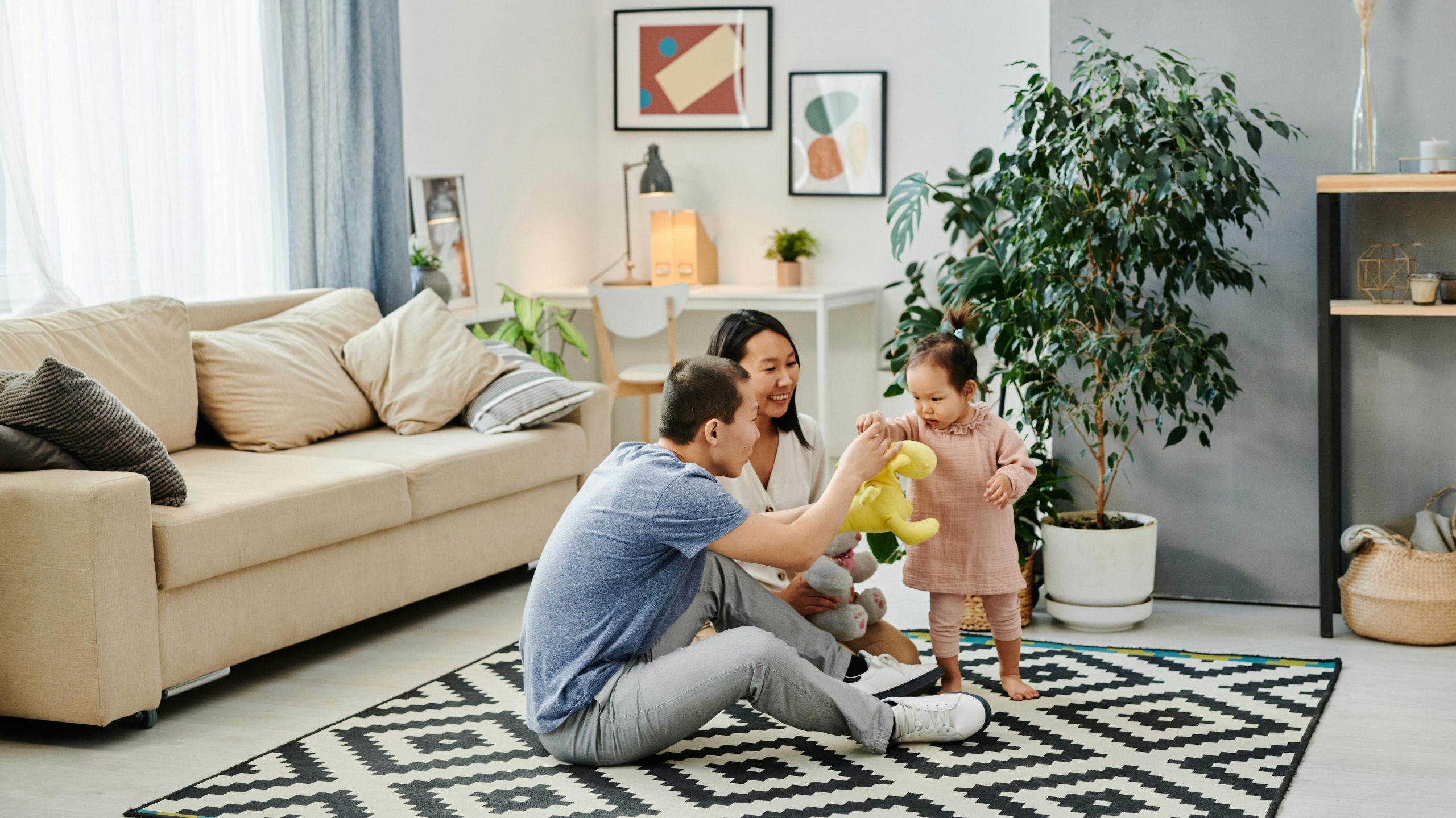
The Living Room: Coffee Tables, Hearths, and Sharp Corners
The living room is the main hub of activity. It is also ground zero for sharp edges and potential tumbles.
The Coffee Table Swap: Instead of applying PVC foam to your wooden coffee table, temporarily remove the table entirely. Replace it with a soft, tightly woven wool ottoman or a heavy canvas pouf. It serves the same function for resting a tray or your feet but poses zero risk to a wobbly toddler.
The Hearth Defense: Brick fireplace hearths are terrifying for parents of new walkers. Instead of buying miles of synthetic bumper tape, look to heavy textiles. Fold a thick, organic wool blanket and drape it over the hearth edge. Secure it with heavy woven baskets filled with soft toys.
Tackling the Sharp Corners: If you must keep your current furniture, you need a physical buffer that does not off-gas when chewed.
- Budget: The DIY Felt Hack. Head to the hardware store and buy a roll of heavy-duty, adhesive-backed wool felt tape. Be sure to read the labels carfully because a lot of felt tape is actually made from polyester. Cut small squares and stick them directly onto the sharp corners. It softens the blow beautifully, uses zero plastic, and peels off cleanly later.
- Best Overall: 100% Food-Grade Silicone corner protectors. If you need something more substantial, look for corner guards made entirely from 100% food-grade silicone. Silicone is a highly stable material that does not require phthalate plasticizers to be soft, making it a much safer chew-target than PVC.
- Investment: Custom Leather Corner Caps. For high-end wooden furniture, look to custom leather workers online. You can purchase heavy-duty, vegetable-tanned leather corner caps that secure with brass tacks underneath the table lip. They age beautifully and add a rugged, intentional aesthetic to your living room.
The Kitchen: Cabinets, Cleaners, and The Stove
Kitchens are highly attractive to babies but filled with real dangers. This is where you need to be highly strategic.
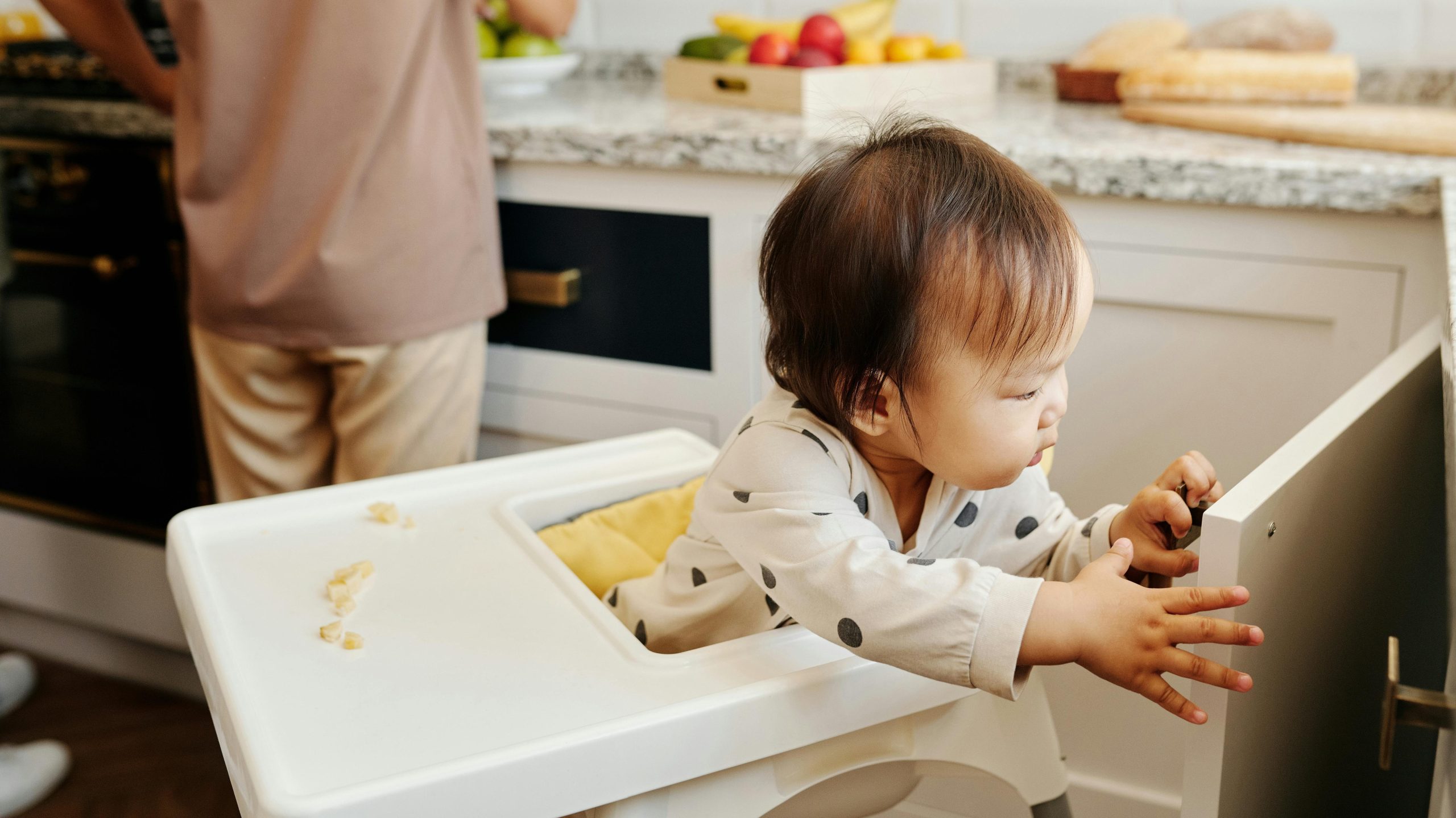
Strategic Relocation of Hazards: Move all non toxic cleaning products and heavy best non toxic cookware to your upper cabinets. Even if you use eco friendly cleaning products, you do not want your baby drinking them. The same goes for your heavy cast iron skillet. Move it up high. Fill your lower cabinets with lightweight stainless steel mixing bowls, wooden spoons, and reusable silicone bags. Let your baby open those specific cabinets safely.
Cabinet Locks: If you must lock lower cabinets, avoid the cheap plastic latch kits.
- Budget: Cotton Rope Ties. A few yards of unbleached, thick cotton rope from the hardware store can secure double-door cabinets just as effectively as a commercial plastic lock. Tie a tight knot. It looks beautifully rustic.
- Best Overall: Concealed Magnetic Locks. While they do contain plastic components, the bulk of the mechanism is magnetic metal. More importantly, they install completely inside the cabinet. Your baby cannot mouth them or break them off.
- Investment: Solid Brass Exterior Latches. For a completely plastic-free lock, install a solid brass hook-and-eye latch high up on the exterior of the cabinet doors. It looks like high-end nautical hardware and is incredibly secure.
Oven Knobs and Stove Safety: The standard oven knob covers are giant, clear orbs of hard polycarbonate plastic. Placed right above a major heat source, they are subjected to repeated thermal stress that accelerates the leaching of chemical plasticizers into your kitchen air.
- Zero Cost: The Pull and Stash. The absolute best, zero-waste baby-proofing hack costs nothing. Just pull the knobs off. Most gas and electric stove knobs slide right off their metal shafts. Keep them in a glass mason jar on the counter. When you need to cook, slide one back on. If you go with this method, be sure to practice in advance of your baby reaching the knobs to ensure this becomes a habit. Also be wary of the sharp metal piece that will be exposed without the knobs in place.
- Budget: If the pull and stash method is not for you, but you still want to be budget conscious, consider 100% silicone stove knob protectors. This option sits behind the knob to ensure tiny hands can’t ignite the stove.
- Best Overall: Extruded Aluminum Stove Guards. Instead of wrapping individual knobs, block access to the entire front of the stove. Look for heavy-duty adhesive stove guards crafted from double-walled anodized aluminum. This creates a sleek metal wall that stops tiny arms from reaching the knobs or pulling down hot pots.
- Investment: RangeSafe Metal Knobs. You can replace your factory stove knobs with heavy zinc alloy and stainless steel safety knobs. These utilize a specialized mechanical locking design that toddlers do not have the hand-span to operate. Your kitchen retains its sophisticated design without the plastic bubbles.
The Bathroom and Nursery: Doors, Outlets, and Safe Care
The places where your baby sleeps and bathes need to be the lowest-toxin environments in the home.
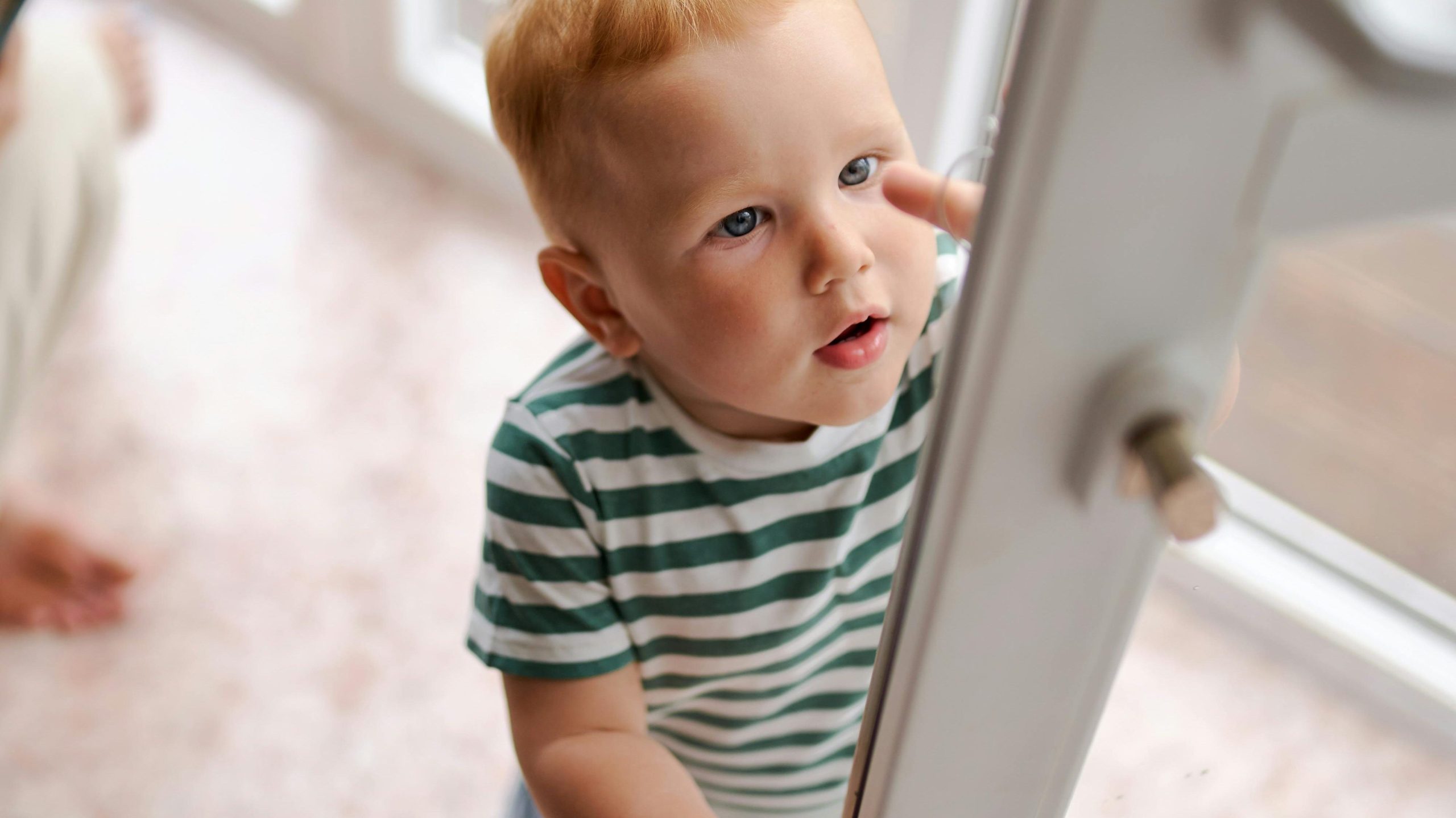
Keeping Them Out of Forbidden Rooms: The standard baby industry solution for a bathroom door is a clunky plastic shell that spins uselessly when a toddler grabs it. They are ugly and unnecessary.
- Budget: The Sock and String Hack. Wrap a thick wool sock tightly around the round door knob and secure it at the base with cotton twine. When a toddler tries to turn the knob, the fabric simply slips and spins. An adult can grip hard enough through the fabric to turn the metal knob inside.
- Best Overall: Fabric Friction Covers. Look for crochet or heavy canvas door knob covers from independent makers online. These slide snugly over the knob and function on the exact same friction principle. They are washable, soft, and completely free of hard plastics.
- Investment: The Top-Mount Metal Latch. Install a solid stainless steel sliding bolt lock at the very top of the door frame. It sits completely out of reach, remains visually unobtrusive, and is made entirely of durable metal.
Electrical Outlets: The standard baby shower gift is a massive box of clear plastic outlet plugs. These are actually a severe choking hazard if a toddler manages to pull them out and leave them on the floor.
- Zero Cost: Strategic furniture placement. Block unused outlets entirely with heavy dressers or cribs so they cannot be accessed in the first place.
- Budget: If you must buy a plastic cover, do not buy the individual, clear plastic push-in plugs. They are a massive choking hazard if your toddler manages to pry one out and leaves it on the rug. Instead, consider an outlet plug cover. Yes, it is made of polycarbonate plastic, but it connects directly to your existing outlet while still allowing cords to be plugged in. It becomes a permanent fixture, eliminating the small loose-parts choking hazard while providing the safety you are looking for.
- Investment: Tamper-Resistant Receptacles (TRRs). Hire an electrician to swap your actual wall sockets to modern TRRs. These feature internal spring-loaded shutters that block foreign objects from being inserted.
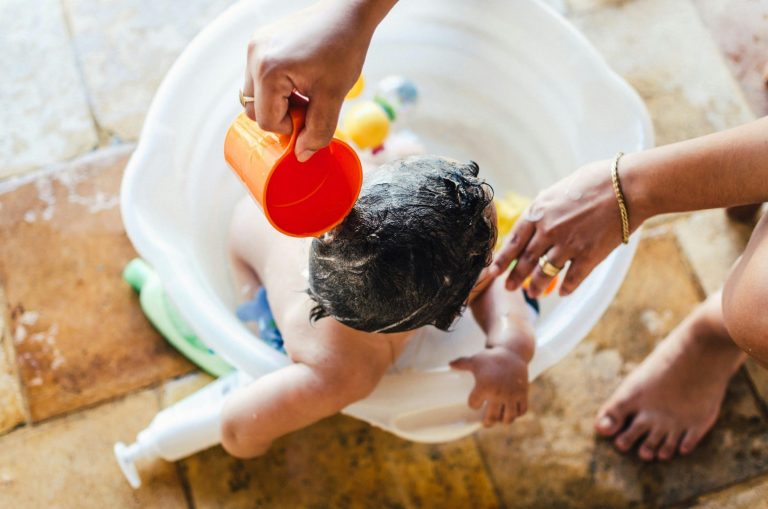
Safe Personal Care: When stocking the bathroom, extend your plastic-free philosophy to the products themselves. Look for non toxic baby shampoo that comes in glass or aluminum bottles, or swap to solid baby wash bars. The fewer plastic bottles sitting on the edge of the tub, the better.
Stairs and Hallways: The Baby Gate Dilemma
Stairs require absolute physical barriers. There is no clever DIY workaround for a steep staircase.

Ditch the Plastic Pressure Gates: Those plastic mesh gates are an eyesore. They also invite babies to scrape their teeth against synthetic netting, creating a direct pathway for microplastic ingestion.
Solid Wood is King: Look for solid hardwood gates. Locally sourced oak or maple gates can be custom-finished with natural linseed oil or beeswax to match your banisters perfectly. They look like a deliberate architectural feature rather than a temporary plastic prison.
The Hardware Mount: Always use hardware-mounted gates at the top of stairs. Pressure-mounted gates can slip and fail. Metal and wood hardware mounts are incredibly secure and drastically reduce the plastic footprint of the safety product.
Progress Over Perfection: Building a Sustainable Home
Baby proofing a home with minimal plastic can feel overwhelming at first. The goal is not to achieve absolute, stress-inducing perfection. If you are exploring sustainable living tips and figuring out zero waste lifestyle tips, the most important rule is to give yourself grace.
Focus on the areas where your baby spends the most time. Focus on the items they are most likely to put in their mouths. Every single PVC plastic corner guard you leave at the store is one less phthalate exposure for your child. Every synthetic rug you roll up reduces the microplastic dust in their developing lungs. Every time you swap a plastic toy for a wooden one, you are making a profound difference. You are doing a great job. Keep it simple. Keep it safe. Keep it beautiful.
10 Frequently Asked Questions About Non-Toxic Baby Proofing
1. Why are standard plastic corner guards considered unsafe for babies? Standard clear and foam corner guards are often made of Polyvinyl Chloride (PVC). To make the PVC soft, manufacturers add chemicals called phthalates. Phthalates are known endocrine disruptors that can easily leach out of the plastic, especially when a teething baby chews on the guard.
2. How do babies consume so many microplastics in the home? Babies consume microplastics primarily through mouthing plastic toys and safety gear. Additionally, crawling on synthetic carpets creates friction that releases microplastic fibers into house dust. Because babies breathe closer to the ground and frequently put dusty hands in their mouths, they ingest significantly more microplastics than adults.
3. Are BPA-Free baby proofing products completely safe? Not necessarily. The BPA-Free label often means the manufacturer simply substituted BPA with a structurally similar chemical like BPS or BPF to harden the plastic. These substitute chemicals have been shown to display the exact same endocrine-disrupting behavior as BPA in scientific studies.
4. What is a plastic-free alternative to standard kitchen cabinet locks? For cabinets with side-by-side handles, you can use heavy organic cotton rope or thick leather straps tied in a secure knot. For a hidden option, magnetic locks use a small amount of plastic and sit safely inside the cabinet where babies cannot reach or chew them.
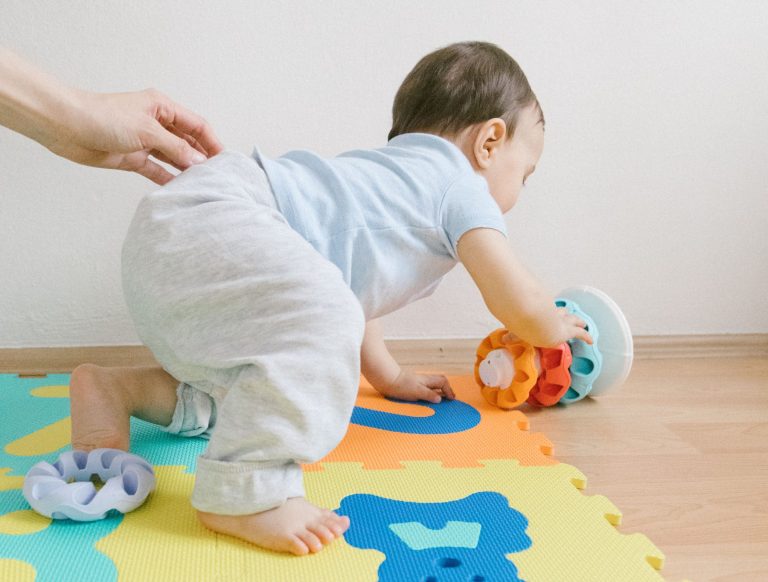
5. Are EVA foam play mats toxic to infants? EVA foam is generally considered safer than PVC, but it is still a petroleum-based product that degrades over time. As babies scratch, play, and crawl on foam mats, they can loosen small particles that contribute to the microplastic dust load in your home. Organic cotton or solid wool rugs are much safer, natural alternatives.
6. What are the best non-toxic baby gates for a staircase? The safest and most aesthetic options are solid hardwood gates. Brands that make custom gates from oak or maple, finished with natural linseed oil and wax, avoid toxic glues and synthetic netting entirely. Always ensure stair gates are hardware-mounted with metal brackets rather than pressure-mounted for absolute safety.
7. How can I baby proof electrical outlets without using plastic plugs? Small, clear plastic outlet plugs are a severe choking hazard if a baby manages to pull them out. Though still comprised of plastic for safety reasons (metal conducts electricity), the best solution is to hire an electrician to replace your existing receptacles with tamper resistant receptacles, which have spring-loaded mechanical shutters built directly into the slots.
8. Is it possible to baby proof a fireplace hearth without sticking on plastic bumpers? Yes. You can create a highly effective physical barrier using heavy, natural textiles. Drape a thick, folded wool blanket over the sharp brick edge. You can hold the blanket firmly in place by setting heavy, baby-safe items on top, like heavy woven baskets filled with wooden blocks or soft toys.
9. How do I protect my crawling baby from sharp coffee table edges without foam? The easiest method is to temporarily remove the wooden coffee table entirely while your baby is in the wobbly walking phase. Replace it with a soft, tightly woven ottoman or a heavy canvas pouf that provides no sharp edges at all. If you must keep the table, use 100% food-grade silicone corners or wool felt tape.
10. What is the safest way to baby proof gas oven knobs without using plastic covers? The safest, zero-waste method is simply pulling the stove knobs completely off their metal shafts and storing them out of reach until you need to cook. If you prefer to leave them on, invest in an extruded aluminum stove guard that blocks physical access to the front of the stove, or upgrade to heavy zinc-alloy safety knobs that require adult coordination to turn.

This article contains affiliate links. As an Amazon Associate, Plastic Free Everything earns from qualifying purchases at no extra cost to you.