
The Pump Bottle Fallacy: Why Your Skincare Packaging Ends Up in Landfills (Plus 5 Products That Pass the Real Zero-Waste Test)
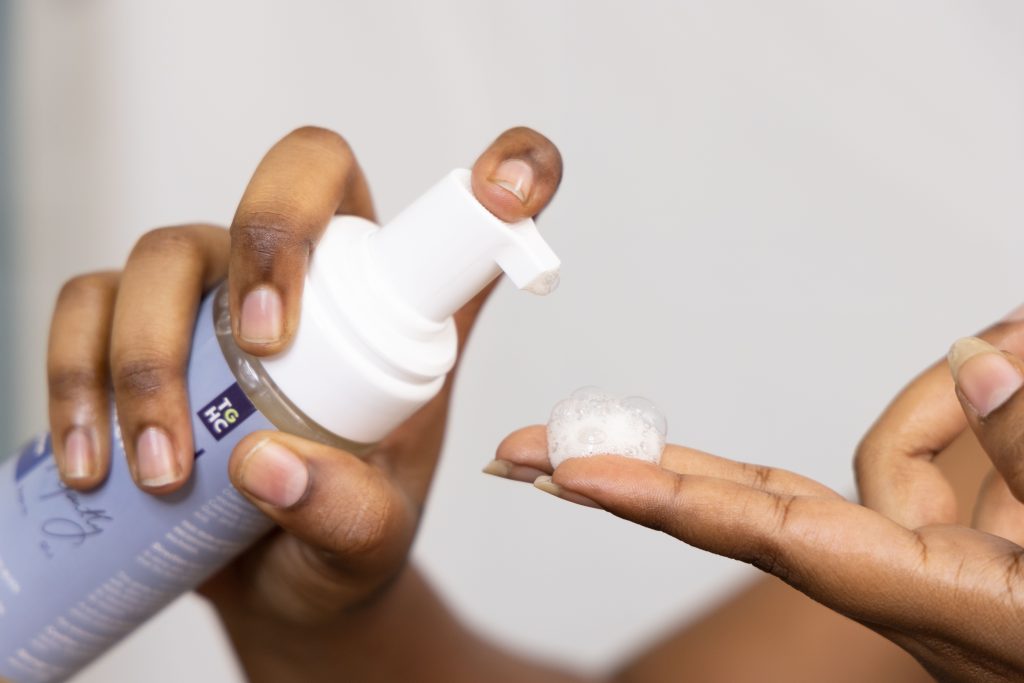
Take a quick look around your bathroom vanity. If you use a liquid facial cleanser, chances are it comes housed in a sleek plastic squeeze tube or a pump bottle equipped with a smooth spring mechanism. It looks clean, minimal, and hygienic.
Here is the dirty reality: that innocent-looking face wash bottle is an engineering nightmare for recycling systems.
According to global beauty industry statistics, the cosmetics sector generates over 120 billion units of packaging every single year, with an estimated 95% of beauty packaging ending up unrecycled in landfills or incinerators. Even worse, a report by environmental researchers found that 62% of plastic packaging used in cosmetics is inherently non-recyclable due to multi-material construction and size limitations.
You might feel good tossing that rinsed-out pump bottle into your blue curbside bin. But the mechanical reality of waste management tells a very different story.
The Chemistry & Mechanics of the “Pump Bottle Fallacy”
Why is standard skincare packaging so resistant to traditional recycling streams? It comes down to two major structural flaws: mechanical sorting limitations and complex material composition.
1. The Small-Plastics Sorting Gap
At municipal Materials Recovery Facilities (MRFs), automated optical sorters and rotating trommel screens process tons of commingled recyclables per hour. These screens typically feature mesh openings of 2 inches. Any plastic component smaller than 2 inches, such as bottle caps, serum dropper lids, and cleanser pumps, falls directly through the screens into the residual waste chute bound for landfills. If your face wash cap is small, it never had a chance.
2. The Multi-Material Pump Trap
A standard lotion or cleanser pump is a masterpiece of complex manufacturing. Inside a single pump mechanism sits:
- A rigid polypropylene (PP) outer collar
- A high-density polyethylene (HDPE) internal dip tube
- An internal stainless steel spring
- A rubber or synthetic elastomer sealing gasket
- An acrylate piston
Because municipal recycling equipment cannot mechanically disassemble these microscopic components, sorting facilities classify the entire pump assembly as contaminated waste. Throwing a multi-material pump into a recycling bin creates “wishcycling”, an action that often causes entire bales of otherwise recyclable material to be discarded.
3. Synthetic Liquid Polymers inside the Formula
The plastic problem is not limited to outer packaging. Many conventional liquid facial cleansers rely on synthetic liquid polymers to achieve a luxurious, gel-like texture.
Ingredients such as carbomer, acrylates copolymer, acrylates/C10-30 alkyl acrylate crosspolymer, and polyethylene glycols (PEGs) act as thickeners and suspension agents. While solid micro-beads were banned in rinse-off cosmetics under the Microbead-Free Waters Act, liquid microplastics remain largely unregulated in North America. When you rinse these liquid polymers down the drain, municipal wastewater treatment systems fail to capture them, releasing non-biodegradable synthetic chains directly into aquatic ecosystems.
The Greenwashing Filter: 3 Red Flags to Avoid
Before jumping to products that claim to be “eco-friendly,” it pays to recognize common industry greenwashing tactics.
- Sugarcane “Bioplastic” Squeeze Tubes: Brands frequently market “100% plant-derived bioplastic” tubes made from sugarcane ethanol. However, bio-based High-Density Polyethylene (bio-HDPE) is chemically identical to petroleum-derived HDPE. It does not biodegrade in ocean water, soil, or backyard composters, and it persists as microplastic pollution for centuries.
- PLA “Compostable” Bottles: Polylactic Acid (PLA) packaging requires industrial composting infrastructure operating at sustained temperatures above 140°F (60°C) with precise moisture controls. Tossing PLA into a backyard compost bin or a standard recycling bin will leave it intact for decades.
- Polyvinyl Alcohol (PVA) Cleansing Sheets: Dissolvable skincare sheets marketed as “zero-waste” often rely on PVA film. Research shows that complete breakdown of PVA requires specific wastewater bacteria strains and precise environmental conditions that standard sewage treatment facilities rarely provide.
Top 5 Truly Plastic-Free Face Wash Products of 2026
We vetted dozens of solid cleansers, waterless powders, and refillable glass formulations to find five products that pass the real zero-waste test. Every product featured below contains zero liquid microplastics, zero hidden plastic pumps, and zero unrecyclable components.
|
Brand |
Packaging |
Best For |
Skin Type |
Waterless |
|
Compostable Paper |
Best Overall |
Dry / Sensitive |
Yes |
|
|
Paper Box & Ink |
Best Budget |
Oily / Acne |
Yes |
|
|
Glass, Aluminum & Paper |
Best Investment |
Dry / Mature |
Yes |
|
|
Aluminum Bottle/Lid |
Best Gel Cleanser |
Oily / Combo |
No |
|
|
Compostable Card |
Best Luxury Bar |
All Skin Types |
Yes |
1. Best Overall: Ethique Bliss Bar Solid Cleanser
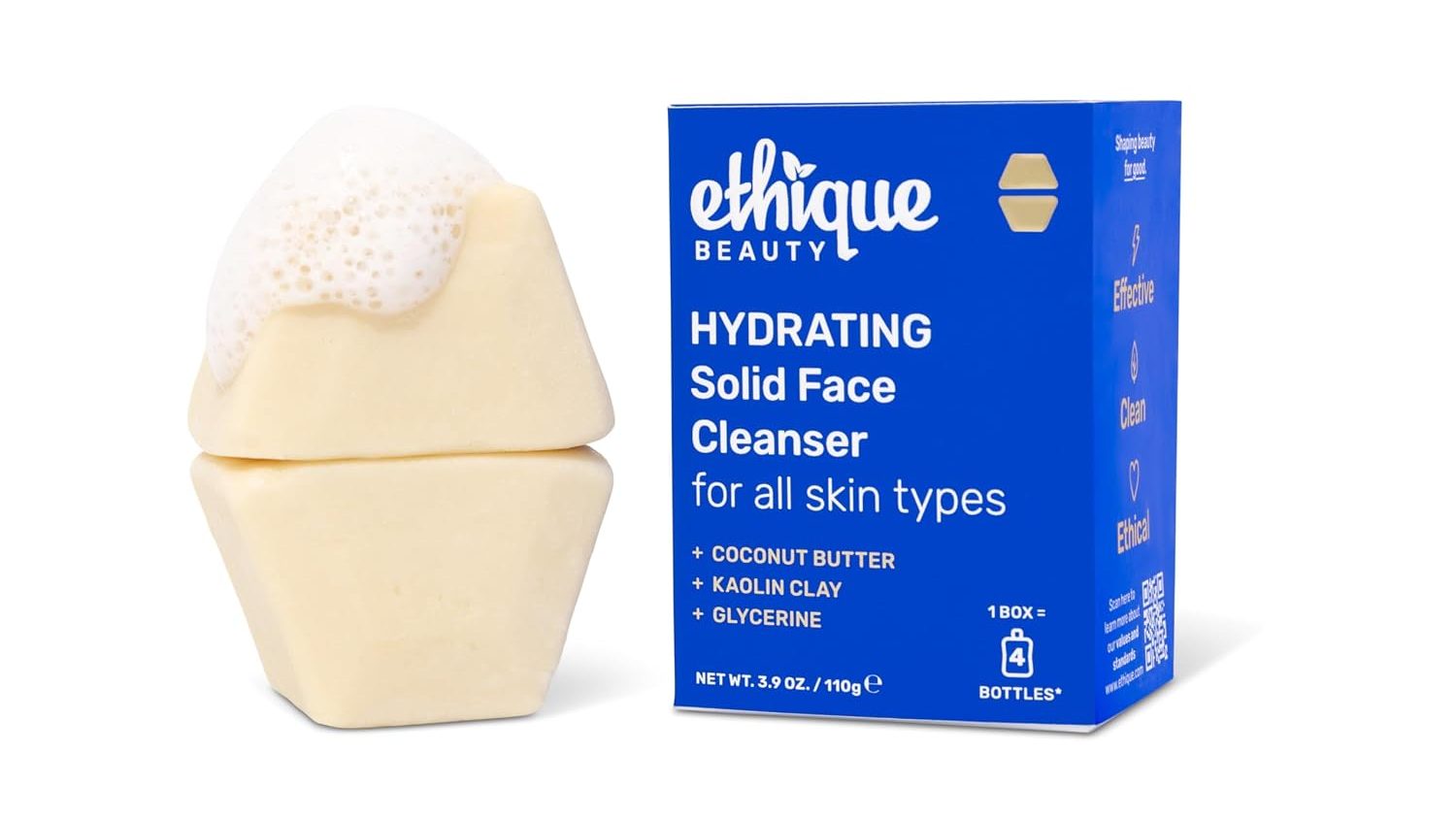
Ethique revolutionized solid personal care, and their Bliss Bar remains the benchmark for solid facial cleansing. Unlike traditional soaps that carry a high alkaline pH (around 9 to 10), the Bliss Bar is a soap-free, pH-balanced syndet bar formulated specifically for delicate facial skin.
- Packaging Audit: 100% FSC-certified, home-compostable cardboard printed with vegetable-based inks. No plastic film, no hidden stickers, no plastic-coated linings.
- Key Ingredients: Creamed coconut butter, kaolin clay, and vegetable glycerine. Free from sulfates, acrylates, synthetic fragrances, and palm oil.
- Real-World Performance: Gently removes light makeup and daily grime without stripping the skin barrier. It melts into a subtle, creamy lather rather than a drying foam, leaving skin hydrated and calm.
- Environmental End-of-Life: The cardboard box can be tossed straight into your backyard compost bin or soil where it breaks down completely within 6 to 8 weeks.
Pros:
- pH-balanced formula maintains acid mantle health
- Equivalent to three 3.5 oz liquid cleanser bottles
- Unscented and extremely gentle on reactive skin
Cons:
- Requires a well-draining soap dish to avoid turning soft
2. Best Budget: Meow Meow Tweet Facial Soap (Tea Tree Charcoal)
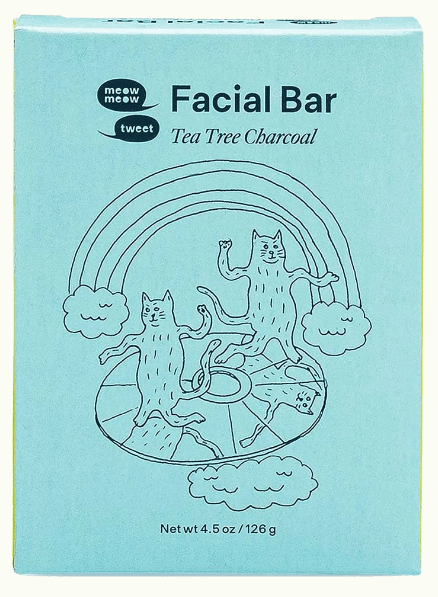
Meow Meow Tweet approaches sustainable skincare with complete transparency. Their Tea Tree Charcoal facial bar is an affordable, small-batch option for individuals dealing with breakouts or oily skin.
- Packaging Audit: Unwrapped option or a 100% post-consumer paper box printed with non-toxic soy inks. Completely recyclable in standard curbside paper streams.
- Key Ingredients: Organic coconut oil, organic olive oil, organic shea butter, ground oats, activated charcoal, and tea tree essential oil.
- Real-World Performance: Activated charcoal draws out excess sebum while finely ground oats offer physical soothing to inflamed blemishes. The lather is rich and purifying without feeling harsh when used two to three times a week.
- Environmental End-of-Life: Zero waste remaining once the bar dissolves. The outer box breaks down easily in backyard soil or municipal paper recycling.
Pros:
- Highly affordable price point per bar
- Excellent for clarifying congestion and balancing oil production
- Certified organic, fair-trade ingredients
Cons:
- Traditional saponified soap base may feel slightly tightening for ultra-dry skin types
3. Best Investment: UpCircle Cleansing Face Balm with Upcycled Apricot Powder
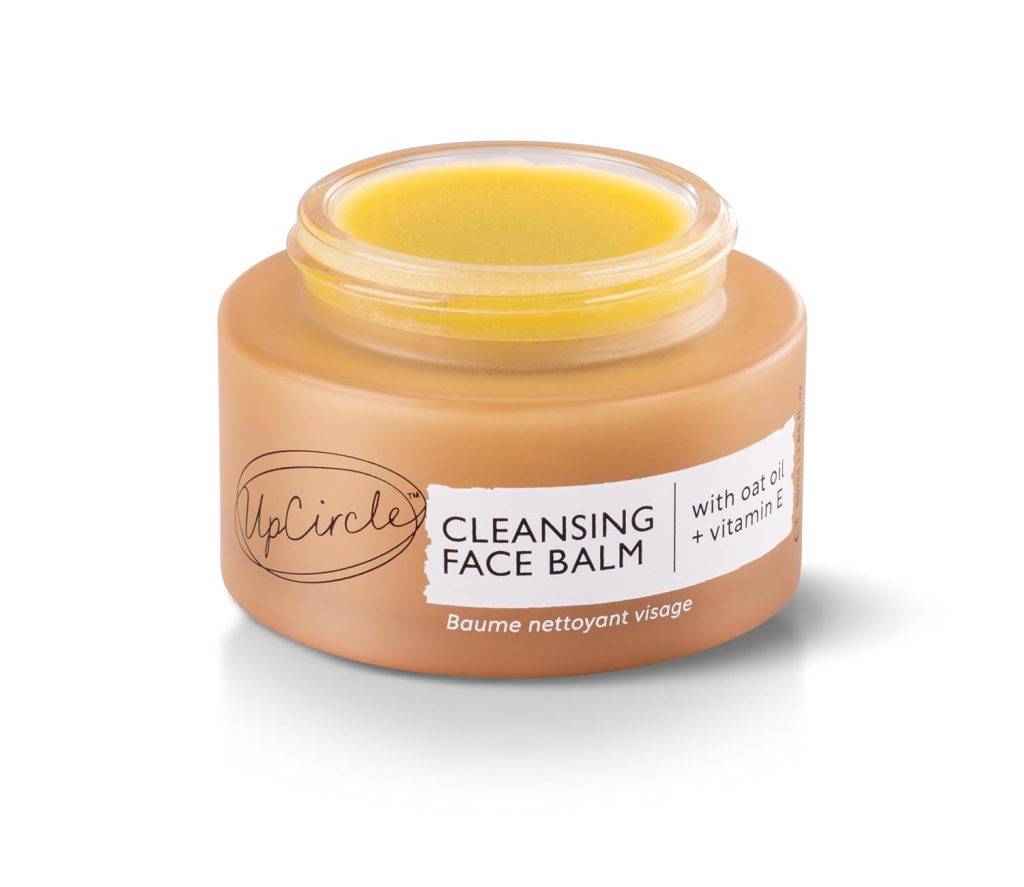
If you love the rich, velvety feeling of an oil-based cleanser or balm, UpCircle offers a luxurious solution that bypasses plastic packaging completely. UpCircle specializes in upcycling food-industry byproducts into high-performance skincare.
- Packaging Audit: Heavyweight, infinitely recyclable clear glass jar paired with an aluminum screw-top cap. The inner liner is plastic-free, and outer boxes are made from recycled cardboard.
- Key Ingredients: Upcycled finely ground apricot stone powder, sea buckthorn oil, oat oil, and shea butter. Anhydrous (waterless) oil-balm formulation.
- Real-World Performance: This balm dissolves heavy sunscreen, waterproof makeup, and stubborn pollution particles on contact. When mixed with water, it transforms into a gentle milky emulsion that rinses clean without greasy residue.
- Environmental End-of-Life: Aluminum and glass are true circular materials with curbside recycling success rates exceeding 70% globally.
Pros:
- Superior makeup-melting capability for double cleansing
- Upcycles food waste that would otherwise release methane in landfills
- Extremely nourishing for dry or compromised skin barriers
Cons:
- Higher initial cost compared to solid bar options
4. Best Gel Cleanser: Plaine Products Sensitive Skin Face Wash (Refill Version)
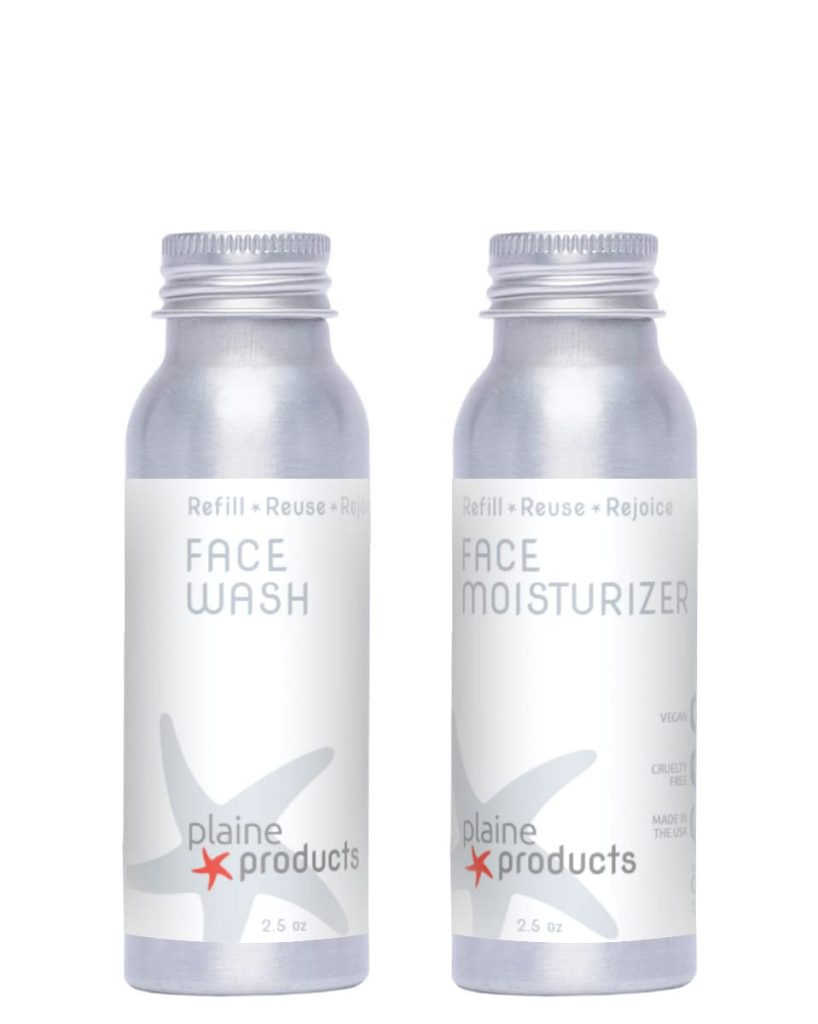
For people who genuinely dislike solid cleanser bars and prefer a traditional liquid gel, Plaine Products offers an exceptional solution with their 100% aluminum refill system.
- Packaging Audit: Housed in a durable 100% aluminum bottle sealed with an aluminum screw cap. When ordering refills, you receive a pump-free bottle and can transfer your existing dispenser or pour directly into your hands. You then send the empty bottle back in a prepaid box to be washed and refilled.
- Key Ingredients: Organic aloe vera leaf juice, vegan glycerin, papaya leaf extract, rosehip seed oil, and camellia leaf extract.
- Real-World Performance: A refreshing, low-foaming gel cleanser that purifies pores while preserving natural skin lipids. Papaya enzymes provide light enzymatic exfoliation, leaving skin soft and clear.
- Environmental End-of-Life: Aluminum is infinitely recyclable without quality loss. Plaine Products operates a closed-loop system where bottles are sanitized and reused dozens of times.
Pros:
- Genuine liquid gel texture without liquid microplastic thickeners
- Closed-loop refill system eliminates waste completely
- Rich in antioxidant botanicals and aloe vera
Cons:
- Requires participation in the mail-back refill program for maximum zero-waste impact
5. Best Luxury Bar: SBTRKT Gentle Foaming Cleansing Bar
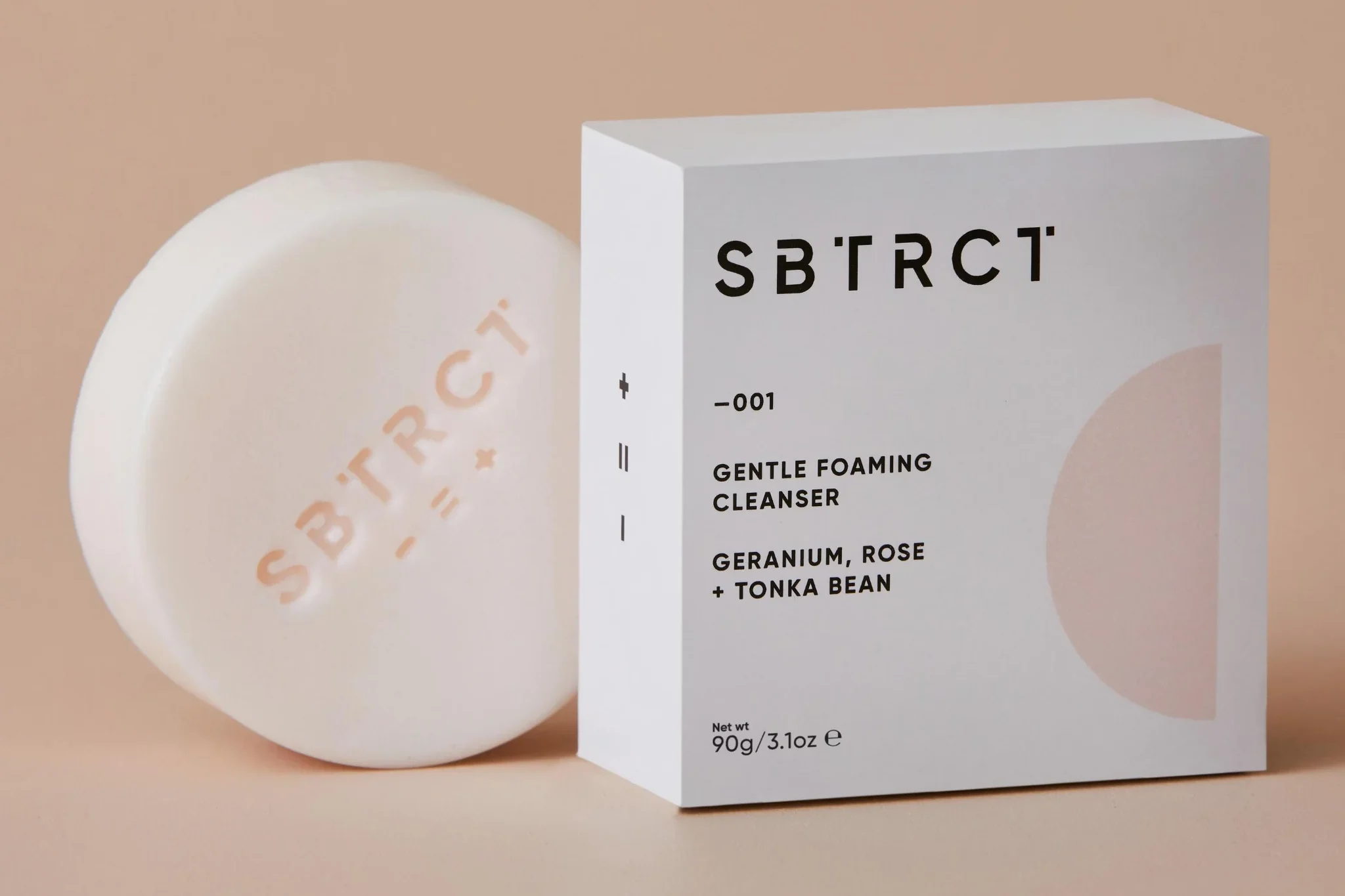
UK-based SBTRKT (pronounced “Subtract”) was founded with a singular mission: remove water and plastic from high-end luxury skincare. Their Gentle Foaming Cleansing Bar delivers a high-end spa experience in a solid format.
- Packaging Audit: 100% bio-based, compostable paper wrap housed inside a structural card box made from sustainably managed forests.
- Key Ingredients: Coconut-derived surfactants, shea butter, squalane, and rosehip oil. Waterless formulation with zero synthetic fillers.
- Real-World Performance: Produces a dense, cushiony foam that rivals luxury liquid cleansers. Squalane and rosehip oil nourish skin, leaving your face supple, smooth, and balanced.
- Environmental End-of-Life: Every aspect of the box and wrapper breaks down naturally in garden compost within weeks.
Pros:
- Exceptional foam texture that feels identical to high-end liquid cleansers
- Formulated with premium actives like squalane and rosehip oil
- Compact design makes it ideal for seamless travel
Cons:
- Premium price point relative to size
- Shipping from UK can be pricey and slow
How to Read Labels for Hidden Liquid Microplastics
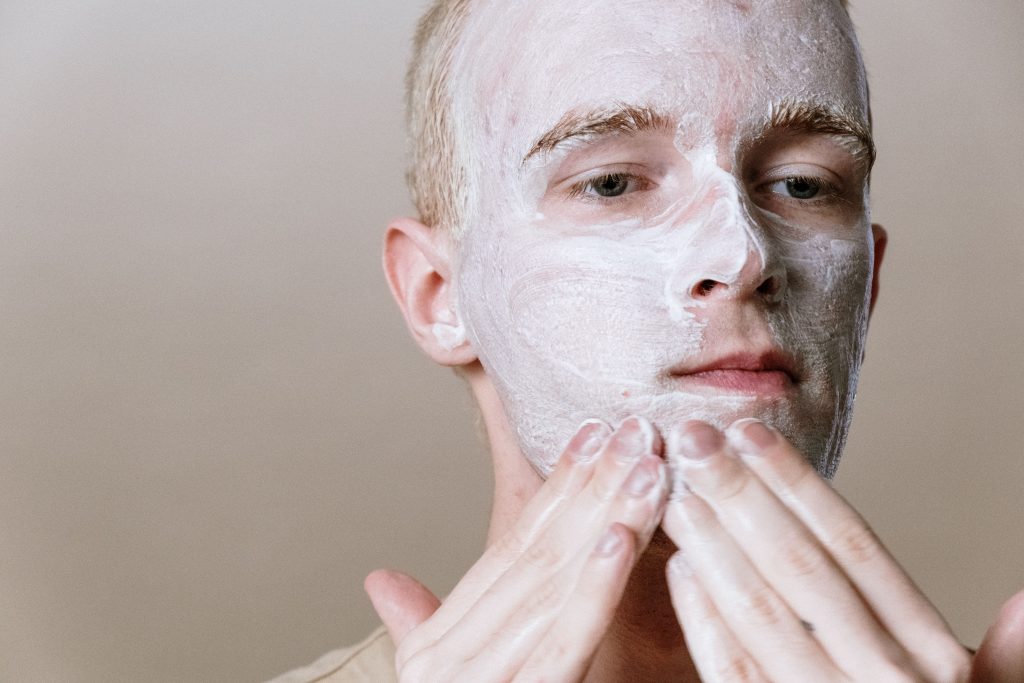
Marketing terms like “natural,” “clean,” and “eco-friendly” are unregulated in the cosmetic industry. To protect your skin and waterways from liquid plastics, scan the ingredient list on the back of any bottle for these common synthetic polymers:
- Carbomer: A synthetic acrylic polymer used to thicken water into clear gels.
- Acrylates Copolymer / Crosspolymer: Synthetic liquid plastics that create film-forming barriers and texture stability.
- Polyethylene (PE) / Polypropylene (PP): Used as thickeners, binders, or wax agents.
- Polyquaternium compounds: Synthetic polymers used for conditioning and skin-feel that exhibit poor environmental biodegradability.
- PEG compounds (Polyethylene Glycol): Petroleum-derived synthetic solvents and thickeners.
If you spot any of these ingredients near the top or middle of an ingredient deck, the product contains synthetic liquid polymers that persist in aquatic ecosystems.
Simple Care Tips to Make Solid Cleansers Last 3x Longer
Switching to a solid face wash saves money, but only if the bar doesn’t dissolve into goo on your shower shelf. Extend the life of your zero-waste bar with three practical steps:
- Use a Slanted, Well-Draining Dish: Never let your bar sit in pooled water. Choose a wooden slatted tray, a diatomaceous earth block, or a silicone holder with wide drainage slots.
- Keep It Out of the Direct Stream: Store solid bars away from direct shower spray. Apply water to wet hands, rub the bar between your palms for 3 seconds to create a lather, and return the bar to its dry dock before washing your face.
- Cut Your Bar into Portions: Slice a large bar into thirds using a clean kitchen knife. Store two pieces in a dry cabinet and keep only one small piece in your bathroom. This prevents humidity from prematurely degrading the unused portion.
Frequently Asked Questions
What makes a face wash truly plastic free? A face wash is truly plastic free when both its external packaging and internal formula contain zero synthetic plastics. The outer container must avoid plastic bottles, caps, pumps, and synthetic coatings, utilizing materials like glass, aluminum, or compostable cardboard. The formula must be free from liquid microplastics, synthetic acrylates, carbomers, and polyethylene glycols.
Is solid face wash better for sensitive skin than liquid face wash? Solid face washes can be excellent for sensitive skin, provided they are soap-free syndet bars formulated to a skin-neutral pH (5.0 to 5.5). Syndet bars use mild plant-derived surfactants and moisturizing botanicals like shea butter or kaolin clay, avoiding the harsh synthetic preservatives, parabens, and liquid acrylates often present in liquid facial cleansers.
Are plastic pump bottles on cleansers recyclable? No, standard lotion and cleanser pump bottles are almost never recyclable through municipal curbside systems. Pump mechanisms contain multiple unseparable materials, including stainless steel springs, polypropylene collars, polyethylene dip tubes, and rubber seals. Sorting machinery cannot separate these components, causing pumps to be discarded into landfills.
How do liquid microplastics in face wash harm marine life? Liquid microplastics, such as acrylates copolymers and carbomers, pass through municipal wastewater treatment plant filters because they are soluble or emulsified in water. Once released into rivers and oceans, these synthetic polymers resist natural biodegradation, accumulating in water systems where marine organisms ingest them, disrupting marine food webs.
Do sugarcane bioplastic face wash tubes biodegrade in nature? No, sugarcane bioplastics (bio-HDPE or bio-PET) do not biodegrade in nature or oceans. They are chemically identical to petroleum-derived plastics. While they reduce reliance on fossil fuel extraction during manufacturing, they persist in landfills and oceans for hundreds of years, breaking down into harmful microplastic particles just like conventional plastic.
How long does a solid plastic free face wash bar last? A standard 3 oz solid facial cleanser bar typically lasts between 60 to 90 days when used twice daily. Because solid bars are waterless concentrates, one bar contains the active cleansing equivalent of roughly two to three 8 oz bottles of liquid face wash.
Can a plastic free cleansing balm effectively remove waterproof makeup? Yes, oil-based plastic-free cleansing balms are exceptionally effective at removing waterproof makeup and physical mineral sunscreens. Oil dissolves oil, allowing natural plant oils and upcycled botanical powders to break down stubborn cosmetic pigments without harsh scrubbing or stripping the skin’s natural lipid barrier.
What ingredients indicate hidden liquid plastic in liquid face washes? To spot hidden liquid plastics, check the ingredient label for carbomer, acrylates copolymer, acrylates/C10-30 alkyl acrylate crosspolymer, polyethylene glycol (PEG), polyquaternium, and synthetic nylon compounds. These synthetic polymers act as thickeners and texture enhancers but resist environmental breakdown.
How should I store a solid face wash bar to prevent it from getting mushy? Store your solid face wash bar on a well-draining soap dish elevated above water pools, such as a slatted bamboo tray, diatomaceous earth pad, or draining wire rack. Keep the bar away from direct shower spray and allow it to dry completely between uses to maximize its longevity.
Why is anhydrous skincare better for the environment? Anhydrous (waterless) skincare products eliminate the 70% to 90% water content typical of liquid cosmetics. Removing water reduces shipping weight and carbon emissions during transport, allows for compact plastic-free packaging, and eliminates the need for aggressive synthetic chemical preservatives necessary to prevent bacterial growth in liquid formulas.
This article contains affiliate links. As an Amazon Associate, Plastic Free Everything earns from qualifying purchases at no extra cost to you.