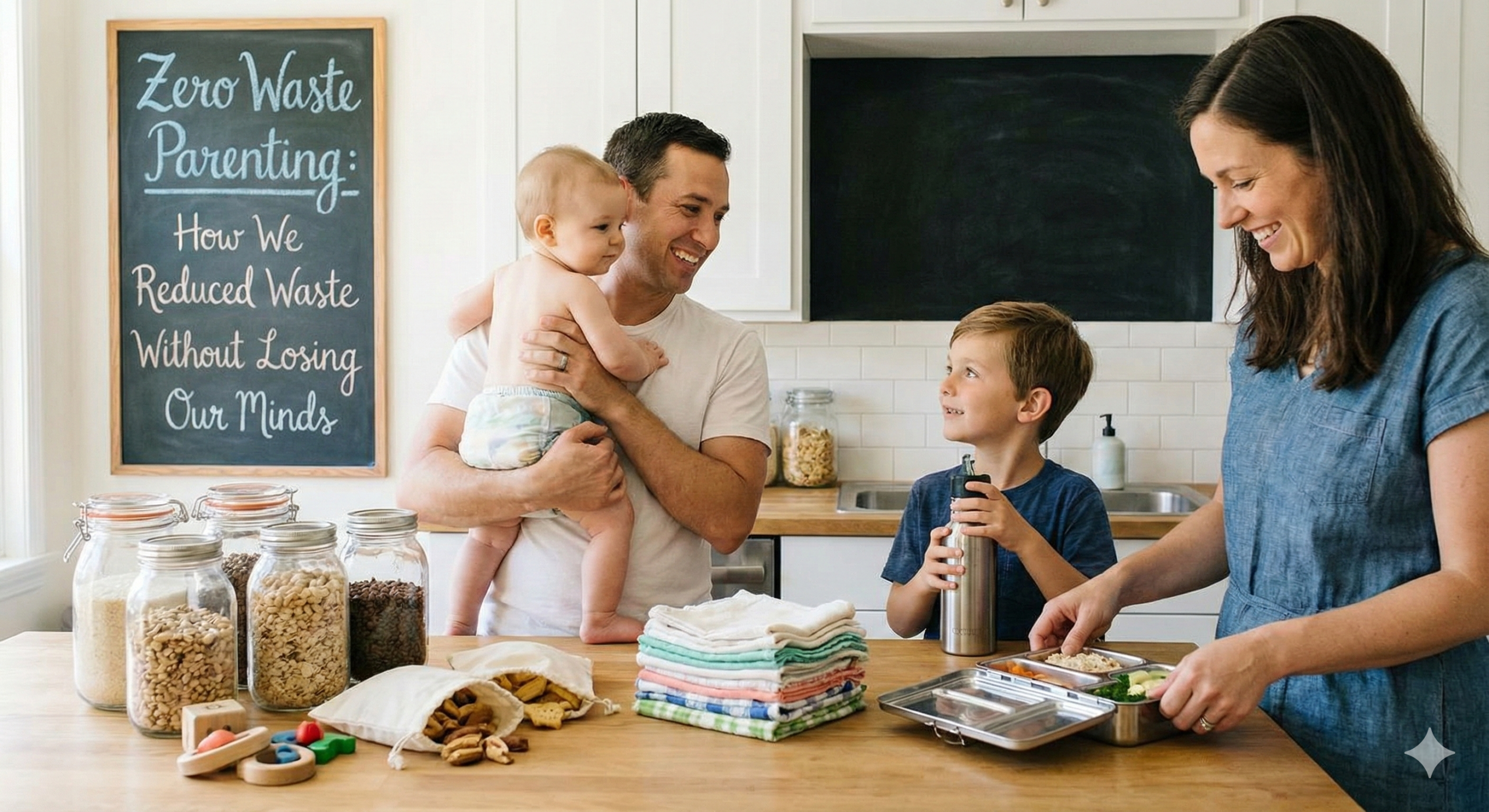
Zero Waste Parenting: How We Reduced Waste Without Losing Our Minds
I didn’t step into parenting thinking about waste. I was just trying to keep a tiny human alive and maybe grab a shower before noon. But it only took a few weeks to notice the bags of trash piling up outside our door. Diapers. Wipes. Food pouches. Plastic everywhere.
Like most families, I wasn’t trying to be wasteful. I was just trying to survive. But the more I dug into the research, the more I realized that small changes in those early years can have a big impact.
Zero waste parenting isn’t about doing everything perfectly. It’s about being intentional. It’s about reducing what we can and teaching our kids to care about the world they’re growing up in.
Here’s what helped us most, backed by solid data and shaped by real experience.
Where Baby Waste Really Comes From
Diapers: the heaviest hitter
Disposable diapers are responsible for a staggering amount of waste. The U.S. Environmental Protection Agency estimated that Americans sent about 4.1 million tons of disposable diapers to landfills in 2018 (EPA). That represents roughly 1.4 percent of the entire U.S. municipal solid waste stream.
To put that in human terms, Americans throw away 27 to 28 billion diapers every year. And once they’re buried, they sit there for centuries. One analysis notes that a diaper can take 450 to 550 years to decompose (EBSCO).
When I first learned that, I felt overwhelmed. Cloth diapering seemed intimidating. But reusable diapers don’t have to be an all-or-nothing choice. Even part-time use makes a difference. Several life cycle assessment studies show that cloth diapers generate far less solid waste than disposables, often twenty times less over the diapering period (The Bump citing LCA data).
The nuance is important though. A UK government analysis found that the environmental impact of cloth diapers depends heavily on how you wash and dry them. Full loads reduce water and energy use. Line drying cuts emissions significantly. Reusing cloth diapers across children brings the footprint even lower (UK LCA report).
Actionable idea: Try cloth diapers at home and use disposables on busy days or outings. It still prevents thousands of diapers from going to landfill. We have not cut out disposable diapers, the convivence and time savings is too hard to ignore. But every small step we take makes a difference.
Wipes: small, but surprisingly harmful
Most disposable wipes contain plastic fibers like polyester or polypropylene. A 2022 study in Environmental Science and Technology showed that wipes shed microfibers that escape wastewater treatment and enter the environment.
I switched to reusable cloth wipes slowly, mostly because they were gentler on my child’s skin. It also cut our waste in half.
Actionable idea: Use cotton cloths with warm water for most changes. Keep a small pack of compostable wipes in your bag for emergencies. We use Honest’s Plant Based Compostable Wipes and they hold up well.
Baby food packaging
Baby food pouches are convenient, but they’re nearly impossible to recycle because they combine layers of plastic and aluminum. One TerraCycle analysis found that only a small fraction of pouches are fully recyclable due to mixed materials.
Actionable idea: Make a big batch of puree once a week and store it in glass jars. As your baby grows, baby led weaning reduces single use packaging almost automatically.
The Microplastics Problem No One Warns You About
Toys
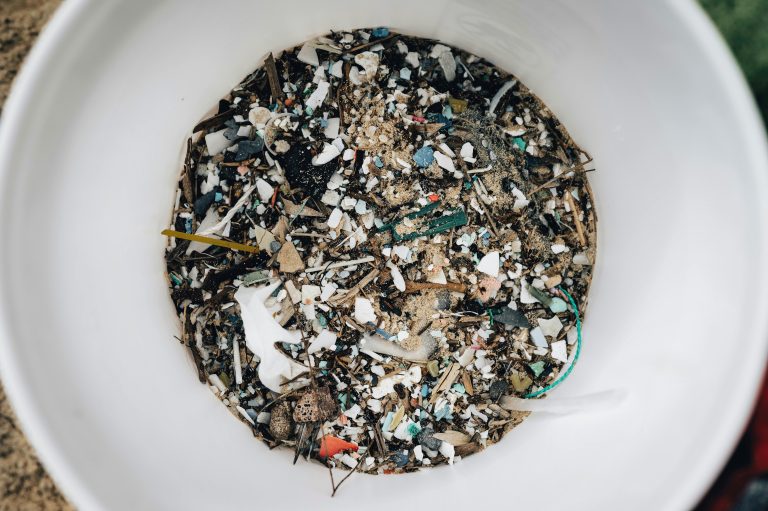
Plastic toys break down into microplastics over time. A 2023 NIH review showed that crawling infants ingest more microplastics per kilogram of body weight than adults because so many of their interactions are hand to mouth.
Wood and silicone toys don’t shed microplastics the same way, and they usually last longer.
Actionable idea: Shift toward wood, silicone, or fabric toys. A small toy collection is better for development anyway.
Baby bottles
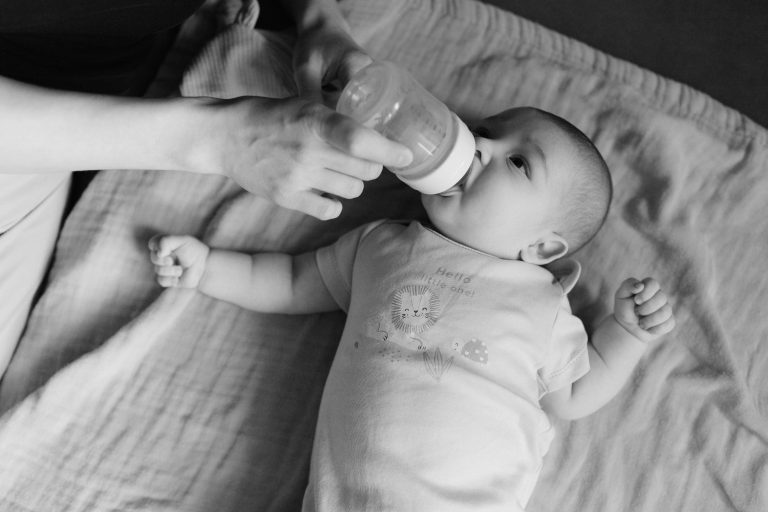
One study in Nature Food found that polypropylene baby bottles can release millions of microplastic particles into formula when heated or shaken. I used plastic bottles for the first few months and had no idea this was happening.
Switching to glass bottles is one of the simplest, highest-impact changes most families can make.
Actionable idea: The Phillips advent bottles are all glass, and we’ve been able to get by well with just 8 bottles that we rotate through.
Household dust
A 2021 Columbia University study found that indoor air can contain higher concentrations of microplastics than outdoor air. Babies spend a lot of time on the floor, so they inhale and ingest more microfibers than we expect.
Actionable idea: Vacuum with a HEPA filter and vent your home daily. It doesn’t have to be perfect. Small habits help.
Clothing: Building a Low Waste Wardrobe for Fast-Growing Kids
One of the biggest surprises in early parenthood is how quickly kids outgrow clothes. Some items lasted a few weeks. Others lasted a few wears. At the same time, the fashion industry contributes around 10 percent of global carbon emissions (UNEP), which makes clothing a meaningful area for change.
Babies and toddlers are actually ideal candidates for low waste clothing systems. Most pieces still look new when they’re outgrown, which means they can circulate through multiple families.
Why secondhand makes sense
Most secondhand baby clothes have barely been worn. Buying used saves money, reduces landfill waste, and lowers demand for new garments that require water, chemicals, and petroleum-based fibers.
ThredUp’s resale report suggests that choosing secondhand can cut a garment’s carbon footprint by more than 50 percent, mostly because it avoids the environmental cost of manufacturing.
Actionable idea: Create a simple capsule wardrobe each season with secondhand clothing. Choose natural fibers like cotton or wool when possible. They shed fewer microplastics during washing.
We have been able to buy all of our baby’s clothing secondhand through thrift stores or Facebook Marketplace and it’s not only helped the environment, it’s helped our wallet.
Renting, sharing, and rotating
Some parents love clothing rental services for babies. Others join swap circles with friends or neighbors. Every time a garment gets reused, its environmental impact drops.
Actionable idea: Keep a “pass-it-on” bin in your child’s closet. When something doesn’t fit, drop it in. It makes donating or swapping easier and keeps the system flowing.
What Parents Actually Struggle With
Time
Zero waste swaps can feel like extra work during a stage of life when time barely exists. What helped me was focusing on the biggest impact items, not everything at once.
Actionable idea: Pick one sustainable habit per month. That’s it. Slow progress is still progress.
Cost
There’s a perception that sustainable parenting is expensive. Sometimes it is, but often it isn’t. The resale economy is booming. ThredUp’s annual report shows that buying secondhand significantly reduces carbon emissions, mostly because baby items are used for such a short time before they’re outgrown.
Actionable idea: Look for strollers, baby carriers, high chairs, and clothing secondhand. These items are often in excellent condition.
Judgement and pressure
Modern parenting is full of judgement. Eco choices sometimes bring even more scrutiny. But you don’t have to justify the changes you make.
Actionable idea: When relatives ask about gifts, suggest experiences or secondhand items. A simple script like “We’re keeping things minimal to save money and reduce waste” works well.
Community: The Secret Ingredient That Makes Zero Waste Parenting Easier
Zero waste parenting gets easier when you’re not doing it alone. Many cities now have toy libraries, baby gear exchanges, Buy Nothing groups, and parent-to-parent swap events. Once I discovered these community systems, everything felt more manageable.
Why community matters
Environmental researchers often talk about “shared consumption systems.” It means that when families share resources, everyone’s footprint goes down. One stroller that serves four families has a quarter of the environmental impact of four new strollers. One high chair used through a neighborhood reduces manufacturing emissions and waste.
These systems also lower stress. Zero waste stops feeling like a personal burden and becomes part of how your community functions.
Where to start
- Buy Nothing groups
- Local parent swaps
- Toy libraries
- Baby gear libraries
- Neighborhood hand-me-down chains
Actionable idea: Join one local swap group and commit to offering one item each month. You’ll be surprised how many useful things flow back to you.
The social benefit
Community-based reuse supports sustainability and connection at the same time. Kids see sharing as normal. They learn that objects have value beyond their price tag.
High Impact Zero Waste Parenting Tips
Build a minimalist baby registry
The fewer one-off gadgets you bring into your home, the less waste you create.
Actionable picks: glass bottles, cloth wipes, silicone bibs, wood toys, natural fiber blankets, secondhand clothes.
Try cloth diapers flexibly
Even ten reusable diapers can save thousands of disposables from landfill. No one needs to be perfect.
Actionable idea: Start with daytime diapering and move at your own pace.
Use toy libraries and swap groups
Psychology research shows that kids play more creatively when they have fewer toys. Toy libraries reduce waste and clutter at the same time.
Keep feeding low waste
Breastfeeding is naturally low waste if it’s an option. If not, glass bottles and homemade baby food are simple, sustainable choices.
Choose secondhand first
Kids outgrow gear quickly. Each secondhand purchase extends the life of an item and cuts emissions tied to manufacturing.
Plan low waste celebrations
Parties generate an unbelievable amount of trash. But you can celebrate beautifully without disposables.
Actionable ideas: cloth banners, thrifted decorations, homemade snacks, recyclable kraft paper, no plastic favors.
Teaching Kids Through Everyday Habits
According to research on early childhood development, kids learn through imitation even before they can talk. They notice the routines we keep and the objects we value.
When we slow down our consumption, reuse what we have, and make thoughtful choices, they absorb it without us saying a word. It becomes normal. It becomes part of who they are.
Final Thoughts
Zero waste parenting isn’t about being the perfect eco-parent. It’s about small choices that line up with your values. It’s about reducing the waste that feels manageable and letting go of guilt about the rest.
Every cloth diaper reused. Every secondhand stroller. Every homemade snack. It all adds up. And your kids grow up seeing sustainability as a natural part of life.
If you want, I can help refine this further, add internal links, or create a downloadable guide for your readers