Beyond the Single-Use Squeeze: The Safest Reusable Baby Food Pouches
If you’ve ever glanced at the mountain of empty squeeze pouches in your recycling bin or trash, you’ve likely felt that familiar pang of parental guilt. We’ve been sold the idea that these colorful, convenient snacks are the gold standard for modern parenting. They’re portable, mess free, and usually plastered with organic labels and BPA free promises.
But there is a hidden cost to that convenience that goes beyond the landfill.
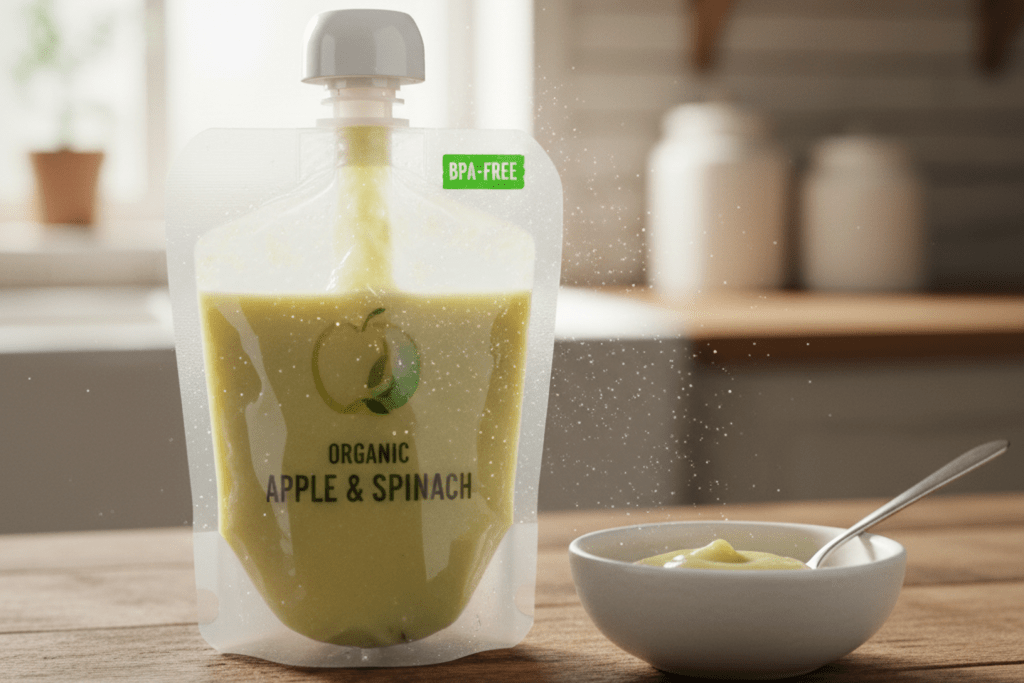
Recent studies have pulled back the curtain on a sobering reality: flexible plastic packaging, even the kind labeled non-toxic, is a significant source of microplastic shedding. When liquid purees, which are often acidic, are pasteurized at high heat inside these plastic and aluminum pouches, they create a microscopic plastic soup. By the time that spout reaches your baby’s mouth, they are ingesting thousands of polymer particles before they’ve even grown their first teeth.
The BPA free label was a start, but it’s no longer enough. It simply replaced one chemical with others (like BPS or BPF) that behave similarly. If you’re looking to protect your child’s developing endocrine system and reduce their toxic load, the solution isn’t to give up the convenience of the pouch, it’s changing the material.
By switching to truly plastic free, reusable silicone vessels, you aren’t just saving money and the planet; you’re ensuring that the only thing your baby swallows is the nutritious food you’ve prepared for them.
Our Top 5 Plastic-Free Baby Food Pouches
Quick Takeaways
| Brand | Material | Best For | Pros | Cons |
| Haakaa Yummy Pouch | 100% Food-Grade Silicone | Overall Use: Parents who want a 100% plastic-free, easy to clean design with zero hard parts | • No plastic collars or caps • Wide neck for easy filling and cleaning • Soft, safe spout for teething babies | • Silicone can hold onto dish soap odors if not washed properly • 4.5 oz capacity might be small for older toddlers |
| Squeasy Snacker | Medical-Grade Silicone | Travel & Mess Free: Parents of toddlers who love to aggressively squeeze and spill their pouches | • Patented no-spill insert prevents messes • Stands upright for easy filling • Works for purees, smoothies, and even water | • Contains hard plastic collar/cap components • Requires a specialized bottle brush to clean the insert |
| Mushie Silicone Puree Pouch | 100% Food-Grade Silicone | The Aesthetic & Durable Pick: Parents wanting beautiful, minimalist designs that hold up to heavy use | • Exceptionally thick, durable silicone • Dishwasher and boil-safe (up to 390°F) • Gentle on tiny hands and mouths | • Higher upfront cost per pouch • Can be slightly difficult to squeeze out the very last drops |
| Lowcountry Littles Palmetto Pouch | 100% Food-Grade Silicone | Longevity: Parents looking for a durable, seamless pouch that won’t split or leak over time | • Seamless interior prevents bacteria buildup • Controlled flow spout (only dispenses when bitten/sucked) • Strongest seal on the market | • Takes a bit of practice for babies to master the bite valve |
| Everusely Silicone Pouch | LFGB Food-Grade Silicone | Budget-Conscious Parents: Building a stash for daycare or daily use without spending a fortune | • Great value for a multi-pack • X-cut variable flow nozzle • Includes a straw attachment for thinner liquids | • Straw attachment can be easily lost by toddlers • Cap is a separate piece that requires tracking down |
How We Chose the Best Plastic Free Pouches
We evaluated dozens of reusable pouches based on criteria that matter most to exhausted parents trying to reduce toxic loads while keeping snack time convenient.
- Material Purity: The primary vessel must not be petroleum plastic. Because pouches require squeezing, rigid glass and steel do not work here. We strictly prioritized 100% food-grade silicone.
- Ease of Cleaning: The biggest downfall of reusable pouches is mold. Pouches with deep crevices, impossible to clean zippers, or narrow necks that trap food were downgraded.
- Leak-Proof Reliability: The safest pouch in the world is useless if it explodes pureed spinach all over your diaper bag. We looked for secure seals and smart spout designs.
- Durability & Practicality: We considered how the pouch handles real world abuse, teething toddlers, and the extreme temperatures of freezers and dishwashers.
The Best Plastic Free Baby Food Pouches
Here are our top recommendations categorized by budget and lifestyle needs.
1. Best Overall: Haakaa Silicone Yummy Pouch
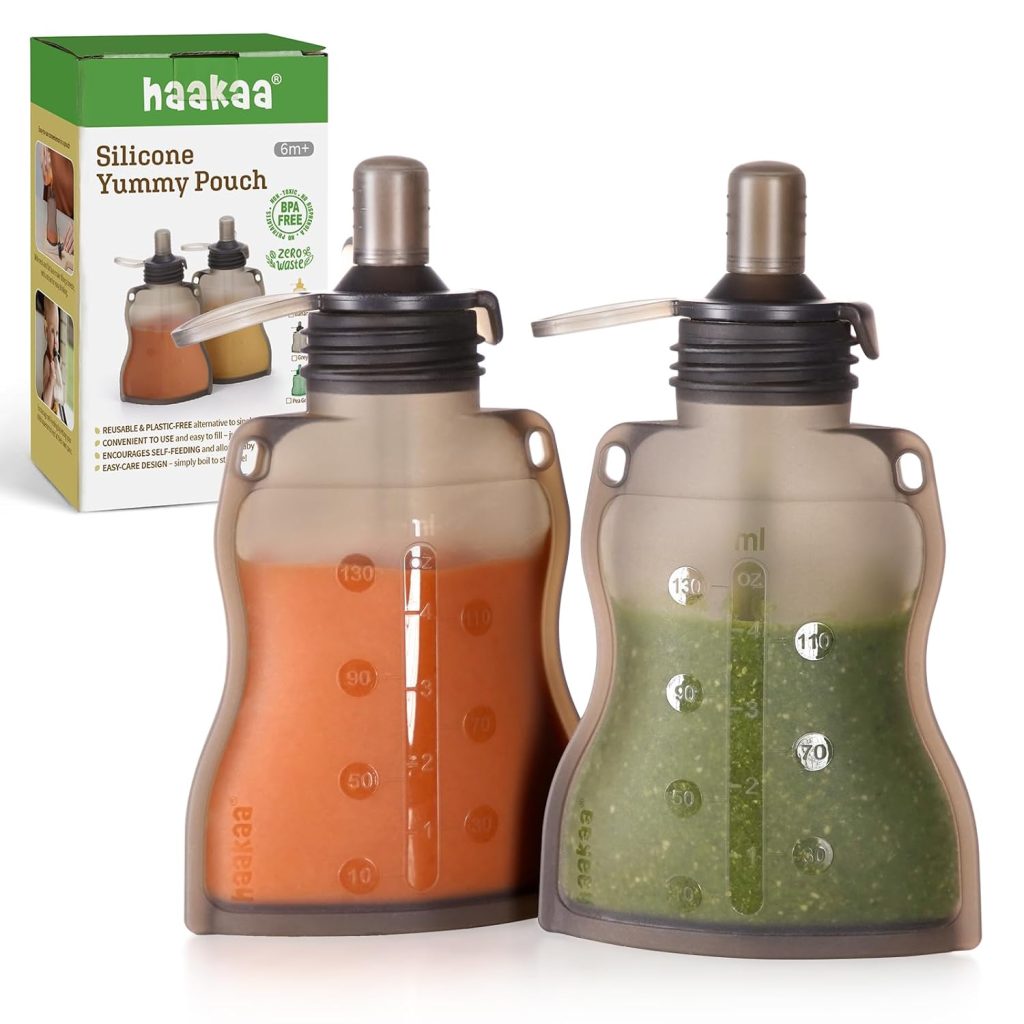
If you want a reliable, widely beloved pouch that is genuinely 100% plastic-free from top to bottom, this is the one. Haakaa is highly trusted in the silicone baby space, and their Yummy Pouch reflects that expertise.
The entire pouch, including the attached leak-proof cap and the drinking spout, is made of a single continuous-feeling piece of food-grade silicone. The wide neck makes it incredibly easy to pour homemade purees or yogurt directly into the vessel without needing a specialized funnel. It’s safe to throw in the dishwasher, freezer, or boiling water to sterilize.
Pros
- 100% plastic-free (even the cap).
- Wide neck makes for easy cleaning and filling.
- Cross-cut valve prevents accidental spills.
- Attached cap means you won’t lose it on the playground.
Cons
- Silicone can retain odors or the taste of strongly scented dishwasher tabs. You may need to boil them occasionally in water and vinegar to refresh them.
2. The Travel & Toddler Pick: Squeasy Snacker
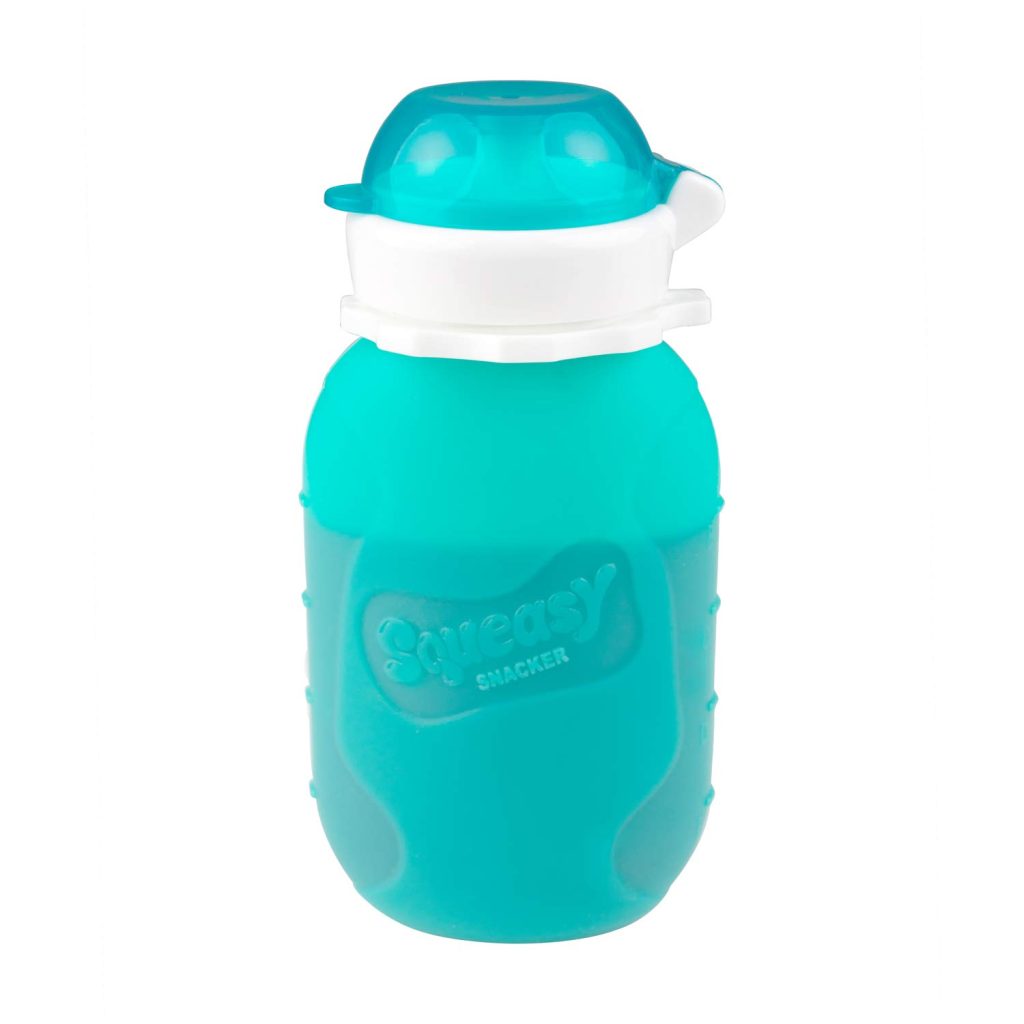
If you have a toddler whose favorite game is squeezing a pouch as hard as humanly possible to watch the puree rocket across the room, the Squeasy Snacker will save your sanity.
While the body of the pouch is made of pure, high-quality silicone, its standout feature is the removable “No Spill Insert.” This insert regulates the flow so that food only comes out when the child actively sucks. It is so effective that it can even be used for thin liquids like water and juice without leaking.
Pros
- Completely spill-proof, even when held upside down and squeezed.
- Flat bottom allows it to stand up on its own for easy filling.
- Incredible durability for aggressive toddlers.
Cons
- It does utilize hard plastic for the collar and cap, meaning it is not 100% plastic-free.
- The anti-spill insert is an extra piece to wash and keep track of.
3. The Aesthetic Pick: Mushie Silicone Puree Pouch
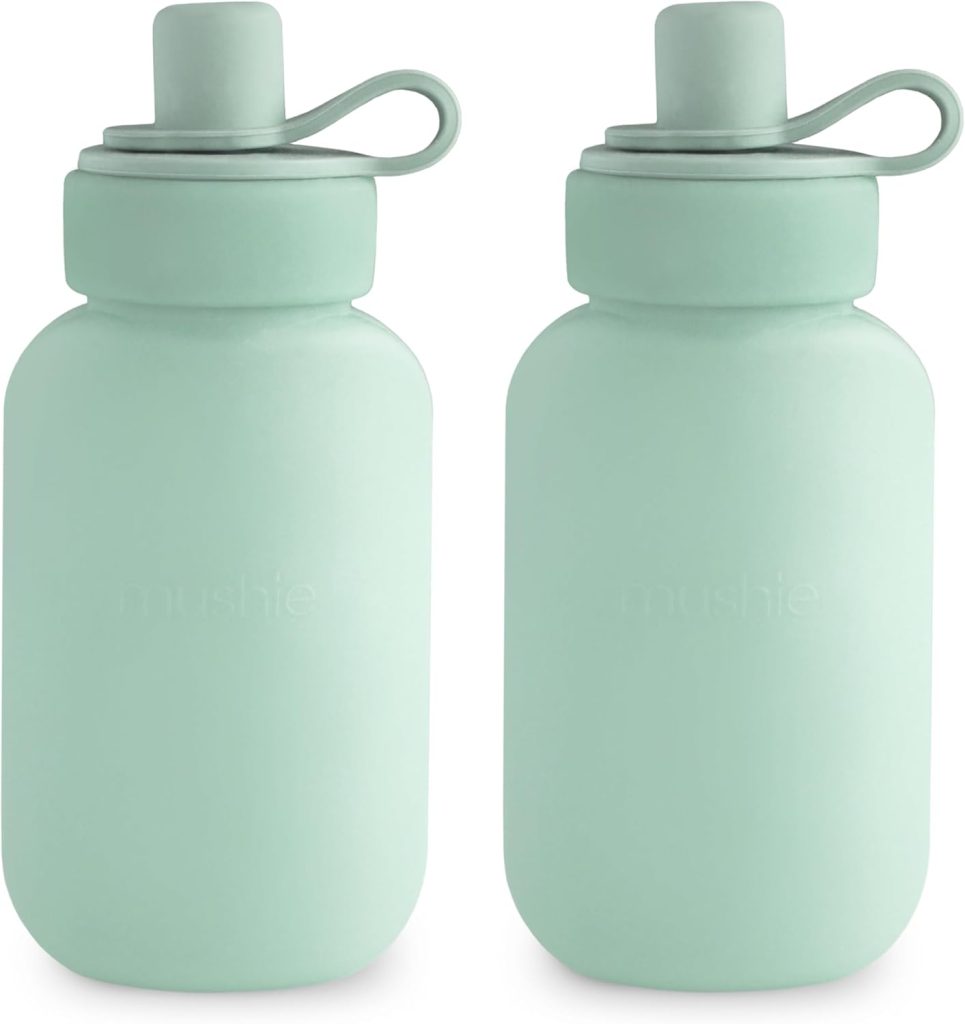
Mushie is known for beautifully designed, minimalist baby gear, and their reusable pouches are no exception. Made from 100% food-grade silicone, these pouches are heavily tested and free of BPA, PVC, and phthalates.
Beyond looking great in your diaper bag, they are incredibly robust. The silicone is thick enough to withstand years of heavy use, yet soft enough for a baby to easily squeeze. They are simple to take apart, easy to run through the dishwasher, and can endure temperatures up to 390°F.
Pros
- Extremely durable, thick silicone construction.
- Beautiful muted color palettes.
- Wide base allows for easy cleaning.
Cons
- One of the more expensive options upfront.
- Because the silicone is quite thick, getting the very last drop of puree out can be slightly tricky for smaller babies.
4. The Longevity Pick: The Palmetto Pouch
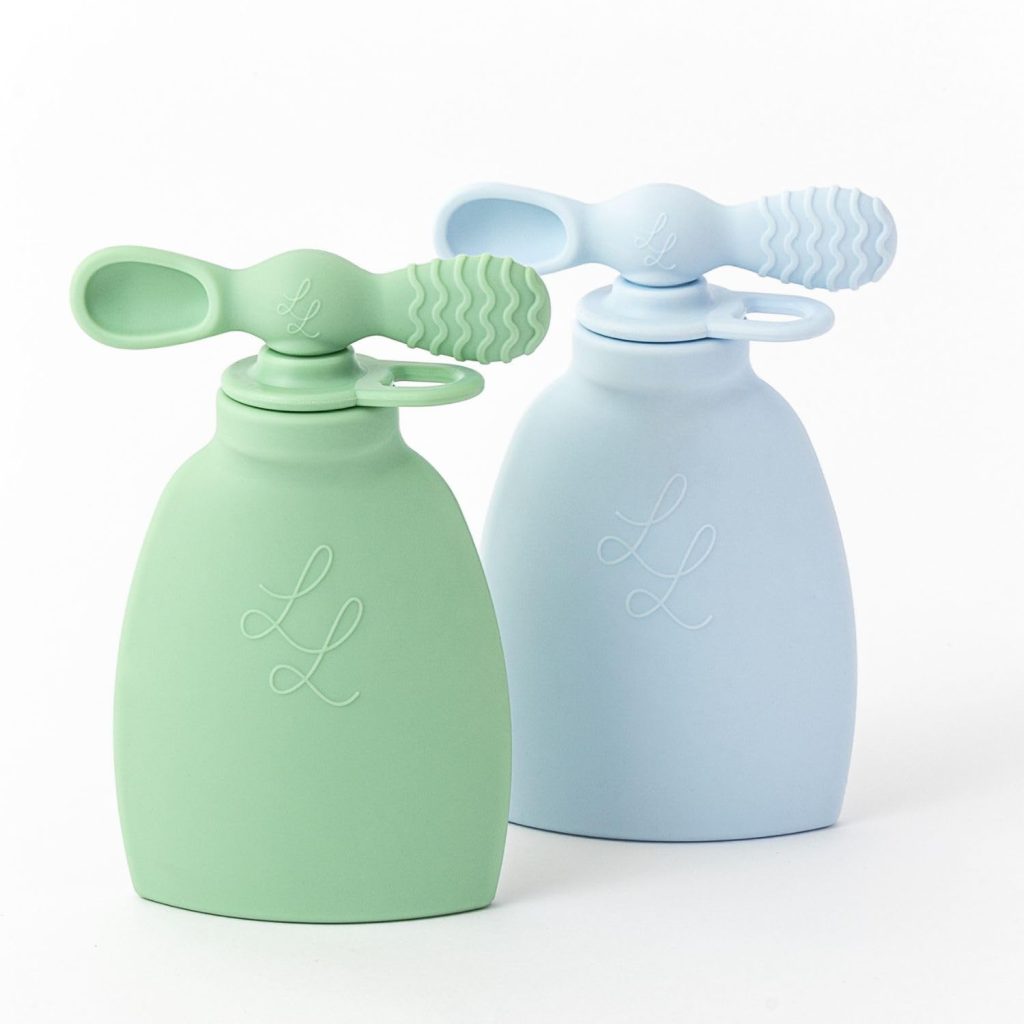
Crafted by Lowcountry Littles, The Palmetto Pouch was designed to solve the most common failure points of reusable pouches: split seams and leaky closures.
This pouch features a completely seamless interior. This not only makes it exponentially stronger (many parents report using the same pouch through multiple children), but it also means there are zero microscopic ridges where bacteria and mold can hide. The controlled-flow spout is incredibly gentle on teething gums and requires a slight bite-and-suck motion to release the food, stopping messes in their tracks.
Pros
- Seamless design is highly durable and sanitary.
- Thick, flexible silicone that won’t degrade.
- Exceptional seal strength prevents diaper bag disasters.
Cons
- The bite-valve requires a specific mouth motion that may take a younger infant a few tries to figure out.
5. The Budget Pick: Everusely Silicone Pouch
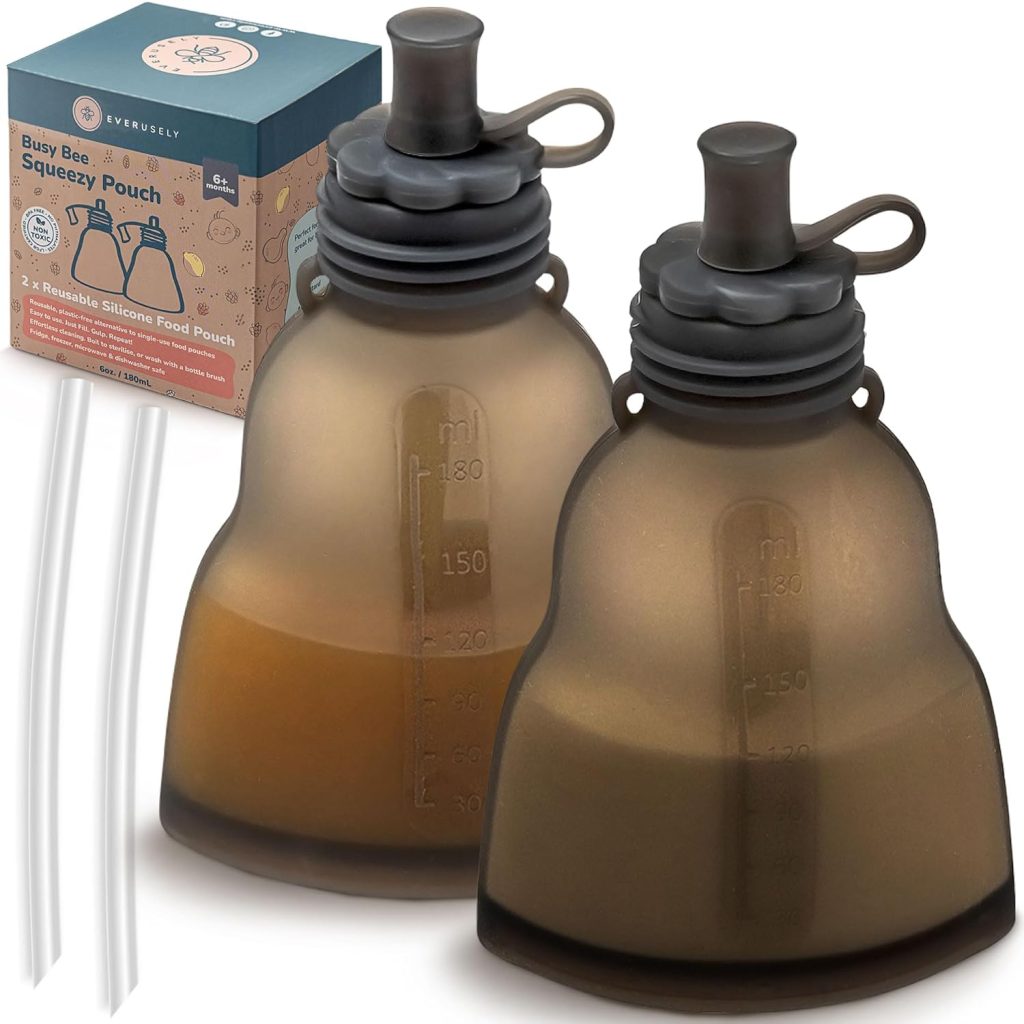
You do not need to spend a fortune to ditch single-use plastics. Everusely offers a fantastic silicone pouch that proves you can build a large stash for daycare without breaking the bank.
These pouches are made from LFGB silicone (the stricter European standard for food-grade silicone) and feature an X-cut variable flow nozzle. They also come with a unique straw attachment that lets you use the pouch for thinner smoothies or milks. It’s an incredibly versatile and affordable option.
Pros
- The price is unbeatable value for LFGB silicone.
- Variable flow spout adapts to different food thicknesses.
- Straw attachment adds versatility for older kids.
Cons
- The cap and the straw are separate pieces, making them easy for a toddler to toss out of a stroller.
Evaluating Materials for Pouch Feeding
When you strip away the marketing, the reality of pouches is that the material must be flexible. Because glass and stainless steel are rigid, they only work as jars or bottles. If you want the convenience of a pouch, you really only have one safe alternative to petroleum plastic.
Medical & Food-Grade Silicone (The Gold Standard for Pouches)
Silicone is technically a synthetic polymer, but its backbone is silicon (derived from sand) and oxygen, rather than the carbon chain that makes up petroleum-based plastics. It is vastly more stable under heat and acidity than standard plastics and is not known to shed microplastics into food.
It gives you the squishy, lightweight, unbreakable convenience of a single-use plastic pouch, but without the leaching concerns or the environmental devastation.
The Downside: Silicone can hold onto odors (like stale yogurt or dishwasher soap fragrance) much more stubbornly than glass. It also tends to attract dust if dropped on the floor. Hand washing with unscented soap or occasional boiling is highly recommended.
Reusable Plastic Pouches (The Compromise to Avoid)
You will see many reusable pouches on the market made from PE (polyethylene) plastic with zip-style bottoms. While these are better for the environment than single-use pouches because they reduce landfill waste, they do not solve the microplastic issue. In fact, repeatedly washing and reusing a flexible plastic pouch can cause the plastic to break down faster, potentially increasing microplastic shedding into your baby’s food. If your goal is microplastic reduction, skip the reusable plastic zippers and go straight to silicone.
FAQs About Plastic-Free Pouches
1. Are silicone pouches hard to clean?
It depends on the design. Look for wide necks and seamless interiors. The best way to clean a silicone pouch is to rinse it immediately after use. Many are dishwasher safe, but handwashing with an unscented soap and a bottle brush is the best way to prevent soap taste retention.
2. Can I freeze homemade baby food in silicone pouches?
Yes! Silicone is incredibly resistant to temperature changes and expands safely without tearing. Freezing purees directly in the pouch is a fantastic way to meal-prep. Just leave a little bit of room at the top for the liquid to expand.
3. My silicone pouch tastes like dish soap. How do I fix this?
Silicone is highly porous to strong fragrances. If your pouches taste like your dishwasher detergent, boil them for 10-15 minutes in a mixture of water and a splash of white vinegar. Moving forward, use an unscented, natural dish soap.
4. Are reusable plastic zipper pouches safe?
They are better for the earth than single-use pouches, but they are still plastic. They will degrade over time, especially when exposed to hot water in the dishwasher, which can lead to microplastic shedding. We strongly recommend silicone over reusable plastic.
5. Will my daycare accept reusable pouches?
Most daycares love reusable pouches! Because silicone is unbreakable, it doesn’t carry the same liability risks as glass baby bottles. Just make sure to label the pouch with your child’s name and the date the puree was made.